IVF, school choice and gambling dominate the week in Montgomery
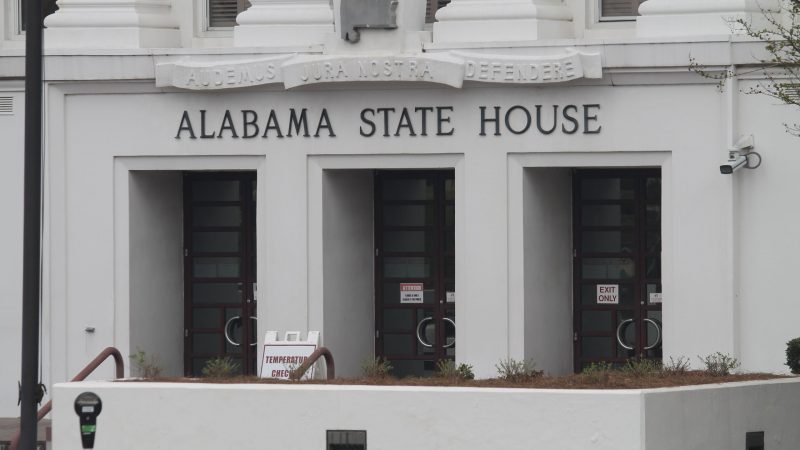
Most in vitro fertilization services resumed across Alabama after Gov. Kay Ivey signed a bill into law Wednesday night granting immunity to fertility clinics. This is in response to an Alabama Supreme Court ruling last month that found frozen embryos are children. At least three IVF providers paused some services because of that ruling.
“It’s been a really interesting time,” said Todd Stacy, host of Capitol Journal on Alabama Public Television. “Lawmakers [were] rushing to figure out how to make this right.”
Stacy discussed the situation and other action in the Alabama legislature this week.
Temporary IVF Fix
The new law, which took effect immediately, shields providers from prosecution and civil lawsuits “for the damage to or death of an embryo” during IVF services. Civil lawsuits could be pursued against manufacturers of IVF-related goods, such as the nutrient-rich solutions used to grow embryos, but damages would be capped to “the price paid for the impacted in vitro cycle.”
Republicans in the GOP-dominated Alabama Legislature opted to back the immunity proposal as a solution to the clinics’ concerns. But they shied away from proposals that would address the legal status of embryos created in IVF labs, an action that some said is necessary to permanently settle the issue.
“I do think this issue is not finished because even with this new liability protection bill you may need to tweak that in the future,” Stacy said.
Patients and doctors traveled to Montgomery the past two weeks, to urge lawmakers to find a solution. They described appointments that were abruptly canceled and how their paths to parenthood were suddenly put in doubt.
“I think they had a real impact on lawmakers on an issue that few know a lot about,” Stacy said. “I think those advocates, those IVF patients and families, coming down to the statehouse made all the difference.”
CHOOSE Act becomes law
Ivey on Thursday signed legislation creating a program similar to school vouchers that would provide eligible families with as much as $7,000 to help pay for private school and $2,000 for homeschooling expenses.
The Alabama Senate voted 23-9 on Wednesday for the proposal. Senators approved it after more than five hours of debate in which opposed lawmakers presented divergent views on allowing families to tap into public money for private schooling.
“There’s just a longstanding resistance to choice options from Democrats especially when you’re talking about public tax dollars going to private institutions,” Stacy said.
Republicans largely supported the plan and Ivey called for it in her State of the State address last month.
The program would be funded at a minimum level of $100 million. The first 500 slots would be reserved for families of students with disabilities. Eligibility would initially be limited to families earning up to 300% of the federal poverty level, which would be about $77,460 for a family of three. The income limit would go away in 2027, but lower-income families and families with students with disabilities would have priority for funds.
“It was a lot more measured in scope than what other states have done,” Stacy said. “There’s a lot of restrictions and guardrails on it and that really made the education groups a lot less resistant.”
While the program would initially be aimed at low and middle-income families, opposed lawmakers questioned how much they would benefit, noting that private school tuition is often more than the $7,000 the state would provide.
“We’ll see just how much it’s actually utilized,” Stacy said. “Other states it’s kind of a mixed bag.”
Gambling split
The Alabama Senate on Thursday advanced a scaled-back gambling proposal — allowing a state lottery and electronic wagering machines at several locations in the state — as lawmakers try to strike a compromise that can win the needed votes in both chambers.
The 22-11 vote on the proposal came after a more sweeping plan, that included sports betting and multiple casinos with table games, passed in the House but stalled in the Senate. The slimmed-down bill approved by the Senate now goes back to the Alabama House, where lawmakers could go along with the changes or send the bill to a conference committee.
“Those changes are probably not going to fly in the House,” Stacy said.
The Senate plan would authorize a state lottery and require the governor to negotiate a compact with the Poarch Band of Creek Indians that could pave the way for the tribe to have full-fledged casinos with table games at its three sites in the state.
It would allow seven locations, including the state’s four dog tracks, to have “historical racing computerized machines.” The devices allow players to bet on replays of horse races, with newer models resembling slot machines. The seven sites would include the state’s four dog tracks located in Greene, Jefferson, Macon and Mobile counties. They could also be located at new sites in Houston, Lowndes and an additional site in Greene County.
If the Senate proposal is approved by both chambers of the Alabama Legislature, the proposal would go before voters on Sept. 10.
“We’re kind of in a stalemate,” Stacy said. “We’re about halfway through [the] session. We’ll see what changes.”
Includes reporting from the Associated Press
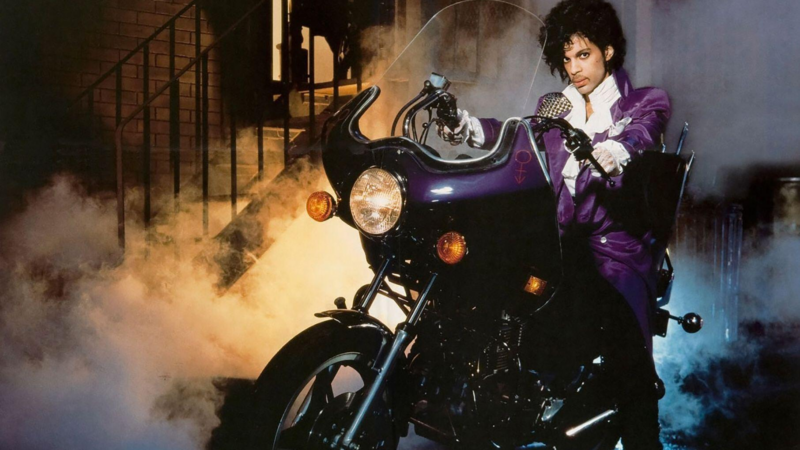
40 years after ‘Purple Rain,’ Prince’s band remembers how the movie came together
Before social media, the film Purple Rain gave audiences a peak into Prince’s musical life. Band members say the true genesis of the title song was much less combative than the version presented in the film.
Park Fire in California could continue growing exponentially, Cal Fire officer says
Cal Fire has confirmed that over a hundred structures have been damaged in the Park Fire, which grew overnight near Chico, Calif. Difficult firefighting conditions are forecast through Friday night.
Checking in with Black voters in Georgia about the election, now that Biden is out
Some voters who could be key to deciding who wins Georgia. What do they think about Vice President Harris becoming the frontrunner in the race to be the Democratic nominee?
Tahiti’s waves are a matter of ‘life and death’ for surfing Olympics
Tahiti's Teahupo'o wave has a slew of riders for the Paris 2024 Olympics. NPR finds out why it's called one of the most dangerous waves.
Researchers are revising botanical names to address troubling connotations
Since the mid-1700s, researchers have classified life with scientific names. But some of them have problematic histories and connotations. The botanical community is trying to tackle this issue.
A spectacular opening ceremony wowed a global audience despite Paris’ on-and-off rain
The Paris Olympics opening ceremony wowed Parisians, fans and most everyone who was able to catch a glimpse of thousands of athletes floating down the Seine to officially begin the Games.