
Mark Zuckerberg defends Meta in court against monopoly claims
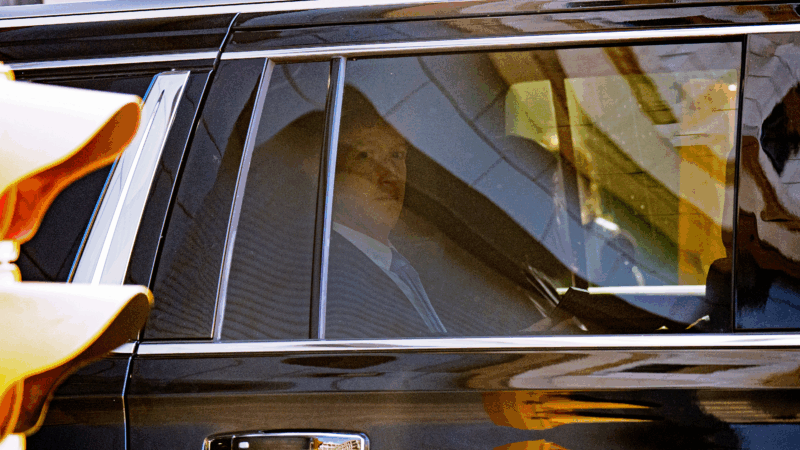
Mark Zuckerberg on Tuesday faced a barrage of questions about what his true motivations were in acquiring Instagram and WhatsApp, purchases the federal government says cemented Meta’s status as a monopoly.
When asked by a Federal Trade Commission lawyer if Meta — then called Facebook — purchased Instagram because it viewed the service as an existential threat, Zuckerberg was evasive.
“The camera was good. The filter was good. They had good taste in their product. It was an experience people enjoyed,” said Zuckerberg, noting at another point that he had been debating building a photo service but that Instagram was ahead of the game. “So I thought it was better to buy them,” he said.
Zuckerberg, the chief executive of Meta, was testifying in an antitrust case brought by the FTC alleging Meta gobbled up rivals as a way to preserve its power and pad its bottom line. The case threatens to bust up the company’s $1.3 trillion business empire.
His second day on the witness stand was at times tense, with FTC lawyer Dan Matheson repeatedly pointing Zuckerberg to old internal emails, trying to illuminate the CEO’s thinking ahead of Meta’s 2012 Instagram purchase for $1 billion and its 2014 take-over of WhatsApp for $19 billion.

Matheson drew Zuckerberg’s attention to a 2012 email exchange between Zuckerberg and his then-chief financial officer David Ebersman, who asked the CEO whether one reason for buying Instagram would be to “neutralize a competitor.”
Zuckerberg agreed, writing that the plan would be to buy Instagram and leave it running, then incorporate “the social dynamics they’ve invented into our core products.” In a follow up message, he wrote: “I didn’t mean to imply that we’d be buying them to prevent them from competing with us in any way.”
Reflecting on this exchange 13 years later in court on Tuesday, Zuckerberg would not say that acquiring Instagram was chiefly about burying a competitive threat, as the FTC argues.
“But scale is one aspect of that and time is one aspect of that,” Zuckerberg said of his thinking at the time.
Asked if he wished Meta would have developed its own photo app, Zuckerberg replied: “I guess so. $1 billion is very expensive,” referencing Instagram’s price tag.
Meta’s acquisition of Instagram and WhatsApp are at the heart of the FTC’s allegations that a “buy or bury strategy” propelled the social media company. They allege it would take over a threatening competitor, or copy an app’s features, or use its power to stifle the rival’s growth by limiting how an app could integrate with Meta.
Zuckerberg’s testimony marked the beginning of what is set to be a two-month trial. For the next eight weeks, government lawyers and Meta’s legal team will be sparring over whether the tech company operates as an illegal monopoly. Meta’s former chief operating officer Sheryl Sandberg and the head of Instagram, Adam Mosseri, are among the witnesses the government intends to call.
If the judge sides with the government and orders Meta to divest from Instagram and WhatsApp, it could devastate the company’s advertising business. Instagram is estimated to represent half of Meta’s overall advertising revenue, up from just 7% in 2015, according to analytics firm eMarketer.

This is not the first time the tech executive has testified under oath. Zuckerberg, 40, has addressed Congress more than half a dozen times, most notably on the subject of child safety, when he apologized to parents in the audience for any harm his platforms caused their children.
But this time, the courtroom testimony will be focused on business decisions that Meta made more than a decade ago.
The FTC argues that the only way to resolve Meta’s monopoly power is for the company to be broken up. In legal filings, government lawyers say a judge should order Meta to spin off Instagram and WhatsApp into separate companies.
Meta’s attorneys say it does not operate as a monopoly, arguing that federal authorities are punishing the company for its success. Meta points out that regulators approved the takeover of Instagram and WhatsApp more than a decade ago, and that the company’s services face plenty of competition from popular platforms like TikTok, YouTube, Snap and others.
William Kovacic, former Republican chair of the FTC, said the judge in the case, U.S. District Judge James Boasberg, will likely be weighing the rationale Zuckerberg provided for the Instagram and WhatsApp buys.
“In particular, he will bear down on Zuckerberg emails that express apprehension that an independent Instagram could evolve quickly into a potent social network platform that would threaten Facebook,” Kovacic told NPR.
The case follows a nearly six-year investigation across multiple administrations. Zuckerberg and President Trump had a stormy relationship for years. In recent months, however, Zuckerberg has been warming up to the president. Meta earlier this year paid $25 million to settle a lawsuit brought by Trump over his social media accounts being suspended after the Jan. 6 attack on the Capitol. And Meta has taken a number of steps to appease Trump, including ending its fact-checking program, something Trump supporters and other conservatives have long attacked as biased.
Supporters of the FTC’s case against Meta fear Trump could still intervene in the case by instructing the federal agency to settle in the midst of the trial.
Former FTC Chair Lina Khan, who advanced the case during the Biden administration, said Monday on CNN that the president meddling in the case is “a constant worry that we all need to stay very vigilant about.”
Meta is a financial supporter of NPR.
US military used laser to take down Border Protection drone, lawmakers say
The U.S. military used a laser to shoot down a Customs and Border Protection drone, members of Congress said Thursday, and the Federal Aviation Administration responded by closing more airspace near El Paso, Texas.

Deadline looms as Anthropic rejects Pentagon demands it remove AI safeguards
The Defense Department has been feuding with Anthropic over military uses of its artificial intelligence tools. At stake are hundreds of millions of dollars in contracts and access to some of the most advanced AI on the planet.

Pakistan’s defense minister says that there is now ‘open war’ with Afghanistan after latest strikes
Pakistan's defense minister said that his country ran out of "patience" and considers that there is now an "open war" with Afghanistan, after both countries launched strikes following an Afghan cross-border attack.
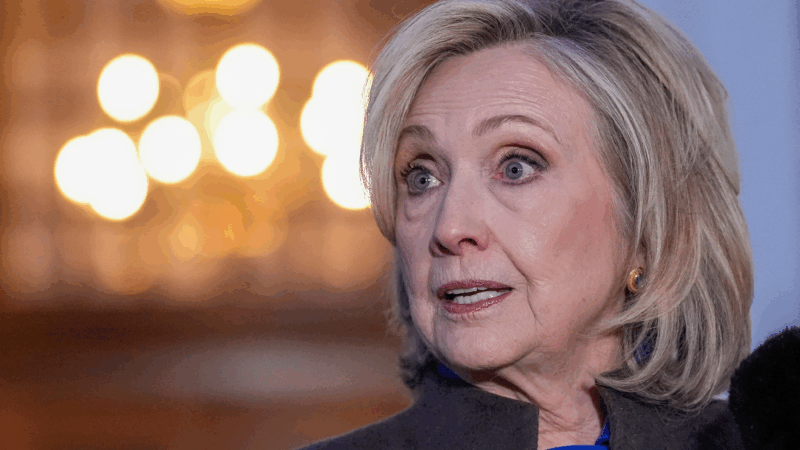
Hillary Clinton calls House Oversight questioning ‘repetitive’ in 6 hour deposition
In more than seven hours behind closed doors, former Secretary of State Hillary Clinton answered questions from the House Oversight Committee as it investigates Jeffrey Epstein.
Chicagoans pay respects to Jesse Jackson as cross-country memorial services begin
Memorial services for the Rev. Jesse Jackson Sr. to honor his long civil rights legacy begin in Chicago. Events will also take place in Washington, D.C., and South Carolina, where he was born and began his activism.
In reversal, Warner Bros. jilts Netflix for Paramount
Warner Bros. says Paramount's sweetened bid to buy the whole company is "superior" to an $83 billion deal it struck with Netflix for just its streaming services, studios, and intellectual property.
