
Doug Jones: Supreme Court Nomination Is ‘A Political Power Play’
President Donald Trump tweeted Tuesday he’ll announce his nominee for the late Justice Ruth Bader Ginsburg’s seat on the U.S. Supreme Court Saturday. The fight over the high court added gasoline to a partisan fire and rubbed salt on political wounds.
If Republicans can hold their Senate caucus together, a swift confirmation is possible. Meanwhile, Democrats have said the matter should be left until after the election. They’ve also accused Republicans of hypocrisy for refusing to consider President Barack Obama’s Supreme Court nominee, Merrick Garland, in 2016, also an election year.
The partisan divide is playing out in Alabama, too.
“In this particular circumstance, it would be better to wait and see,” Democratic Sen. Doug Jones said.
Jones said voting is already underway and the winner of November’s election should make the pick. He said Congress has more urgent items than a Supreme Court confirmation, including a coronavirus relief package, appropriations bills and a defense authorization.
“This is pure raw politics and I think this is hurting the Senate as an institution,” Jones said.
Jones’ Republican opponent in his re-election battle, former Auburn football coach Tommy Tuberville, issued a statement saying the Senate should begin the confirmation process as soon as possible.
“The next Supreme Court justice could open the door to finally overturning Roe v. Wade, protecting our gun rights, and firmly securing the religious freedoms guaranteed to us by the First Amendment,” Tuberville wrote in the statement.
Republican Sen. Richard Shelby also expressed support for a swift confirmation process.
Jones opposed President Trump’s last nominee to the U.S. Supreme Court, Justice Brett Kavanaugh, although he has supported other Trump nominees to the federal bench. He said he’s hopeful enough Republicans will speak out to delay the process.
“I lived through the Kavanaugh vote and how divisive and ugly and partisan it became. That is the last thing that we need right now,” Jones said.
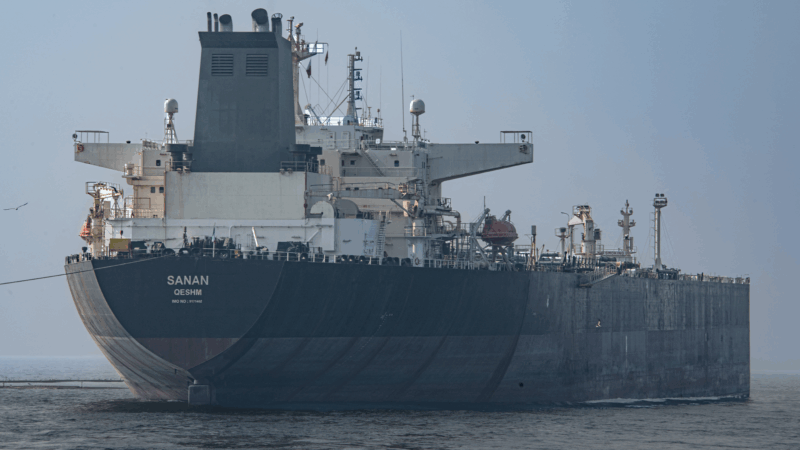
How could the U.S. strikes in Iran affect the world’s oil supply?
Despite sanctions, Iran is one of the world's major oil producers, with much of its crude exported to China.
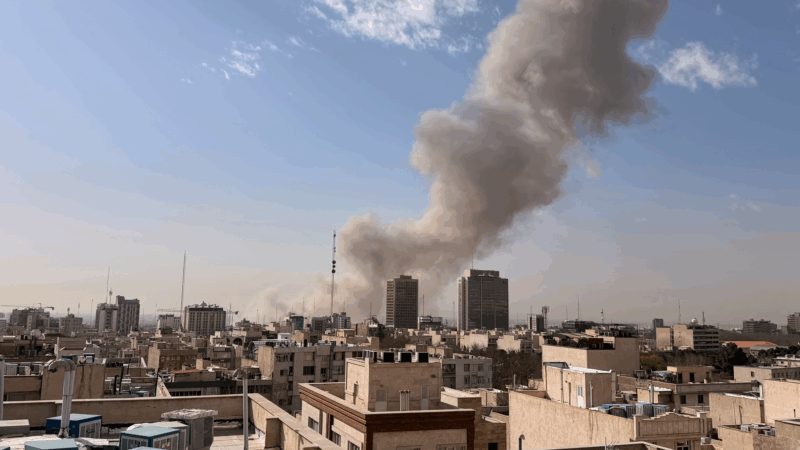
Why is the U.S. attacking Iran? Six things to know
The U.S. and Israel launched military strikes in Iran, targeting Khamenei and the Iranian president. "Operation Epic Fury" will be "massive and ongoing," President Trump said Saturday morning.
Sen. Tim Kaine calls on the Senate to vote on the war powers resolution
NPR's Scott Simon talks to Sen. Tim Kaine, D-Va., about the U.S. strikes on Iran.
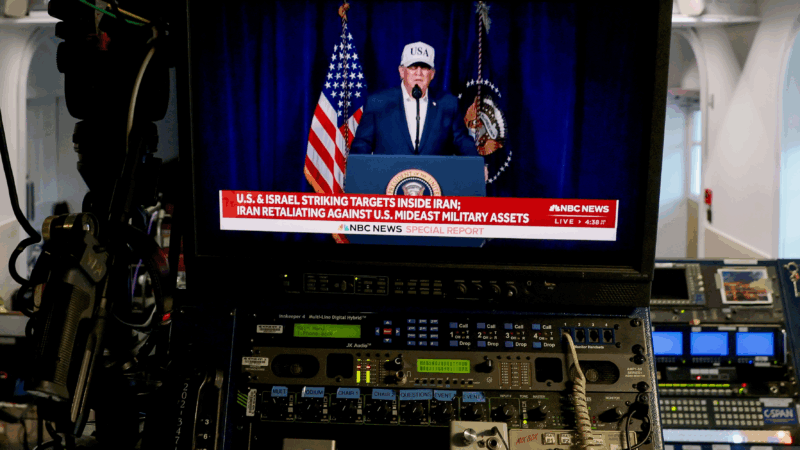
Iran strikes were launched without approval from Congress, deeply dividing lawmakers
Top lawmakers were notified about the operation shortly before it was launched, but the White House did not seek authorization from Congress to carry out the strikes.
Political science expert weighs in on Iran’s nuclear program in light of U.S. strikes
NPR's Scott Simon speaks to Ariane Tabatabai, the Public Service Fellow at Lawfare, about U.S. attacks on Iran and how President Trump's calls for regime change might be received there.
Week in Politics: Does Trump have political support for his actions in Iran?
We look at what President Trump's decision to attack Iran means, what kind of support he has in Iran and what this moment means for his administration.
