
Jefferson County released from sewer consent decree
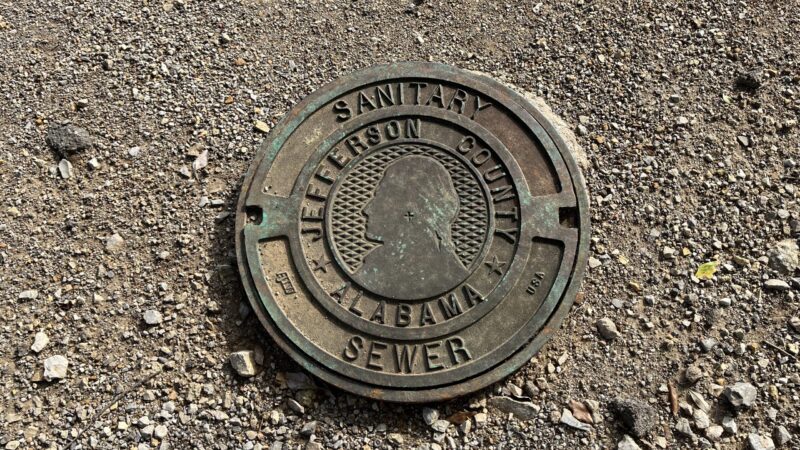
A federal judge on Thursday released Jefferson County from a decades-long consent decree ordering rehabilitation of its sewer system.
The County Commission and the Cahaba River Society, which filed the case forcing the sewer work, filed a joint request to terminate the 1996 consent decree, which also included the Environmental Protection Agency.
As part of the agreement, the county committed to completing several additional capital improvement projects by early 2027 that are planned and funded to further reduce sewer overflows.
The settlement confirms that Jefferson County has met the goals for improving the system’s infrastructure, operations and maintenance under the decree, achieving industry best practices to minimize sewer overflows.
U.S. District Court Judge David Proctor signed the settlement late Thursday, releasing the county from the federal court’s oversight.
“We’re extremely pleased with the progress that the county has made,” said Beth Stewart, former executive director of the Cahaba River Society. “They have a very well-run sewer system now. They’ve made tremendous improvements. We felt it was the time to congratulate them of their progress and close this chapter.”
The society is represented in the case against the county by the Southern Environmental Law Center.
The sewer decree was the last federal consent decree under which the county was operating. Almost four years ago, it was released from a decree that for 45 years had governed its hiring and employment practices.
County Attorney Theo Lawson said Jefferson County is always working toward doing the best it can do to serve its citizens.
“That’s always been our goal and we’re just happy that was recognized by all the parties to the decree,” he said. “All, ultimately, agreed that we should be relieved of it.
“Since I got there, it’s always been my goal to try to make sure the county is compliant with all state and federal laws,” Lawson continued. “After we were able to successfully be released from (the employee consent decree), this was my next goal, to ensure that everybody knew that we were not the same county that we were years ago. It has always been our goal to be in compliance of all laws and to review that and be sure it was appropriate to ask for that termination.”
County Commission President Jimmie Stephens said he feels a great deal of gratification, a great sigh of relief and “a little bit of ‘Attaboy, see what you can get done when you get everything working in the same direction and have everyone focused laser sharp to reach a goal.’
“Throughout the past decade and a half, it’s been one of our primary objectives to be relieved from this consent decree that’s plagued the citizens of Jefferson County,” he said. “I want to thank the staff, our fellow commissioners and our legal staff for working together and to remain laser focused for the continuation and finally the resolution of this consent decree.”

Supreme Court appears split in tax foreclosure case
At issue is whether a county can seize homeowners' residence for unpaid property taxes and sell the house at auction for less than the homeowners would get if they put their home on the market themselves.
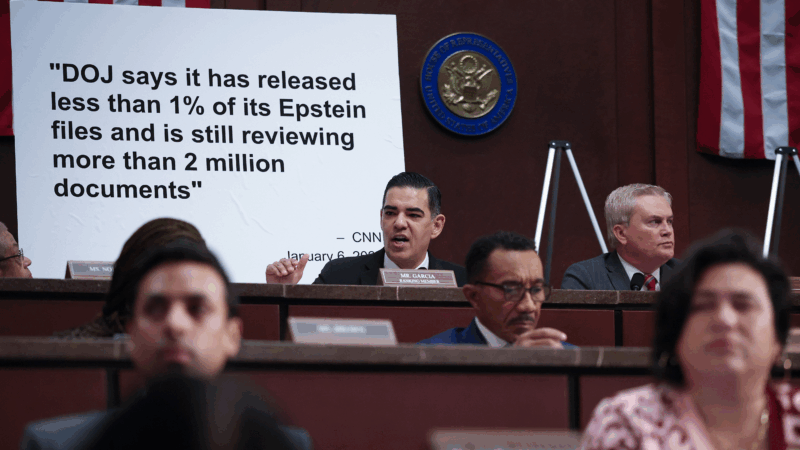
Top House Dem wants Justice Department to explain missing Trump-related Epstein files
After NPR reporting revealed dozens of pages of Epstein files related to President Trump appear to be missing from the public record, a top House Democrat wants to know why.

ICE won’t be at polling places this year, a Trump DHS official promises
In a call with top state voting officials, a Department of Homeland Security official stated unequivocally that immigration agents would not be patrolling polling places during this year's midterms.

Surgeon general nominee Means questioned about vaccines, birth control and financial conflicts
During a confirmation hearing, senators asked Dr. Casey Means about her current positions and her past statements on a range of public health issues.

Rock & Roll Hall of Fame 2026 shortlist includes Lauryn Hill, Shakira and Wu-Tang Clan
The shortlist also includes a 1990s pop diva, heavy metal pioneers and a legendary R&B singer and producer.

This novel about family drama is so good you may want to re-read it immediately
Allegra Goodman's new novel is called This Is Not About Us, but critic Maureen Corrigan says that title is coy: Readers are bound to see aspects of themselves and their families in these pages.
