
Last parent of a child killed in 1963 church bombing dies
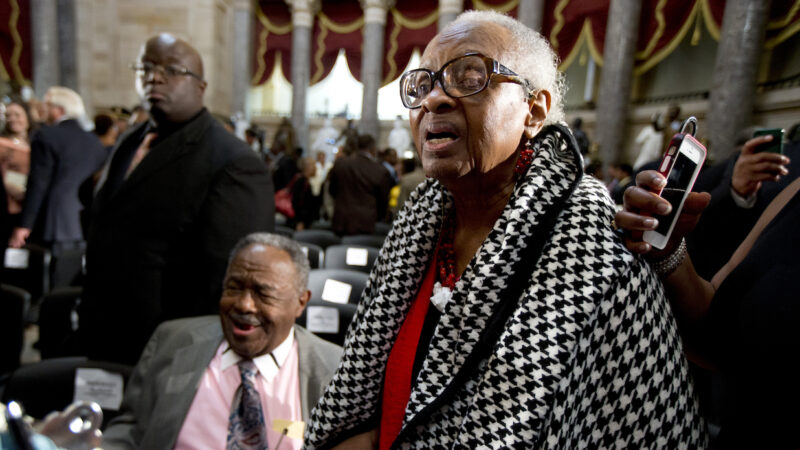
Maxine McNair, right, and Jewell Chris MacNair, left, parents of Denise McNair, the 11-year-old black girl killed in an Alabama church bombing nearly 50 years ago with three other girls, attend a ceremony at the U.S. Capitol in Washington, Tuesday, Sept. 10, 2013, awarding the Congressional Gold Medal to 14-year-olds Addie Mae Collins, Carole Robertson and Cynthia Wesley, and 11-year-old Denise McNair. The ceremony comes five days before the 50th anniversary of their deaths inside the 16th Street Baptist Church in Birmingham.
BIRMINGHAM, Ala. (AP) — Maxine McNair, the last living parent of any of the four Black girls killed in a 1963 Alabama church bombing, died Sunday. She was 93.
McNair’s family announced her death in a press release. A cause of death was not given.
McNair’s daughter, 11-year-old Denise McNair, was the youngest girl killed in the bombing of Birmingham’s 16th Street Baptist Church, the deadliest single attack of the civil rights movement. Also killed were three 14-year-olds: Addie Mae Collins, Carole Rosamond Robertson and Cynthia Dionne Wesley.
Three members of the Ku Klux Klan were eventually convicted in the case, the first in 1977 and two more in the early 2000s.
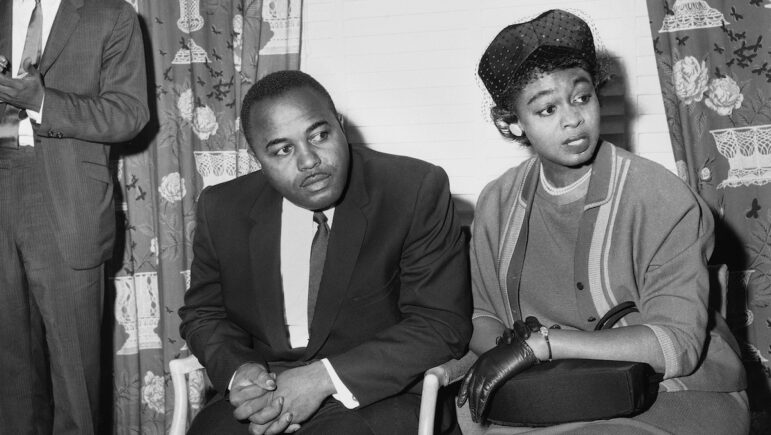
Maxine McNair worked as a teacher for over three decades in Birmingham public schools. Her daughter, Lisa McNair, said she changed many lives through education and left a lasting legacy through the students she touched.
“Mrs. McNair was an amazing wife and mother and as a teacher of 33 years in the Birmingham public school system imparted knowledge in the lives of hundreds. We are going to miss her laughter and her humor. The family would appreciate all of your thoughts and prayers,” the family’s statement said.
Maxine McNair’s husband, Chris McNair, died in 2019 at the age of 93. He was one of the first Black members of the Alabama legislature since Reconstruction and a Jefferson County commissioner.
In 2013, Maxine McNair attended an Oval Office ceremony in which President Barack Obama awarded the four girls the Congressional Gold Medal, one of the country’s highest civilian honors.
Funeral arrangements for a celebration of Maxine McNair’s life are pending.
Denise McNair was one of five girls who had gathered in a downstairs bathroom at the 16th Street Baptist Church on Sept. 15, 1963, when a timed bomb planted by KKK members went off outside under a set of stairs.
The fifth girl and sister of Addie Mae Collins, Sarah Collins Rudolph, was blinded in one eye by the blast. She later provided testimony that helped lead to the convictions of the men accused of planting the bomb.
The church bombing came during the height of the fight for Civil Rights in America, and as Birmingham’s public schools were being desegregated. The four girls became emblems of the racist hatred that emanated from much of the opposition to equal rights.
‘Scarpetta’ is a captivating murder mystery — and a high-wire balancing act
Based on a series of novels by best-selling author Patricia Cornwell, Scarpetta follows two different mysteries from two different timelines. It's structurally complicated — but it all holds up.

‘Derry Girls’ creator returns with a gleeful riff on the murder mystery
In the hilarious Netflix series How to Get to Heaven from Belfast, three women learn that a long estranged school friend has died in a suspicious manner — and take it upon themselves to investigate.

Giant robots battle it out in Detroit’s Robowar
Fighting robots is a cultural fantasy going back at least to Richard Matheson's 1956 story "Steel." One Detroit impresario is now bringing the idea to the stage — and real audiences.
Bill would move Alabama to closed primaries
Right now, any Alabama voter can participate in a primary election. Lawmakers in Montgomery took up a bill this week that would change that system.

Why ‘Sinners’ should win best picture (but probably won’t) — and more Oscar predictions
NPR critics share their hopes and predictions for the 2026 Academy Awards, which air on Sunday.
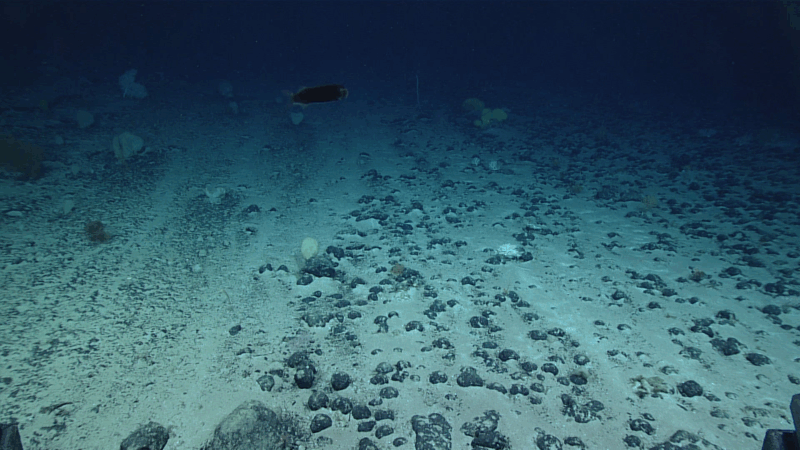
Countries are negotiating rules to mine the deep sea. The U.S. is pushing ahead alone
With growing interest in mining critical metals from the seafloor, countries are now negotiating international rules. The Trump administration is forging ahead on its own, speeding up environmental review for mining the fragile ecosystem.
