
Giving Juries The Last Word On The Death Sentence
In Alabama, nearly 1 in 5 people on death row were sentenced to death through judicial override, according to the Equal Justice Initiative. Judicial override allows judges to impose the death penalty after a jury returns a life verdict, and Alabama is the last state to allow it. Critics have called override unreliable and arbitrary. Now there’s a bipartisan effort in the legislature that could abolish the procedure.
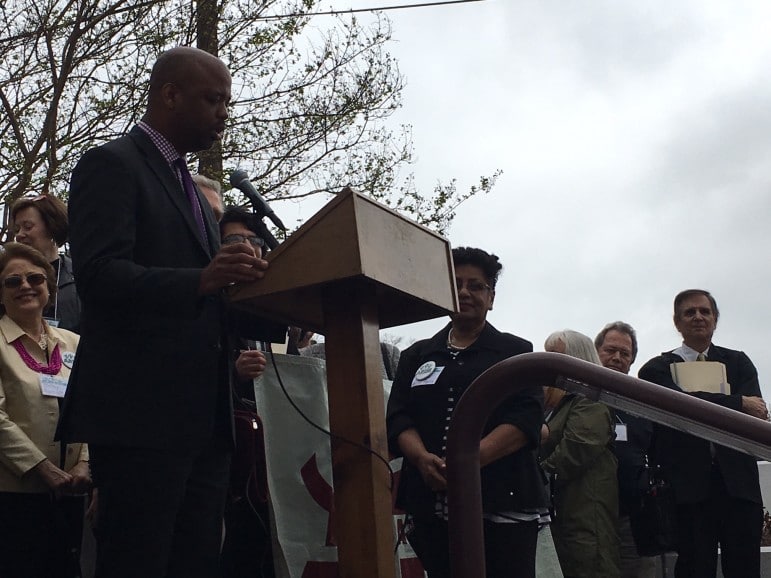
State Rep. Chris England stood outside the State House earlier this week and told a crowd why Alabama should end judicial override. England is sponsoring the House bill that would do just that. And he says Alabama’s distinction as the only state to let judges overrule juries could motivate change.
“My mom used to tell me sometimes, being embarrassed sometimes could make you do the right thing,” England said. “But we’re at this threshold today and I’m hopeful that we’re actually going to do the right thing.”
The House could vote on the measure today. Per capita, Alabama sends more people to death row than any other state.
“Alabama is in love with the death penalty,” says Esther Brown, executive director of Project HOPE, a group that works to abolish the death penalty in Alabama. Brown says this latest legislation is a step that’s long overdue. Part of the problem, she says, is that there’s pressure on judges to dole out harsh sentences.
“They feel that voting for law and order, and we would all like law and order, that means punish them really hard,” Brown says.
One big criticism of override stems from the fact that judges in Alabama are elected. And during election years, the rate of overrides goes up. Sen. Dick Brewbaker, who sponsored a similar judicial override bill this session, says the numbers speak for themselves.
“All the research shows that over half of overrides take place in election years,” Brewbaker says. His bill passed 30-1 in the Senate last week.
In Florida, one of the last holdouts of judicial override, lawmakers ended the practice after the U.S. Supreme Court last year ruled that Florida’s sentencing scheme – which is the same as Alabama’s — was unconstitutional. Kimble Forrister, is state coordinator of Alabama Arise, a citizen’s advocacy group. He says the move to end judicial override here could be a way to preempt similar legal challenges. But the real question, he says, is ‘does Alabama trust its juries?’ Right now, the answer is no.
“It’s kind of outrageous that Alabama doesn’t trust a jury of your peers to make the right decision,” Forrister says.
But if the House approves this measure, Alabama juries considering the death sentence will have the final say.

Israeli soldiers fire on family car in occupied West Bank, killing 4
Israeli soldiers fired on a car carrying a family in the northern West Bank, killing four people including two children, the Palestinian Authority's Health Ministry said.

U.S. military names six killed in plane crash as Iran war enters third week
The conflict in the Middle East has entered a third week, with Israel announcing a barrage of new strikes on western Iran on Sunday, while the U.S. defense department released the names of six service members who died when their military refueling aircraft crashed.
Alabama poised to drastically overhaul utility regulation. Will it lower electric bills?
The Alabama Senate unanimously voted to expand the public service commission, and create a Secretary of Energy to address rising electricity prices. A bill in the House would go even further, requiring rate case hearings and limiting utility profits.

Acclaimed 20th century philosopher Jürgen Habermas dies at 96
Associated with the Frankfurt School, Habermas was a world-renowned thinker on modernity and democracy who helped shape German post-war and post-reunification political discourse.

Why the Chicago Bears could be moving to Indiana
While Illinois is trying to keep the team in Chicago's suburbs, Indiana lawmakers are offering a plan to finance a new stadium

Pentagon tightens controls over Stars and Stripes after calling it “woke”
The new rules for the independent military newspaper are the Defense Department's latest effort to put extraordinary restrictions on journalists covering the agency.
