
Dennis Covington and Revelation: The Search for Faith in a Violent Religious World
Birmingham native, Dennis Covington, teaches creative writing at Texas Tech University in Lubbock, TX. He is the author of six books, most notably Salvation on Sand Mountain, about the trial of a snake-handing preacher who tried to kill his wife with a rattlesnake. His latest work is Revelation: the Search for Faith in a Violent Religious World. Revelation is part memoir and part war reportage on the Syrian civil war.
When asked about why his search for faith took him to dangerous places like Syria, he says: “I guess it’s because I found faith in El Salvador during their civil war in the 1980s. I was a drunk for twenty years. I was a pretty hopeless case.
“I had gone to church with my family when I was young, but the bombing of the 16th Street Baptist Church did it for me. When I went to El Salvador in my early 30s, something happened to me. The suffering there just got to me, and I quit drinking.”
Coving says his interest in Syria was a primary motivation for writing the book. “I wrote up a proposal about it, but I didn’t phrase it that I was going to cover the Syrian civil war. I simply said I was going to places where cultural and religious borders collided. One of those places happened to be Antioch which is where Christians were first called Christians, and Paul made his journeys to spread the Gospel to the Western world,” Covington says.
Many scholars consider Syria and Turkey to be the birthplace of the great monotheistic religions.
When asked why this landscape has been such a battlefield throughout history, he says: “I don’t know that I can answer that except to say it has something to do with religion.
“I don’t think it has much to do with faith. Those two things are different. Religions I associate with doctrine and dogmas. People have been killing themselves over religion for centuries, but faith is something different. It’s the substance of things hoped for. I was looking for that definition of faith, and I think I found it in several places. I found it just as much among non-believers and believers,” he says.
The Syrian civil war has created the biggest refugee crisis since World War II. While in Turkey, Covington met a British couple who seemed to underscore his definition of faith.
“Their dream was to bring an ocean-going shipping container full of supplies for refugees in Syria, but ISIS had taken over,” he says, adding that the couple was undeterred.
“They wound up going to Lebanon, and it happened the refugee camp they were going to had been attacked by ISIS and the al-Nusra Front, an al-Qaeda linked group. They had set fire to the camp and killed about 50 civilians. These two Brits were able to get that container in with 10 tons of food, an ambulance, medical supplies, clothing, and books to the camp. When it was unloaded, the container was wired and insulated and turned it into a clinic. Now that’s the substance of things hoped for. That’s faith. It’s not empty words. It’s not sitting in a pew singing ‘Amazing Grace’.
Dennis Covington made three trips across the Turkish border to Aleppo, Syria, which has been in the news lately for the humanitarian crisis there. Aleppo is a war zone, and on his last trip there, he suffered a brain injury.
“We were coming out of the old part of the city, and there was this loud blast. I knew then that I’d been injured. Nobody around me seemed to notice it,” he says. According to Covington, the other occupants of the car treated this as business as usual. “I was interviewing a guy, and I continued with the interview. I told everybody that something had broken inside my head. When I returned to Texas, my symptoms got really bad, and I went to the emergency room. They did a CAT scan, and I had what’s called a subdural hematoma. It was acute, and I should probably have died, or at least, that’s what I was told,” he says.
The conversation concluded with Dennis Covington reading a passage from his book.
“Faith, as St. Paul said in his letter to the Galatians, is a fruit of the spirit, and a fruit is something tangible, life sustaining, a gift. But I don’t think the gift of faith comes from a church or a religion. I think it comes from the same source as life does, and I think it first arrived in our consciousness as a conviction that life had meaning. We knew that we hadn’t invented ourselves, nor the garden in which we had first woke up. We didn’t have to kill ourselves or someone else in order to arrive in paradise. It was already there all around us. All we had to do was keep ourselves from destroying it and reconcile ourselves to the truth that just as we would someday have to leave it, we would as surely leave a bit of it behind.”
Russian strike on Kyiv region kills 4 and wounds 15, with peace talks stalled
The strikes comes after the United States paused ceasefire talks between Russia and Ukraine due to the war with Iran.
As the risk of measles grows, why are parents so divided on vaccines?
In South Carolina, some parents embrace vaccines, others opt out. Why do people make such different choices? A mix of politics, distrust and misinformation is pushing neighbors apart.
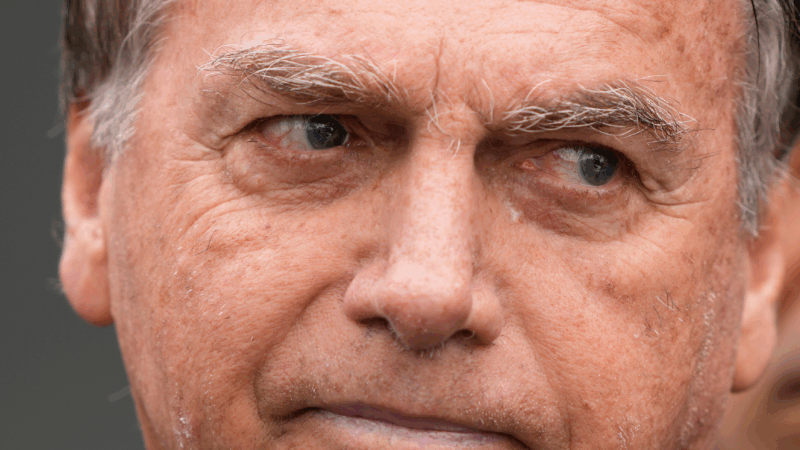
Brazil’s ex-President Bolsonaro is in intensive care with pneumonia, hospital says
One of Bolsonaro's doctor's described the former Brazilian president's medical condition as "serious."
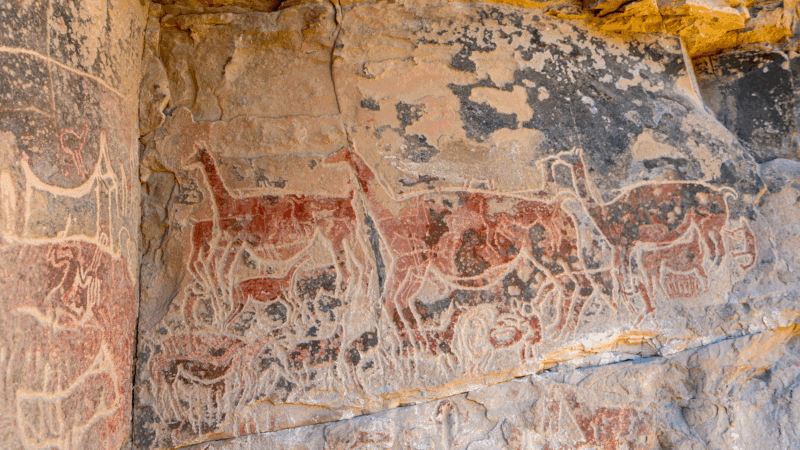
Opinion: An ancient, sophisticated palate
Researchers looking at foodcrusts on the pottery shards of ancient humans say there's evidence of a wide variety of ingredients, indicating that they may have been experimenting with "recipes."
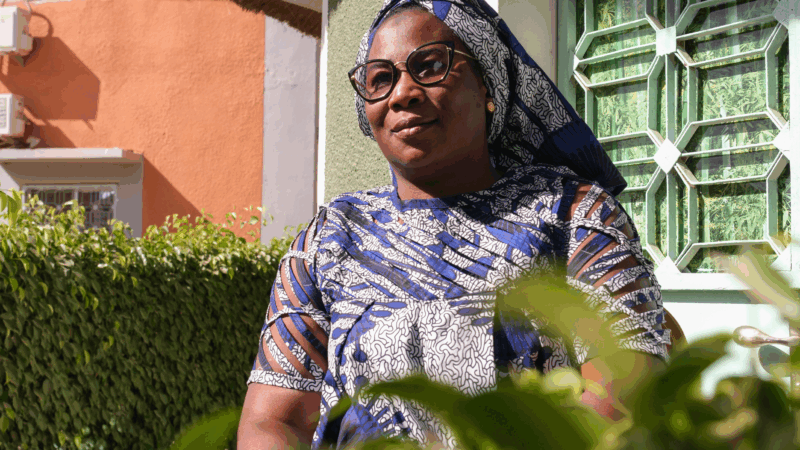
Why women have an especially tough time in Senegal’s prisons
Women charged with a crime in Senegal are at the mercy of a slow judicial process and prisons that may lack basic supplies. They also face stigma that robs them of familial and community support.
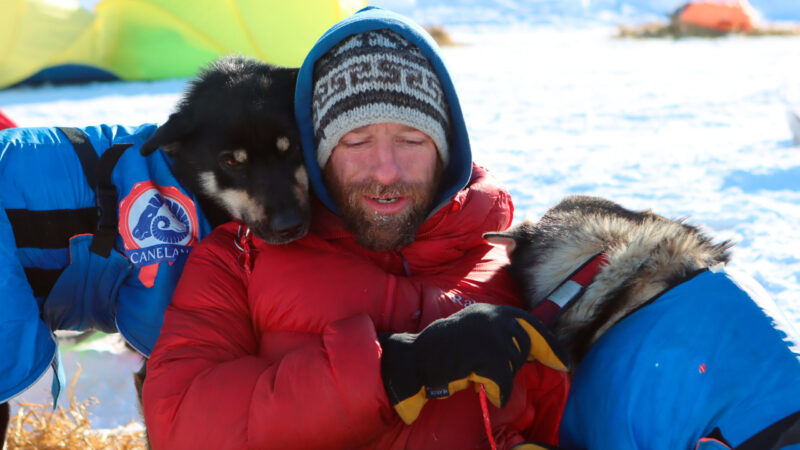
Musher from Alabama is going for back-to-back Iditarod wins
Riches and paid appearances haven’t followed Jessie Holmes since he won the world’s most famous sled dog race, the Iditarod, last year. He doesn't mind.
