
Businesses’ Take on the Birmingham Business Alliance
Local business owners are closely watching what direction economic development takes since the formation of the Birmingham Business Alliance. The merger between the Birmingham Regional Chamber of Commerce and the Metropolitan Development Board took place a few weeks ago. The Alliance covers a large swath of central Alabama, including Jefferson, Shelby and five neighboring counties. The union sounds great on paper, but what does it really mean for local businesses? WBHM’s Varun Krishnan reports.
It’s dinner time and crowded at the J Clyde restaurant on Birmingham’s Southside. Waiters bustle from table to table, taking orders and delivering food. J Clyde was a member of the Birmingham Chamber of Commerce before the merger and owner Jerry Hartley says he’s optimistic.
“I feel like we have a new beginning.”
Hartley says the Birmingham Business Alliance will help change the way the city does business. For example, he hopes various groups wouldn’t have to fight for resources anymore, which is especially important in this tight economy.
“I guess, like a lot of businesses, these days especially, is having people come in and continue to buy your product. It’s a tough economy. But the challenge is bringing in people from outside of Birmingham.”
Hartley’s not alone. Ralph Moore is President and CEO of the AHI group, which provides corporate housing. He says the new alliance will give the city a unified voice to attract more diverse businesses from out of state.
“We have a lot of medical professionals still, and some in the automotive industry. But, for example, banking is just gone, just left the city.”
Attracting more diverse businesses is exactly what the Birmingham Business Alliance would do, says Beck Taylor, Dean of the Brock School of Business at Samford University. He says the alliance creates a more efficient way of promoting the seven-county region to outside investors.
But Taylor says the biggest challenge the Business Alliance faces is establishing credibility with local business owners.
“I think there are some legitimate questions in the market place as to the mission of the new organization, how it will be run, how the benefits would accrue to membership.”
Another challenge is the geographic scope of the alliance, but Taylor says there’s strength in numbers.
“The Birmingham Business Alliance does try to cover a very wide and diverse swatch of business here in central Alabama. But the alternative model, as you know, would be a model where each individual county or groups of counties will try to do the same kinds of things. I tend to think that there’s strength in geographic alliance.”
Even other economic development boards support the Business Alliance. David Fleming is Executive Director of Main Street Birmingham, a non-profit devoted to both community and economic development. He says too often, business leaders separate the two. But, he says the Birmingham Business Alliance is different because it will approach development more holistically. Even so, Fleming cautions…
“Early on, we heard a lot of talk about cost savings as being one of the real benefits or reasons to do this. While there may be some minor savings and operational savings over time, I don’t think that doing economic development in Birmingham needs to be thought of as let’s do this cheaper. I think we need to be really investing in big ways in economic development in the city.”
That’s something business owners like to hear.
Back at the J Clyde, owner Jerry Hartley hopes the merged Birmingham Business Alliance will be greater than the sum of its two previous economic development parts.
“I think that it would be great if the city of Birmingham and the region, could do a lot to promote Birmingham and to point out what the city has to offer.”
Just one of the varied expectations of the new business alliance, an organization that prompts cautions optimism among these business professionals.
~ Varun Krishnan, August 4, 2009.

Kalshi reveals insider trading case against editor for MrBeast
With prediction markets booming, so have concerns about insider trading. Now, Kalshi has disclosed its first public actions against accounts suspected of trading on confidential information.
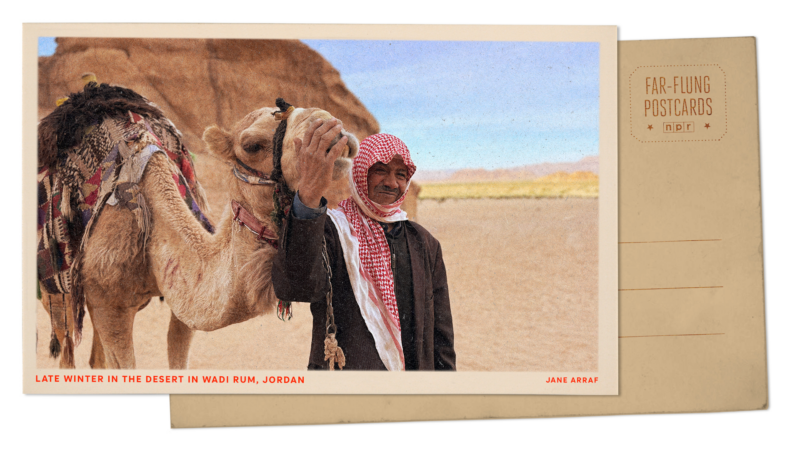
Greetings from Jordan’s Wadi Rum desert, where patches of green emerge after winter rains
Wadi Rum's otherworldly landscape is where Star Wars movies and The Martian were filmed. In late winter, plants emerge in this desert — but some are toxic to camels, so their herders must protect them.
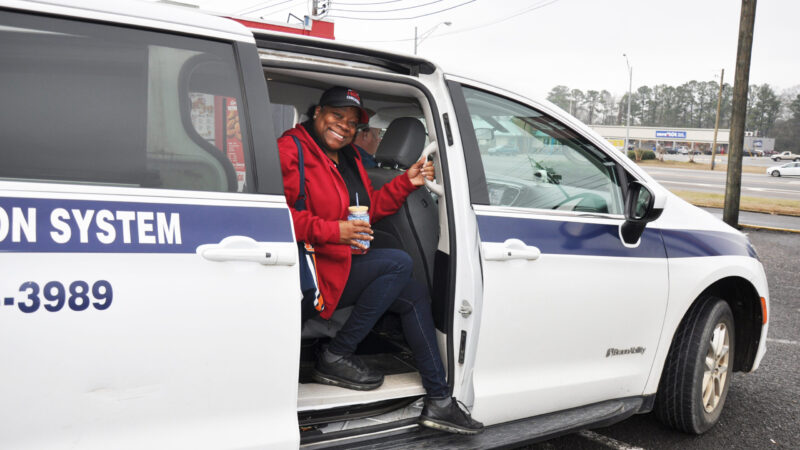
Lack of transportation keeps many Alabamians from working. Rural public transit programs are trying to help
While lack of transportation is a major employment barrier in Alabama, few people take public transit to work. That dynamic is even more pronounced in rural areas.

When a horse whinnies, there’s more than meets the ear
A new study finds that horse whinnies are made of both a high and a low frequency, generated by different parts of the vocal tract. The two-tone sound may help horses convey more complex information.
Hundreds of American nurses choose Canada over the U.S. under Trump
More than 1,000 American nurses have successfully applied for licensure in British Columbia since April, a massive increase over prior years.

Trump’s many tariff tools mean consumer prices won’t go down, analysts say
The Supreme Court struck down President Trump's signature tariffs. But the president has other tariff tools, and consumers shouldn't expect cheaper prices anytime soon, economists say.
