
Music Therapy
Music therapy is at once – old and new. Still considered a “new age” alternative treatment by many – the practice actually dates back centuries. In the Old Testament, King David is said to have cured an illness by playing on the harp. Ancient Greek philosophers hypothesized that music could restore balance and in Africa, tribal medicine men use drums and other instruments to drive out evil spirits. More recently, music therapists have been using their guitars and voices to treat stressed and depressed tsunami victims in Southeast Asia. Closer to home — music therapy has found a place at UAB hospital’s neonatal intensive care unit. Research suggests that music therapy may lead to speedier neurological development in premature babies. Matthew Leong was one of those babies. He was born four months early — a micro-preemie who tipped the scale just shy of a pound. David Leong is Matthew’s dad.
“They didn’t expect him to make it through the weekend, but he did. they didn’t expect him to make it through the week, he did.”
After five months in the NICU, Matthew went home and soon after started a regiment of therapy. Physical therapy, occupational therapy, speech therapy… and eventually, as a student at United Cerebral Palsy’s Hand-in-Hand child care facility — music therapy. Rochelle Loney is Hand-in-Hand’s music therapist.
“When I first started working with matthew in a group setting, he was pretty quiet. He would still be sitting in the chairs while everybody else would be moving around in the center of the room. he might get up towards the end of the activity
and experiment to see if he can get up. when we would sing hello to him he would just curl up in a ball and maybe move his fingers just a little bit for a wave.”
But after a year of music therapy, Loney says, Matthew was right in the thick of things… dancing and singing with all the other kids.
Matthew Leong is one lucky boy. Many micropreemies – if they survive – suffer brain bleeds and other disabling traumas as infants. Matthew does have some vision loss in his left eye. Hiis retina detached as a result of oxygen treatments in the NICU. He also was a bit speech delayed, but his father says music therapy seemed to help.
“All the sudden, you couldn’t shut him up! He just started talking, you know, I can’t say for sure music therapy is the one that started him talking, but I think it certainly helped because when he came home you could tell that he was singing more. I have a guitar at home and he would point to the guitar and want me to play for him. And when he watches his videos or he watches TV, when they would start singing he would start signing with the music as well.”
Proponents say the therapy works on many fronts. Communication is just one. There’s also the physical therapy — disabled kids learn to hold and play instruments — and, Rochelle Loney says, it helps cognitively.
“Especially in traumatic brain injury. If one side of the brain is affected you can definitely start teaching the person through music how to use things that have been damaged on that side of the brain and somehow it just starts connecting again. Or if you’ve really lost one side of the brain you’re building up skills on the good side of the brain and it’s pretty remarkable how they can relearn things.”
Gary Edwards is Executive Director of United Cerebral Palsy.
“You know my background is as a psychologist, and I’ve worked with kids with and without disabilities for many years and teaching kids to learn. I knew that music has a lot of help in brain development, has socialization, language development and movement. I knew all those things. BUT – I really didn’t realize the power of music and what’s happening here. And the best I can explain is, I was talking to a mother. She has a child, 2 or 3 years old, with downs syndrome and she said, it gave me chills when I saw my baby, sitting on the steps, rocking her baby doll and singing to the baby. Too often in a classroom we do something and it has no carryover to the outside. This does. This does.”
Still, it can be a tough sell. Only about 20% of music therapists receive third party reimbursement for their services. Some states, like Arizona, Minnesota and Michigan, authorize Medicaid spending for music therapy for developmentally disabled children but that’s not consistent nationwide. Some of the larger private insurers are starting to cover music therapy, but again, that’s not consistent nationwide. Proponents expect those numbers to grow as the discipline moves into the mainstream. There are now 70 college programs nationwide that offer advanced degrees in music therapy. The University of Alabama is one of them.

In Vermont, small town meetings grapple with debate on big issues
Typically concerned with local issues, residents at town meetings in Vermont and elsewhere increasingly use the forum to debate polarizing national and international events.

Alabama man, on death row since 1990, to get new trial
The U.S. Supreme Court on Monday declined to review the summer ruling from the 11th U.S. Circuit Court of Appeals. The decision paves the way for Michael Sockwell to receive a new trial.
Supreme Court blocks redrawing of New York congressional map, dealing a win for GOP
At issue is the mid-term redrawing of New York's 11th congressional district, including Staten Island and a small part of Brooklyn.
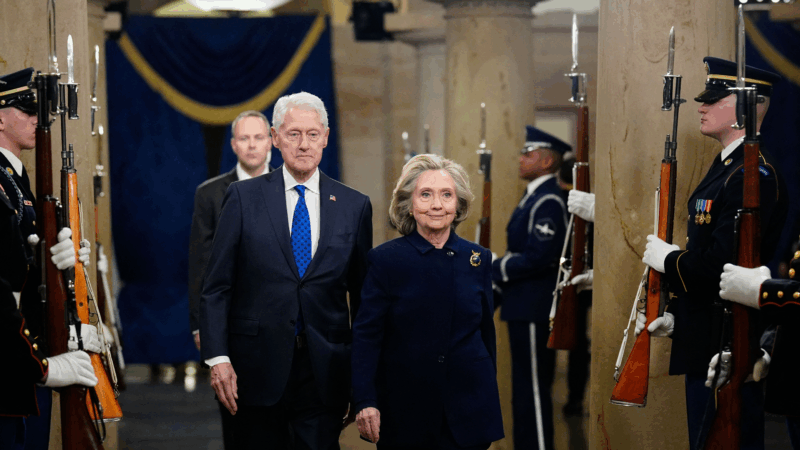
Video of Clinton depositions in Epstein investigation released by House Republicans
Over hours of testimony, the Clintons both denied knowledge of Epstein's crimes prior to his pleading guilty in 2008 to state charges in Florida for soliciting prostitution from an underage girl.
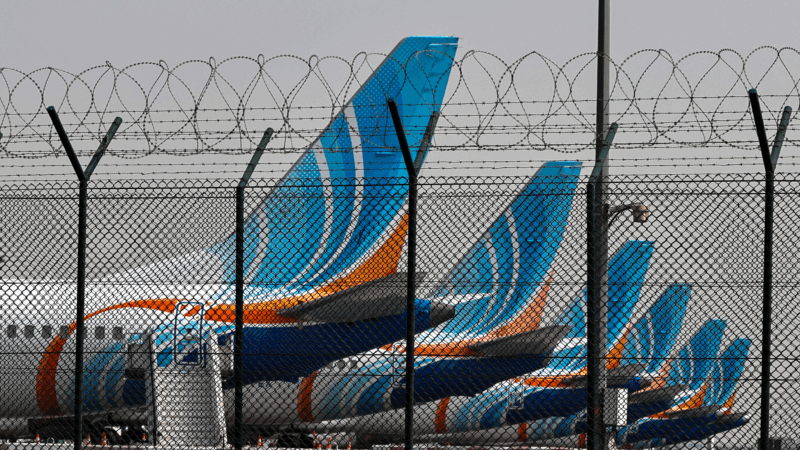
Some Middle East flights resume, but thousands of travelers are still stranded by war
Limited flights out of the Middle East resumed on Monday. But hundreds of thousands of travelers are still stranded in the region after attacks on Iran by the U.S. and Israel.

Oil prices surge, but no panic yet, as Iran war continues
Global oil prices are in the high $70s as traffic through Strait of Hormuz comes to a halt. Some analysts have warned they could top $100 a barrel if the stoppage is prolonged.
