
Living with Arthritis: Joseph’s Story
“On sunny days like this I don’t hurt as much, but on rainy days I kinda hurt. And my usual score of one to ten of hurting is usually, sometimes 5 and under. It doesn’t do it that bad.”

Joseph’s mom, Amy Lanzelone-Lang still remembers the day three years when Joseph was diagnosed.
“It was very, very scary. One Friday, I think it was the Friday after the fourth of July, I was drinking my coffee in the kitchen and I happened to look down the hall and he was holding on to the walls as he was coming down the hallway. And it was one of those parenting moments when you went, mmmm, something’s not right.”
Lang’s husband rushed Joseph to Children’s Hospital where an MRI revealed that Joseph had arthritis in both ankles, both knees and several fingers. Looking back, there were earlier signs that something might be wrong, but the Langs had dismissed them. That’s common with JRA.
“He would occasionally say, oh my knee hurts and we would look at his knee… it was not swollen. There were no bug bites. There were no scrapes. But then in the afternoon he’d be running around, so we thought ahhhh it’s no big deal.”
The disease is not life-threatening, but certainly life-changing. The family can’t stroll the mall or take long shopping expeditions to Walmart. Joseph can’t be on his feet that long. And then there’s the medicine. When the disease flares up Joseph takes 40 to 50 pills a week, plus two injections weekly.
“Mom says it’s the needle or the medicine that tastes like glue.”
No contest! Josephs opted for the injections, which he says work really well and have improved his basketball game. Joseph has even given his drugs knick-names, like superheros. Naprosin is “the pusher” because it pushes the JRA out of the way. Methatrexate is “the bully” because it knocks out the JRA… and the weekly injections? Well, they’re “the shooter”, of course.
Amy Anzelone-Lang says the medical part of the disease is getting easier. Joseph is still in a lot of pain on a regular basis, but the drugs help. It’s the emotional components that are a growing problem.
“It’s not like he, that his hair is gone because of chemo treatments or that he’s in a wheelchair permanently… it’s largely unseen. And to deal with the emotional issues when your child comes home and someone at school has called him slowpoke or the kids are playing soccer and they’re all exceptionally good soccer players and he has to sit out on the side because he can’t do that.”
“My buddy Holt, he’s the fastest kid in our classroom… when I get it for tag or something he says you have to slow down because joseph has JRA.”
But his mom worries that things will get tougher for Joseph socially as he enters his teen years. There’s increased peer pressure to fit in, dating, and driving – will he get a handicapped permit or try to tough it out? She says she’s already seeing a change in her fourth-grader.
“Because he used to be fairly open and we would do, what are your numbers – that’s our code for how are you feeling and he would rattle off the numbers. And then after we did this for about a year he would say, don’t ask me so many times. So we do one in the morning and one at night. And now, even when I can see that he’s limping I get – no, I’m fine. No I’m fine! He doesn’t want to talk about that. So really right now that’s been the hardest thing for me to cope with is this sweet child who was so willing to discuss this and he was open to my questions and to my guidance, to now being – I don’t want to talk about it.”
How much of that is wanting to shield his mom and dad from his pain and how much is pre-teen rebellion — who knows.
Amy Anzelone-Lang says she’s only cried twice over Joseph’s disease. The day he was diagnosed and the day his pediatric rheumatologist moved away from Birmingham. Dr. Polly Ferguson had been the only pediatric rheumatologist in the state. Now there are none, even though thousands of kids suffer from the disease. WBHM’s Rosemary Pennington spoke recently with Dr. Ferguson, who is now with the University of Iowa. Listen to the interview with Dr. Ferguson.
Researchers don’t know what causes juvenile rheumatoid arthritis… but they suspect it might be a virus that gets into a person’s genetic code. For more information on juvenile arthritis:

Ilia Malinin’s Olympic backflip made history. But he’s not the first to do it
U.S. figure skating phenom Ilia Malinin did a backflip in his Olympic debut, and another the next day. The controversial move was banned from competition for decades until 2024.
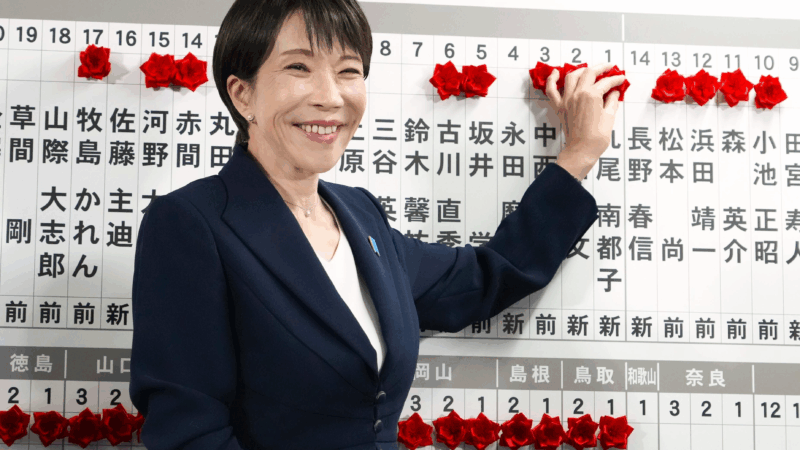
Japan’s Takaichi to pursue conservative agenda after election landslide
Japan's first female Prime Minister, Sanae Takaichi, brought the ruling Liberal Democratic Party its biggest-ever electoral victory, fueling her ambitions to pursue to a political agenda which she says could "split public opinion."

Olympic COVID restrictions are gone, but some athletes are still self-quarantining
For most people, the pandemic days of masking are behind them. In certain corners of the Winter Olympics, though, things still look a lot like they did in COVID times. Some athletes are taking extreme measures to stay healthy.

Mikaela Shiffrin has battled grief, PTSD and freak injury. Now come the Olympic Games
Shiffrin became a celebrity at 18 years old after becoming the youngest-ever skier to win Olympic slalom gold. Since then, she has faced grief, PTSD and freak injury — yet she is ready to bounce back.

As US Olympians call for tolerance and LGBTQ rights, some face Trump attacks and online hate
President Trump called U.S. Olympic skier Hunter Hess a "loser" after Hess voiced concern about political turmoil in the U.S. Gold medal U.S. figure skater Amber Glenn says she's faced online hate and threats after advocating for LGBTQ rights.

Four top U.S. speedskaters to watch at the Olympics
U.S. speed skaters set to compete in Milan are drawing comparisons to past greats like Eric Heiden, Bonnie Blair, and Apolo Ohno. Here are four to watch in the 2026 Winter Olympic Games.
