
Why don’t we remember being babies? Brain scans reveal new clues
Tristan Yates has no doubt about her first memory, even if it is a little fuzzy.
“I was about three and a half in Callaway Gardens in Georgia,” she recalls, “just running around with my twin sister trying to pick up Easter eggs.”
But she has zero memories before that, which is typical. This amnesia of our babyhood is pretty much the rule.
“We have memories from what happened earlier today and memories from what happened earlier last week and even from a few years ago,” says Yates, who’s a cognitive neuroscientist at Columbia University. “But all of us lack memories from our infancy.”
Is that because we don’t make memories when we’re babies, or is there something else responsible? Now, in new research published by Yates and her colleagues in the journal Science, they propose that babies are able to form memories, even if they become inaccessible later in life.
These results might reveal something crucial about the earliest moments of our development. “That’s the time when we learn who our parents are, that’s when we learn language, that’s when we learn how to walk,” Yates says.
“What happens in your brain in the first two years of life is magnificent,” says Nick Turk-Browne, a cognitive neuroscientist at Yale University. “That’s the period of by far the greatest plasticity across your whole life span. And better understanding how your brain learns and remembers in infancy lays the foundation for everything you know and do for the rest of your life.”
Babies are the worst — subjects
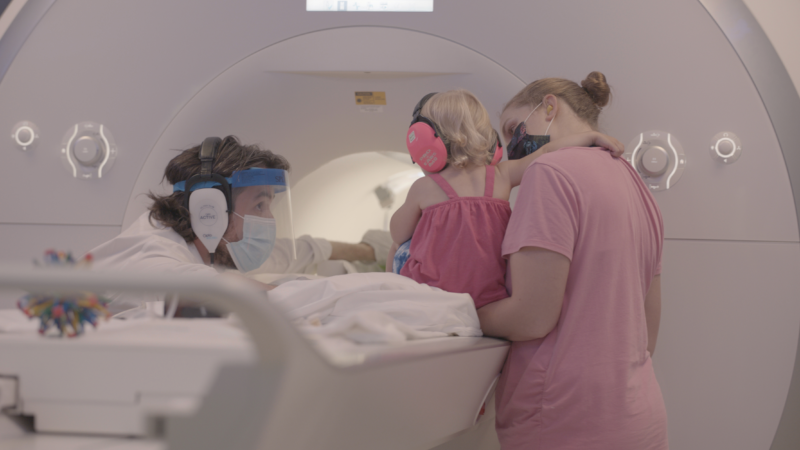
There’s a reason we don’t know much about infant memories. One of the best ways to look deep in the brain is with an fMRI (functional magnetic resonance imaging) machine, which requires a person to remain still for an extended period of time — but just try to get a baby to cooperate with that!
“Infants in many ways are the worst possible subject population,” admits Turk-Browne. “They don’t understand instructions. It’s like taking a photograph — you get a blurry picture [so] you can’t move a millimeter. And also they have really short attention spans. So we had to adapt.”
Turk-Browne and his colleagues have spent nearly a decade figuring out how to do fMRI research on babies. They have come up with all sorts of tricks to keep them happy and engaged. If they cry, the experiment stops so the baby can play or go for a walk. “We have them bring comfort items like a pacifier or a blanket or a toy,” he says. “I’ve given babies a bottle during these scans.”
The researchers nestle the baby in bedding, the child’s parent is always in the room with them, and the tasks required of them are short. “It’s the only way to be able to ask what’s going on in the infant’s mind despite not being able to ask them questions,” says Turk-Browne. “You can look at their brain and their brain has the answers.”
Screen time in the name of science
Here’s how this particular experiment went down. The babies were shown a video inside the fMRI machine. Throughout, the background displays a green kaleidoscopic pattern — “this kind pf psychedelic screen meant to have infants fixate towards the center of the screen,” says Yates.
Then, one image at a time appears for two seconds before disappearing. These are images that they have never seen before — a canyon, a dog toy, a woman’s face.
“About a minute later,” says Yates, “we show them one image they just saw alongside a different image from the same category.” That could be the canyon, say, alongside a waterfall.
If the baby remembered seeing the canyon earlier, the child will look longer at the canyon than at the waterfall. “It’s as if you’re still learning about it, so you’re looking at it more,” says Turk-Browne. “It’s only really when they have a preference for the familiar thing that we take that as evidence of successful memory formation.”
This procedure gave the researchers an indication as to which images the baby remembered, and which they forgot.
Meanwhile, the fMRI was snapping pictures of the baby’s brain, including its hippocampus, “a region that we know is super important for memory in adults,” says Yates.
The scans revealed that starting at about 12 months of age, the more activity there was in the baby’s hippocampus when seeing an image for the first time — like that canyon — the more likely they were to remember that image later.
“What we’re able to conclude is that the hippocampus can encode individual memories, even in human infants,” says Yates. She and her colleagues say it’s evidence that a memory has formed in the baby’s hippocampus.
Unlocking our earliest moments
These results allow scientists to “put the time stamp of our first memory a little bit earlier than when we thought possible,” says Flavio Donato, a neurobiologist at the University of Basel who wasn’t involved in the research.
He says it now appears that infancy isn’t a passive, forgettable stage of our lives — a relevant consideration for how we raise and educate children, and even how we understand early trauma or stress.
“It’s an important question,” says Donato, “how these traumatic events might lead to memories or traces in the brain that might persist for a long time and might even influence the way in which this person will develop.”
There’s still a lot to figure out. Just how durable are the memories we may be storing as infants? And if they’re still there, locked away in our older brains, are they forever off limits?
“The question is,” asks Turk-Browne, “could you circumvent that in some way to help kids, or adults even, potentially reactivate old memories?”
To try to answer this question, the researchers are performing another study in which they ask families to record home videos from their baby’s perspective. Later, in the lab, when they play those videos for the infants, they will look to see what’s happening in the infant’s hippocampus — and just how long those earliest of memories may persist.
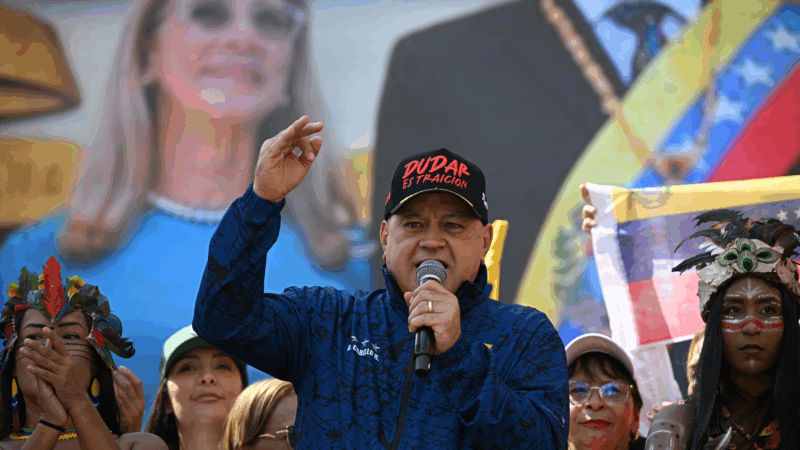
Venezuela: Maduro’s enforcer Cabello still central to power
The ousting of Venezuela's president raised hopes of change — but the politician now controlling the streets shows how little has really shifted.
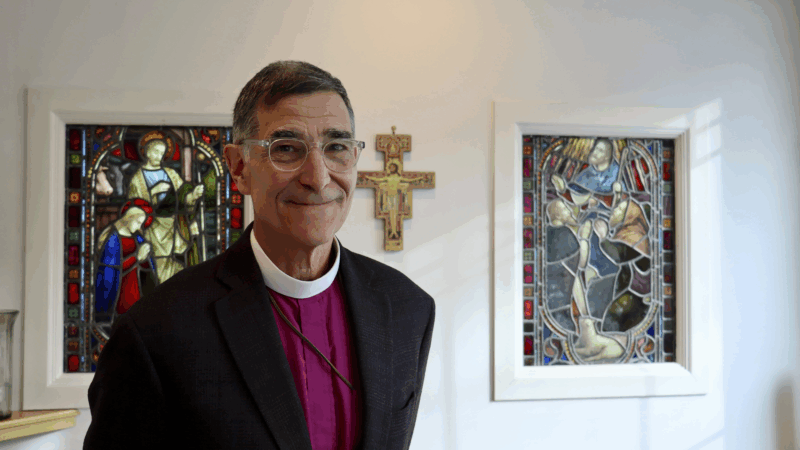
Amid ICE clashes, New Hampshire bishop urges clergy to prepare their wills
The Episcopal bishop of New Hampshire told priests protesting ICE to get their wills and affairs in order. Some praise the bishop, while other priests say they never signed up to be martyrs.

New York Giants hire John Harbaugh as coach after identifying him as their top choice
Harbaugh joins the Giants 11 days after he was fired by the Baltimore Ravens. The Super Bowl champion is now tasked with turning around a beleaguered franchise.
US launches new retaliatory strike in Syria, killing leader tied to deadly Islamic State ambush
A third round of retaliatory strikes by the U.S. in Syria has resulted in the death of an Al-Qaeda-affiliated leader, said U.S. Central Command.

NASA rolls out Artemis II craft ahead of crewed lunar orbit
Mission Artemis plans to send Americans to the moon for the first time since the Nixon administration.
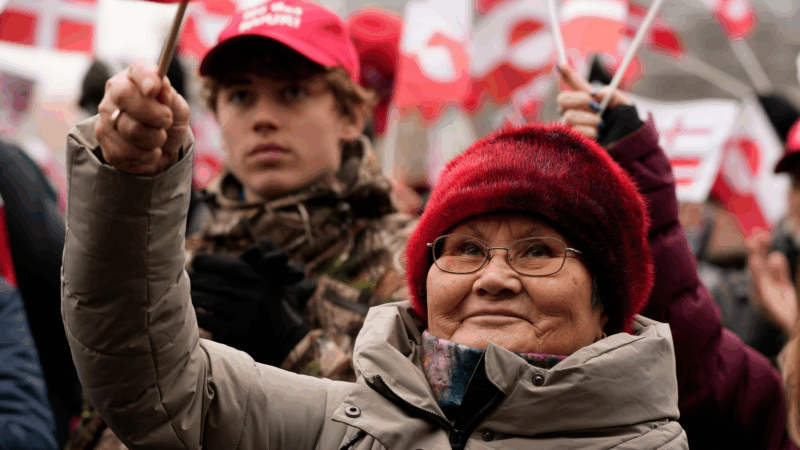
Trump says 8 EU countries to be charged 10% tariff for opposing US control of Greenland
In a post on social media, Trump said a 10% tariff will take effect on Feb. 1, and will climb to 25% on June 1 if a deal is not in place for the United States to purchase Greenland.
