
Federal judge strikes down Trump’s order suspending asylum access at the southern border
A federal judge in Washington, D.C. ruled Wednesday that the Trump administration cannot deny entry to people crossing the southern border to apply for asylum. The court found that neither the constitution nor federal immigration law allow the president to make that decision.
The proclamation to deny entry to asylum seekers at the southern border was issued by President Trump on his first day in office.
Asylum has been part of U.S. law since 1980, allowing those who fear for their safety to seek refuge in the U.S. as long as they can show a credible fear of persecution in their home country. In the past, other U.S. presidents had attempted to make asylum seeking more difficult, but the scope of Trump’s order was unprecedented.
“This is a flat-out ban on all asylum,” Lee Gelernt, deputy director of the ACLU’s Immigrants’ Rights Project told NPR in January. “This is way beyond anything that even President Trump has tried in the past.”
Several immigrant rights advocacy groups filed a lawsuit to halt the policy in February, including the ACLU, the Texas Civil Rights Project, and the National Immigrant Justice Center. They argued that the proclamation endangered thousands of lives of those fleeing violence and persecution in their home countries.
In his 128-page ruling, U.S. District Judge Randolph D. Moss wrote that “The President cannot adopt an alternative immigration system, which supplants the statutes that Congress has enacted.”
Immigrant rights groups took issue with the president’s repeated characterization of the situation at the southern border as an “invasion.”
The ruling will take effect in two weeks, and the Trump administration is expected to appeal. In a post on X, White House Deputy Chief of Staff Stephen Miller blasted the decision: “a marxist judge has declared that all potential FUTURE illegal aliens on foreign soil (eg a large portion of planet earth) are part of a protected global ‘class’ entitled to admission into the United States.”
Opinion: The immorality of betting on war
Traders on prediction markets bet on nearly anything. One made more than half a million dollars betting on the U.S. strike against Iran. But should people wager on human suffering?
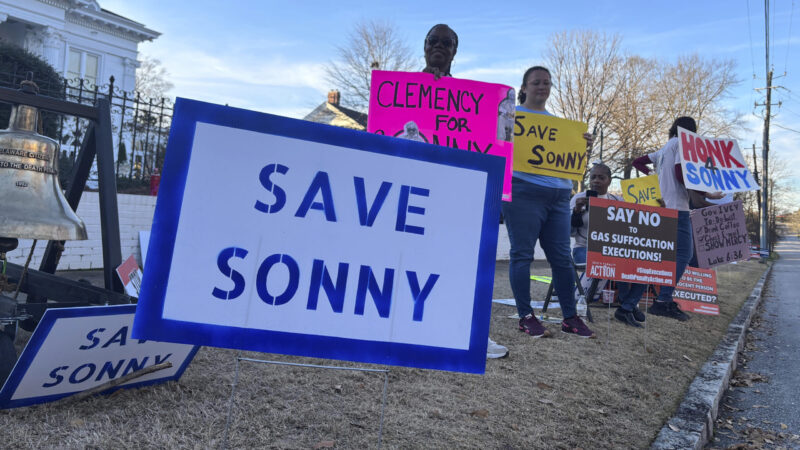
Alabama man facing execution for deadly robbery asks for clemency as he didn’t kill victim
Charles “Sonny” Burton is scheduled to be executed March 12 for his role in a 1991 robbery in which a man was fatally shot. His supporters and attorney are asking the governor for clemency, arguing that his life should be spared because Burton didn’t fire the gun or witness the killing.
One week into the Iran war, the fallout is global
The war is no longer just about the U.S., Israel and Iran. More countries are getting caught in the political crossfire or being drawn into the fighting themselves.

Curling had its moment at the Olympics and now Paralympics. It sparked a curling bonanza in America
Hundreds of people become interested in curling every four years and the 2026 numbers already show that boom.
Iran’s president defies U.S. demands while apologizing for strikes on neighbors
President Masoud Pezeshkian said Saturday that a demand by the U.S. for an unconditional surrender is a "dream that they should take to their grave." He also apologized for Iran's attacks on regional countries.
What the Trump administration says about why it went to war with Iran
The Trump administration says it is "laser focused" and mission driven, but the messaging has been varied. The range of cited motivations for striking Iran now are sometimes at odds with each other.
