
Entire staff at federal agency that funds libraries and museums put on leave

The Institute of Museum and Library Services has placed its entire staff on administrative leave.
The IMLS is a relatively small federal agency, with around 70 employees, that awards grant funding to museums and libraries across the country.
Earlier this month, President Trump named Keith E. Sonderling — deputy secretary of labor — the new acting director of IMLS. This followed Trump’s previous executive order, shrinking seven federal agencies, including the Institute of Museum and Library Services.
According to a statement from AFGE Local 3403, which represents IMLS workers, the agency’s staff were notified by email about being placed on paid administrative leave for 90 days after a “brief meeting between DOGE staff and IMLS leadership.” Employees had to turn in government property, and email accounts were disabled.
What is the IMLS?
The IMLS is an independent federal agency that provides grants to libraries and museums across the country. According to the American Library Association, the IMLS provides “a majority of federal library funds.” The IMLS says it has awarded $266 million in grant funding and research to cultural institutions last year. This money goes to help staff, maintenance and create new programs. In comparison, the projected 2025 budget for the NEA was $210 million.
For instance in 2023, the IMLS funded projects such as a workforce training program at the Museum of Discovery and Science in Orlando, a pilot program in Iowa to help library staff address patrons’ psychological needs, and basic library functions (books, computers, internet) for various Native American tribes. You can find programs the IMLS has funded to libraries and museums in your state through their dashboard.
According to the advocacy group EveryLibrary, public libraries are primarily funded by city and county taxes. And federal funds account for a much smaller portion of a library’s budget. However, the group issued a statement following President Trump’s executive order, saying that “without this core federal funding for state libraries, museums, and archives, we risk losing critical programs and services in every state.”
According to AFGE Local 3403, the status of grants that were previously awarded is unclear. And, the union statement said, without staff to administer the programs, it’s likely most grants will be terminated.
Steve Potash is the CEO of Overdrive, which distributes digital products such as audiobooks, ebooks and movies to libraries. He said in an interview that small and rural libraries will be most affected by cuts to federal funding.
“When a public library, which has growing demand for their online and digital materials is getting any kind of budget cuts, hard decisions have to be made,” said Potash.
Meghan Collins Sullivan edited this story.
Opinion: Remembering Renee Good
Renee Good won a national prize six years ago for her poem "On Learning to Dissect Fetal Pigs," which muses on science and faith. Good was shot to death by an ICE agent this week in Minneapolis.

2026 looks ominous for media, from Hollywood to journalism
Critic at large Eric Deggans says that in 2026, audiences have more power than they realize to determine the future of news and entertainment.
Influencer, White House welfare fraud claims are distorted, but the system has risks
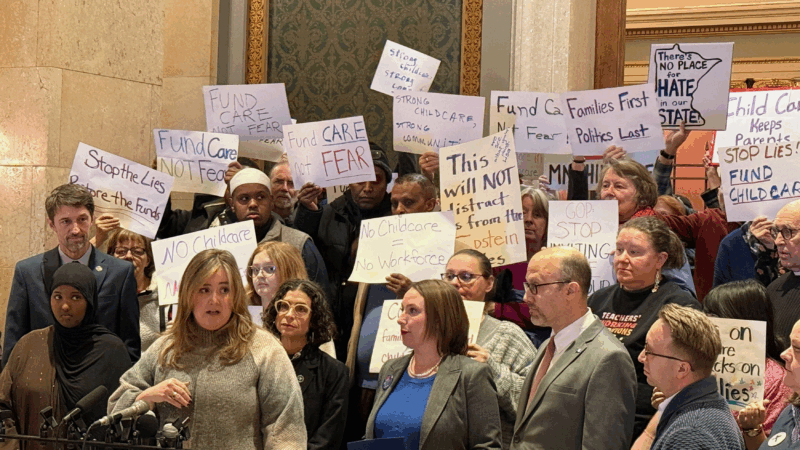
Federal officials are targeting Democratic-led states over alleged safety-net fraud. Critics worry a drumbeat of unfounded accusations could undermine public trust.

New video shows fatal Minnesota ICE shooting from officer’s perspective
The video, published online by a Minnesota-based news site, Alpha News, and reposted by the Department of Homeland Security, shows the shooting from the perspective of the officer who fired the shots.

RFK Jr. cast doubt on a key vaccine. This country can’t wait to get it
The U.S. is cutting the Hepatitis B vaccine from its recommended list. But here's a place where the medical establishment — and a rapper — are eager to obtain it.
Six months later, the Texas Hill Country is still living with effects from flooding
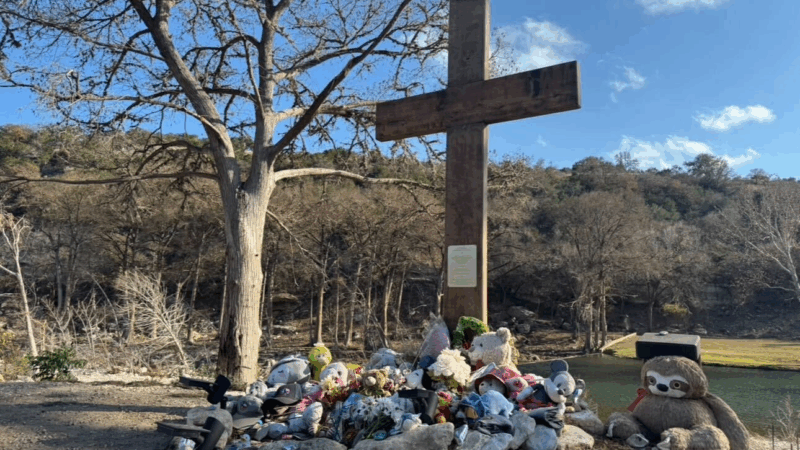
More than 130 people died as floodwaters swept through the region on July 4. Now, recovery continues amid legal action and scrutiny of flood preparedness.
