
Canada’s Hudson’s Bay has survived 355 years. Now the store is in crisis
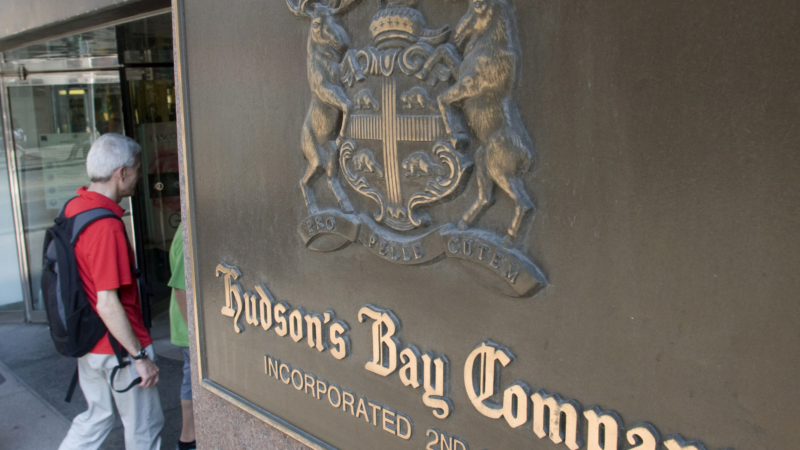
Canada’s oldest retailer, Hudson’s Bay department store, cannot pay its debts.
The high-end chain, dating back to the 17th-century fur-trade era, has been losing money and shoppers, set back by the pandemic, inflation and lately, trade tensions with the U.S. Now, it’s entered a proceeding similar to bankruptcy protection and expects to close some stores.
“The threat and realization of a trade war has created significant market uncertainty and has impacted our ability to complete these transactions,” CEO Liz Rodbell said in a statement, referring to recent attempts to shore up investments.
On Monday, a judge in Toronto granted Hudson’s Bay creditor protection, which lets the company try restructuring its debt and regaining financial footing. He began his ruling with a wistful note about the chain:
“It is hard not to have a sense of melancholy when considering the Application before me,” wrote Justice Peter J. Osborne of the Ontario Superior Court of Justice. “Hudson’s Bay is the oldest company in North America and a very prominent Canadian department store. It was founded in 1670. Now, approximately 355 years later, it is insolvent and seeks protection from its creditors.”
Hudson’s Bay historically is known for striped wool blankets that were originally traded for beaver pelts. Now it runs about 80 stores, after several waves of closures and layoffs. The chain also has licenses to run some Saks Fifth Avenue and Saks Off 5th locations in Canada — remnants of once-joint ownership.
The parent company, called HBC, purchased the U.S. chains Neiman Marcus and Bergdorf Goodman last year, combined them with Saks and later spun off the Hudson’s Bay department-store chain into a standalone entity. HBC is controlled by American real estate mogul Richard Baker, who previously also owned and then sold the luxury chain Lord & Taylor, which later filed for bankruptcy.
High-end department stores have struggled across North America. The pandemic, a boon for online shopping and work-from-home policies, hurt foot traffic. Then, inflation had people tightening their budgets for non-essentials. And luxury brands — a mainstay of department stores — are increasingly trying to connect directly with shoppers and open their own retail locations.
In Friday’s court filing, Hudson’s Bay representatives wrote that the chain was “facing significant challenges to its ability to make payments,” including to landlords and suppliers, “and absent additional funding, will be unable, within the next several days, to meet its employee payroll obligations.” The company listed 9,364 workers.
“While very difficult, this is a necessary step to strengthen our foundation and ensure that we remain a significant part of Canada’s retail landscape,” CEO Rodbell said of filing for creditor protection. “Now more than ever, it is critical that Canadian businesses are protected and positioned to succeed.”

DOJ subpoenas Federal Reserve in escalating pressure campaign
The Justice Department has subpoenaed the Fed over chair Jerome Powell's testimony over the central bank's headquarters renovation. Powell calls it part of a pressure campaign over interest rates.
The 2026 Golden Globe awards are Sunday. Here’s how to watch
The 2026 Golden Globes air on Sunday night starting at 8 p.m. ET / 5 p.m. PT.

National Portrait Gallery removes impeachment references next to Trump photo
A new portrait of President Trump is on display at the National Portrait Gallery's "America's Presidents" exhibition. Text accompanying the portrait removes references to Trump's impeachments.

America’s top figure skaters dazzled St. Louis. I left with a new love for the sport.
The U.S. Figure Skating National Championships brought the who's who of the sport to St. Louis. St. Louis Public Radio Visuals Editor Brian Munoz left a new fan of the Olympic sport.

DHS restricts congressional visits to ICE facilities in Minneapolis with new policy
A memo from Homeland Security Secretary Kristi Noem, obtained by NPR, instructs her staff that visits should be requested at least seven days in advance.

Historic upset in English soccer’s FA Cup as Macclesfield beat holders Crystal Palace
The result marks the first time in 117 years that a side from outside the major national leagues has eliminated the reigning FA Cup holders.
