
Report: Students with Disabilities, Minorities Arrested at Higher Rates in School
Kids sometimes misbehave in school. They might curse or knock over a chair. Those disruptions can look like criminal behavior in the eyes of school resource officers or SROs. These are law enforcement officers assigned to protect schools. SROs have been around for decades but have gained renewed attention following last year’s school shooting in Parkland, Florida.
Despite the pressure to provide for more security in schools, there are concerns about the long-term effects on students who are arrested by SROs and sucked into the criminal justice system. A recent report from the advocacy group Alabama Appleseed details one aspect. It found black students and children with disabilities were more likely than others to be arrested in connection with their conduct at school.
WBHM’s Andrew Yeager spoke with Leah Nelson, the group’s research director.
Interview Highlights
The reasons behind the difference:
“It’s hard to say exactly what accounts for those disparities. It’s not just one thing. Children with disabilities are disproportionately arrested particularly because children with disabilities may be more likely to be disruptive. Children of color are over-arrested the same way adults of color are over-arrested in Alabama. It is essential that children of color not be over-arrested in schools just as it is essential that adults of color not be over-arrested in communities for activities that are equally engaged in by white people.”
Law or rules for student resource officers:
“There is a law that says they need to be in good standing with the Alabama Peace Officers Standards and Training Commission. They need to have active shooter training. But there’s nothing that requires special training for the job of being a school resource officer.”
Recommendations based on these findings:
“My number one recommendation would be training both for school resource officers and for faculty and staff … My second recommendation is to create a robust data tracking system, integrating information from schools, from police and from courts to look at outcomes. What’s happening to these kids? How long are they staying out of school? How are they doing when they do come back to school, so that we can start creating systems that help guide and educate children who may be disruptive and make sure they have the opportunity to become successful adults. And then I also would like to see the creation of unambiguous codes of conduct that make it clear when it is appropriate to refer a child to law enforcement.”
Photo by Tomás Del Coro
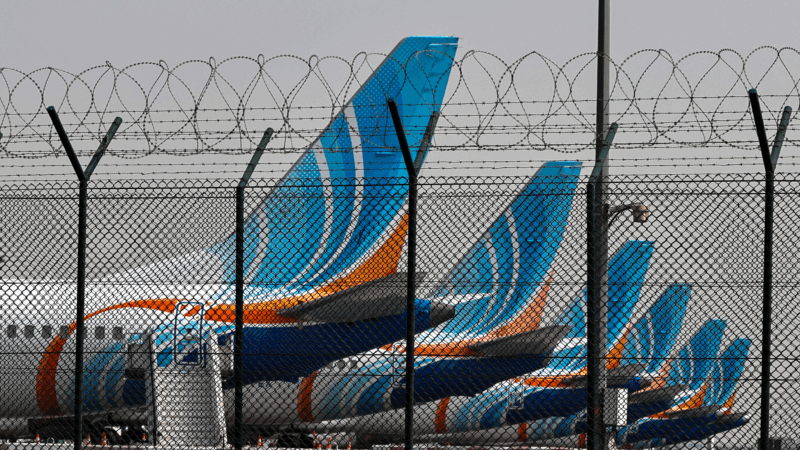
Some Middle East flights resume, but thousands of travelers are still stranded by war
Limited flights out of the Middle East resumed on Monday. But hundreds of thousands of travelers are still stranded in the region after attacks on Iran by the U.S. and Israel.

‘Hamnet’ star Jessie Buckley looks for the ‘shadowy bits’ of her characters
Buckley has been nominated for a best actress Oscar for her portrayal of William Shakespeare's wife in Hamnet. The film "brought me into this next chapter of my life as a mother," Buckley says.

How, who, and why: NPR flips its famous letters to defend the right to be curious
NPR is standing up for the public's right to ask hard questions in a national campaign dubbed "For your right to be curious." At NPR's headquarters, on billboards in New York City, Chicago, and Washington, D.C., and across social media, NPR's three iconic letters transform into "how," "who," and "why" — a bold declaration of its commitment to fight for Americans' right to ask questions both big and small.
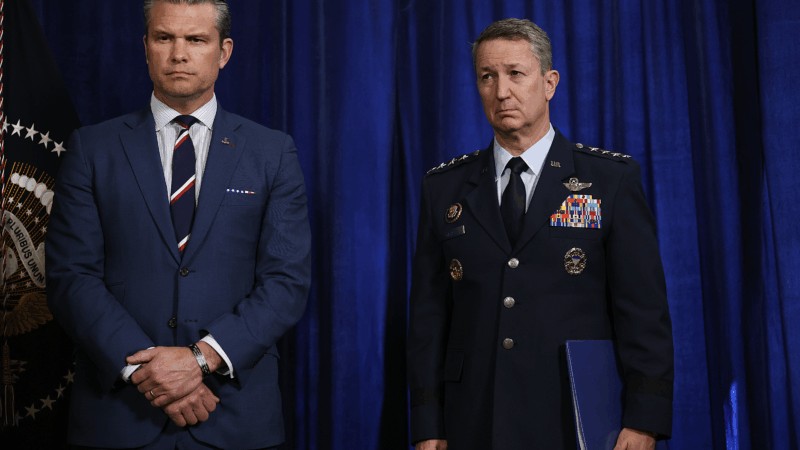
Hegseth: ‘We didn’t start this war but under President Trump we’re finishing it’
The remarks are the first to reporters since the U.S.-Israeli military operations against Iran began Saturday despite weeks of talks designed to stave off a conflict.
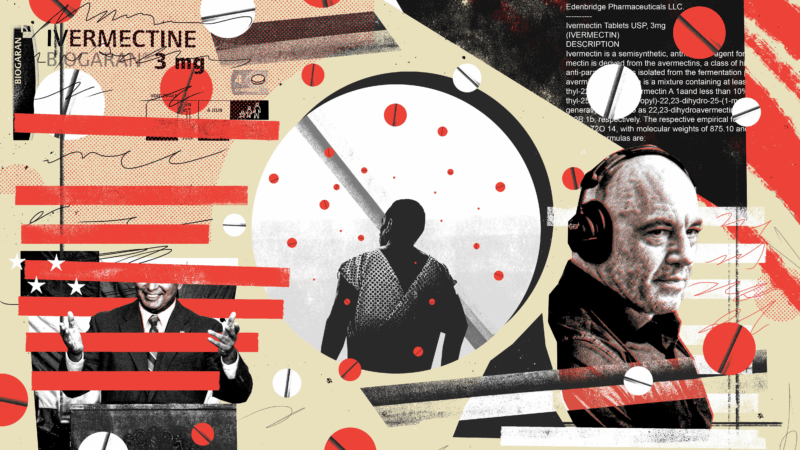
Ivermectin is making a post-pandemic comeback, among cancer patients
The anti-parasitic drug became a household name during the COVID-19 pandemic, and it is now being embraced as an alternative treatment for cancer. It is as politically polarizing as ever.
Rep. Adam Smith on the U.S. strikes on Iran and the debate over Trump’s war powers
NPR's Leila Fadel asks Democratic Rep. Adam Smith of Washington, the ranking member on the House Armed Services Committee, about President Trump's unilateral authorization to strike Iran.
