How Gulf South outdoor workers dealt with the hottest August on record
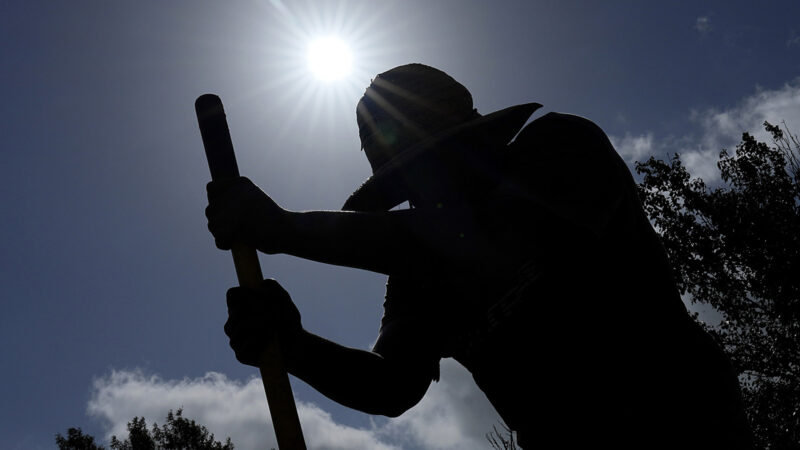
In this file photo, Carlos Rodriguez digs fence post holes on Tuesday, June 27, 2023, in Houston. Outdoor workers are vulnerable to prolonged time in extreme temperatures like those seen across the Gulf South this summer, which climate scientists warn are becoming more common. (AP Photo/David J. Phillip)
Tomas Pablo has been working in construction and remodeling for eight years in Forest, Mississippi, but he’s never experienced working conditions like those he faced this summer.
According to the National Oceanic and Atmospheric Administration (NOAA), Mississippi and Louisiana had their hottest August on record so far. They averaged nearly 85 degrees and 88 degrees, respectively — continuing the trend of the hottest summer ever recorded on Earth.
“Hace mucho calor. A veces se pone noventa y ocho, 100 grados. 100 y cuatro,” Pablo said. “Hace mucho calor. Tomamos mucha agua.” (“It’s been very hot. Sometimes it gets to 98, 100, 104 degrees. We drink a lot of water.”)
But it wasn’t just the heat that made this summer one of the hottest Pablo has experienced. Dry conditions also contributed to it, with Pablo noting it’s been more than a month without rain in Forest.
Mississippi and Louisiana are both dealing with a drought. Louisiana firefighters responded to over 500 large fires in August alone — which NOAA says is its annual average — that burned more than 50,000 acres.
Despite dangerous conditions, only four U.S. states have set regulations for outdoor workers and heat exposure. The federal government doesn’t have heat exposure standards for outdoor workers.
Kristie Ebi, a professor at the University of Washington who researches how climate change impacts human health, said it’s important to protect workers like Pablo and his crew because of the higher risks associated with their jobs.
“This is one of the places where we understand the physiology, we understand how to get people’s core body temperature down,” Ebi said. “If you can protect workers and keep those core body temperatures down, it’s helpful. It really does save lives.”
But Ebi has seen positive strides with the National Integrated Heat Health Information System, where federal agencies have been able to collaborate more on heat safety and are “coordinating now in ways they didn’t in the past.” Ebi said having heat early warning and response systems, as well as heat action plans, can help mitigate heat illness and death
“These are really important advances to have the information of what you can do with regulation at the local level,” Ebi said.
In the absence of guidelines, individual employers and workers are coming up with their own methods to protect themselves. Aid groups, like El Pueblo, are also lending a hand. The Mississippi-based humanitarian group that serves immigrant communities across the Gulf Coast region has helped construction workers and landscapers gather at its Forest location to share their techniques for dealing with the heat.
Juan Simon Hernandez has been in construction work for 17 years, but the heat even got to him this summer. One day, he suddenly became sick.
“Sentí que me como escalofrío,” Hernandez said. “Como muy caliente. Y un poco dolor de cabeza.” (“I felt chills, and really hot inside my body and a bit of a headache.”)
He treated his heat sickness by drinking an electrolyte beverage that was supposed to help with hydration. Now, he makes sure to take breaks, and sometimes he and his coworkers will end their work day early because of the heat.
“Bueno, lo ideal sería entrar un poco más temprano y hacer lo que yo hago con un ventilador,” Hernandez said. “Si el jefe no tiene problema, un ventilador o una carpa.” (“The ideal would be to come in to work earlier and set up a fan. If the boss has no problem with it, maybe a fan or a tent.”
The tips and strategies the workers have shared will likely have to extend into the fall. NOAA predicts that Louisiana, Mississippi and most of Alabama will experience higher-than-normal temperatures through October.
This story was produced by the Gulf States Newsroom, a collaboration between Mississippi Public Broadcasting, WBHM in Alabama, WWNO and WRKF in Louisiana and NPR.

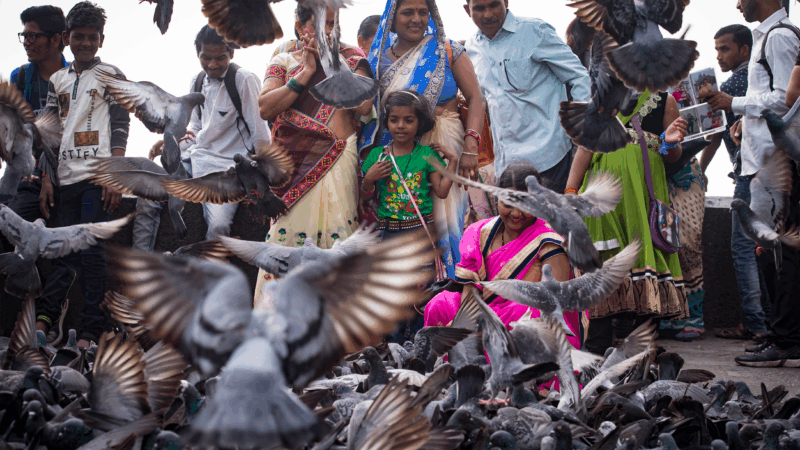
A ban on feeding pigeons ruffles lots of feathers in Mumbai
The pigeon population has exploded — a result of people feeding the birds. For some it's a holy duty and a way to connect to nature. Critics point to health risks tied to exposure to pigeon droppings.
‘Rosemead’ tells a tragic — and true — story
The new movie stars Lucy Liu as an ailing mother to Joe, played by Lawrence Shou as a teenager facing mental illness in his feature debut role.

From 400-year-old globes to cosmic shrouds: A Maine library brings maps to life
From 400-year-old globes to cosmic funeral shrouds, how the Osher Map Library in Maine shows people that maps aren't just for navigation — but windows into history, culture, and how we see the world.
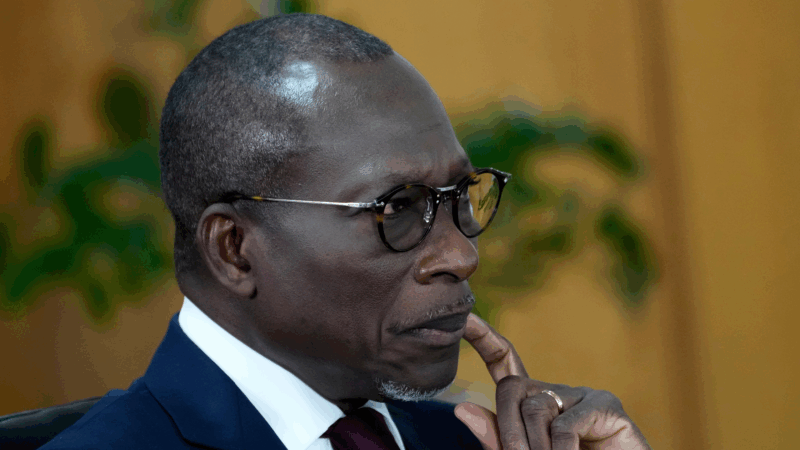
Benin’s interior minister says a coup announced earlier has been foiled
Earlier, a group of soldiers had appeared on Benin 's state TV Sunday to announce the dissolution of the government in an apparent coup, the latest of many in West Africa.
A fire at a popular nightclub in India’s Goa state kills at least 25, officials say
At least 25 people, including tourists, were killed in a fire at a popular nightclub in India's Goa state, the state's chief minister said Sunday.
National parks fee-free calendar drops MLK Day, Juneteenth and adds Trump’s birthday
The Trump administration, which has railed against what it describes as "woke" policies, removed MLK Day and Juneteenth from next year's list of fare-exempt days for visitors at dozens of national parks.