
What happens when a rural hospital shuts its doors? Look to Pickens County

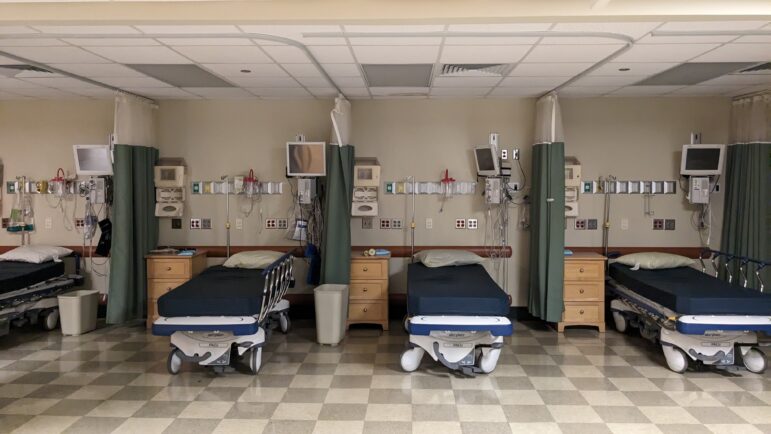
Tabitha Pate stands in front of the nurses' station at the now-shuttered Pickens County Medical Center.
Tabitha Pate knows every corner of the Pickens County Medical Center.
She worked in the hospital’s human resources department for years. Now she stops by the facility almost every day to monitor for leaks and check the air handlers.
“We have tried to keep the facility maintained, with the hope that something will come to fruition,” Pate said.
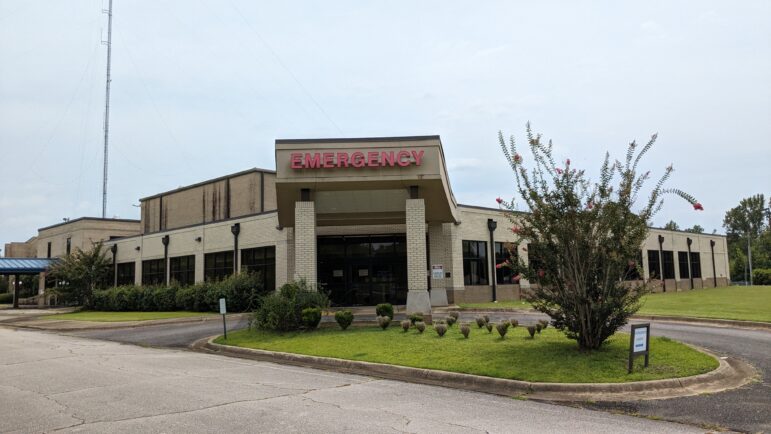
For decades, Pickens County Medical Center offered inpatient and outpatient services, plus a 24-hour emergency department.
But facing low reimbursement rates and mounting debt, the hospital shut its doors in early 2020. Pate said it was a tragic loss for the community.
“To see the empty halls, to not hear the hustle and bustle of nurses and staff walking around, it’s sad,” she said.
It’s a fate that could befall more than half of Alabama’s rural hospitals, according to a report released earlier this year by the Center for Healthcare Quality and Payment Reform. The report points to “serious financial problems” largely due to low reimbursement rates from Medicaid, Medicare and private insurers, plus the costs of caring for uninsured patients.
“Most of the at-risk hospitals are located in isolated rural communities,” the report states. “Closure of the hospital would mean the residents of the community would have to travel a long distance for emergency or inpatient care.”
That grave warning has proven true for the residents of Pickens County.
‘Don’t get sick past 4:30’
The closure of the Pickens County Medical Center left the surrounding community with only a primary care clinic, open during weekday business hours.
“Don’t get sick past 4:30,” Pate said. “And we all know all heart attacks happen between 8 and 4:30.”
Like a growing number of places in Alabama, the county has no emergency room, no urgent care, no after-hours clinic. The closest emergency provider is more than 30 miles away, in Tuscaloosa or Columbus, Mississippi.
And when residents call for an ambulance, it could take a while.
“It’s a sad, unfortunate situation for the people here in Pickens County,” said Vicky McCrory, manager of the Pickens County Ambulance Service.
Since the hospital closed, the EMS provider has struggled, shrinking from a staff of 12 operating three ambulances, to a skeleton crew of four people working 36-hour shifts to provide one ambulance.
That one unit now has to drive further to get to a hospital, so it takes longer to get back to town to respond to other calls.
The result is that people die waiting for help.
Deadly consequences
McCrory recalls several incidents when residents called for help and an ambulance couldn’t make it in time.
She said people experiencing cardiac arrest waited up to 45 minutes, sometimes an hour, before passing away. Some families, tired of waiting for help, started the 30 mile drive to a hospital, only to pull over on the side of a rural road and begin CPR.
McCrory said one of the most heartbreaking stories is that of Grena Prude.
Last year, Prude was driving in town when she started to not feel well. She drove past the shuttered hospital to meet her family in front of the Carrollton City Hall. Family members called for an ambulance, but the trucks were miles away and didn’t make it in time.
Prude passed away before a large crowd in front of city hall. Her sister, Annie Jackson, suspects that Prude died from a heart attack.
“Do I think that she would have made it if the hospital was open?” Jackson said. “I don’t know. I can’t say yes or no on that. But she would have had a fighting chance.”
She said Pickens County residents don’t feel safe anymore.
“We feel that we’ve been put out on an island,” Jackson said. “You’re scared to get sick. If you get sick or you got a family member that get hurt, in the back of your mind you’re thinking, ‘They’re going to die. They’re going to die.’”
Finding a path forward
Since the Pickens County Medical Center shut its doors, residents and local officials have hoped to see it reopen. To make that happen, they’re trying to get creative.
They would like to get funding from state lawmakers to convert the second floor of the old hospital into a state-run adolescent mental health facility. The idea is that it would generate funds to support reopening an emergency room on the first floor.
“You have a facility that can be utilized, but it has to do something different than rural health care,” former HR director Pate said. “That’s why we have to be forward thinking and look for another option.”
Local officials estimate that renovations for the mental health unit would cost $10 million. They hope to request the funds as part of this year’s general fund budget earmarked for the state mental health department.
For now, Pickens County residents continue to rely on EMS providers for emergency care.
Earlier this month, officials with the county commission and local municipalities agreed to step in and financially support the ambulance service. The additional money will help pay for another unit that will run 16 hours a day.
“It’s going to help,” EMS manager McCrory said. “But it definitely will not be a fix-all, because we don’t have a hospital in the county.”

Mideast clashes breach Olympic truce as athletes gather for Winter Paralympic Games
Fighting intensified in the Middle East during the Olympic truce, in effect through March 15. Flights are being disrupted as athletes and families converge on Italy for the Winter Paralympics.

A U.S. scholarship thrills a teacher in India. Then came the soul-crushing questions
She was thrilled to become the first teacher from a government-sponsored school in India to get a Fulbright exchange award to learn from U.S. schools. People asked two questions that clouded her joy.

Sunday Puzzle: Sandwiched
NPR's Ayesha Rascoe plays the puzzle with WXXI listener Jonathan Black and Weekend Edition Puzzlemaster Will Shortz.
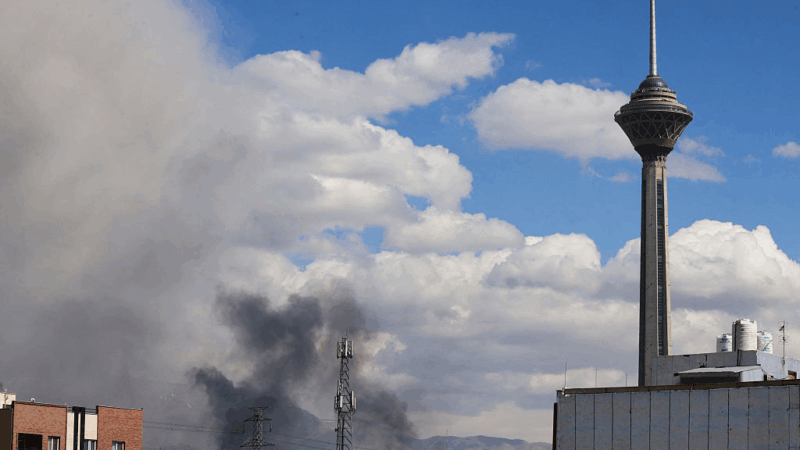
U.S.-Israeli strikes in Iran continue into 2nd day, as the region faces turmoil
Israel said on Sunday it had launched more attacks on Iran, while the Iranian government continued strikes on Israel and on U.S. targets in Gulf states, Iraq and Jordan.

Trump warns Iran not to retaliate after Ayatollah Ali Khamenei is killed
The Iranian government has announced 40 days of mourning. The country's supreme leader was killed following an attack launched by the U.S. and Israel on Saturday against Iran.

Iran fires missiles at Israel and Gulf states after U.S.-Israeli strike kills Khamenei
Iran fired missiles at targets in Israel and Gulf Arab states Sunday after vowing massive retaliation for the killing of Supreme Leader Ayatollah Ali Khamenei by the United States and Israel.
