
Q&A: A former New Orleans police chief says it’s time the U.S. changes its marijuana policy
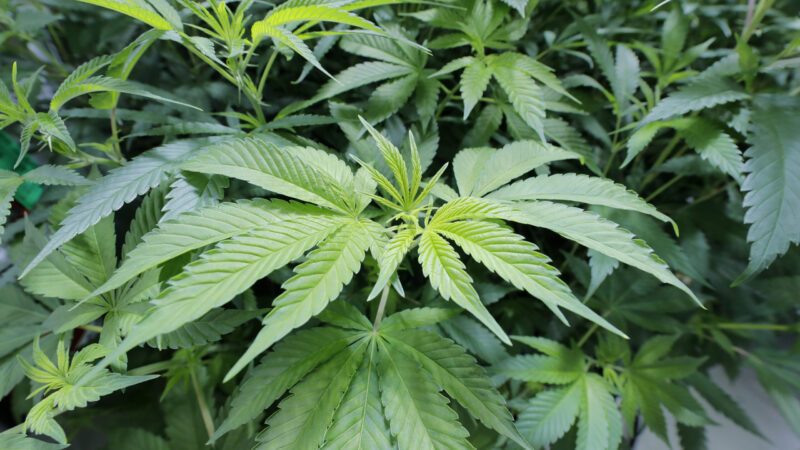
In this file photo, marijuana plants grow at GB Sciences Louisiana on Aug. 6, 2019, in Baton Rouge, La. (AP Photo/Gerald Herbert, File)
A rethinking of how the government classifies marijuana could have wide-ranging effects on research, the cannabis industry, and criminal justice — and some law-enforcement professionals are behind it.
Following a review, federal health officials recommended in August that marijuana should be relabeled as a Schedule III substance, citing a more limited public health impact relative to other drugs. At a briefing Monday, White House Press Secretary Karine Jean-Pierre said the Department of Justice is considering that review.
Former New Orleans Police Department Superintendent Ronal Serpas is among the proponents of the policy change. He signed a letter to President Joe Biden urging his administration to support it, along with 31 other law enforcement leaders.
The Gulf States Newsroom’s Kat Stromquist caught up with Serpas to discuss the policy and what it could mean for criminal justice.
The following conversation has been edited and condensed for clarity.
You’re a career law enforcement guy who now teaches and heads the group Law Enforcement Leaders to Reduce Crime & Incarceration. What got you interested in marijuana policy?
Well, it begins with I grew up in the ‘70s. Many people of my age group obviously smoked marijuana, and I would never say that I didn’t. So I’m familiar with it, not only as an academic and a professor and a police officer but as a young person. I smoked marijuana as well.
Across the country, what’s really become more interesting to me and my colleagues in law enforcement [and] academia is that so far, 38 states have made a statement in one form or another [on] what they think about the construction of marijuana is in America — and it’s changing.
The next level of it is, what do you do once the laws are passed? Many of my colleagues who are retired like I am now, but who were in the middle of this when it first started, recognize that if the public decides to make marijuana legal, then the rest of the system should adapt to it, which would help reduce the illegal market.
The point here for those of us who think this way — not my entire organization, obviously — is that by making this recommendation to the government to move it to a Schedule III, it may help us in the enforcement of the illegal market.
You joined dozens of colleagues to ask the Biden administration to change marijuana from a Schedule I to a Schedule III substance, and federal health officials want that, too. What exactly do those schedules mean?
The [Controlled Substances Act] lays out, essentially, levels of potential harm to people using drugs that have high addictive qualities. High addictive qualities have tremendous social and economic impacts on people. Schedule I, right now, would be crimes like heroin, LSD, ecstasy and those types of crimes. Marijuana is currently still a Schedule One crime.
Schedule III, which has a far lower potential for physical or psychological dependence, would be where we think marijuana and the government thinks it could fall. Thus, it wouldn’t be a significant violation of controlled dangerous substances [law]. It would be seen as something maybe not as benign as Tylenol or codeine under prescription, but it would not be the same as what it is now: heroin, LSD, ecstasy, etc.
The thing that makes me curious about that is, if the schedule change happens, what will it mean for prosecutions?
Well, they would fall off of the category of crimes that would result in potential sanction and loss of freedom. Through that change, it would be clear to the criminal justice system that this is not a focus of the American public any longer.
Think about it from the point of view of a citizen in a state where it’s legalized for medicinal use or personal use. People could be very confused if they ran across a federal investigation of them doing something that they can do legally in their state.
It’s just a confusing circumstance, and I think that the American people have spoken.
What do you think is coming down the pike for this? What do you think weed policy and enforcement will look like in five or 10 years?
My opinion only: 15 years ago, this was not getting much attention. 20 years ago, this wasn’t even really discussed. About 30 years ago, this was a flat-out violation of the law, not unlike other violations of the law. You can see the pendulum has swung, so what would be the future on the other side of the pendulum? Not quite sure yet. But the central question of moving the pendulum away from enforcement has been made by 38 states already.
This story was produced by the Gulf States Newsroom, a collaboration between Mississippi Public Broadcasting, WBHM in Alabama, WWNO and WRKF in Louisiana and NPR.
Kennedy Center president departs – months before the art complex’s scheduled closing
In a post on Truth Social, President Trump announced Friday afternoon that Richard Grenell is leaving the Kennedy Center. The arts complex is scheduled to close in July for renovations.
Judge blocks DOJ’s criminal probe of Federal Reserve, blasting it as political
A federal judge has put the brakes on a criminal probe of the Federal Reserve, saying it was part of an improper campaign by the Trump administration to pressure the central bank into cutting interest rates.

A cholesterol test you’ve never heard of is now recommended to prevent heart disease
The test can help assess your lifetime risk for cardiovascular disease. That, along with earlier treatment for high cholesterol, is part of new doctors' guidelines.

And the Oscar goes to — wait, why is it called an Oscar?
The Academy Awards officially adopted the "Oscars" nickname in 1939. But who is Oscar, and who started calling them that? We may never know. But here are four enduring legends to consider.
TSA workers miss a full paycheck, while travelers keep paying airport security fees
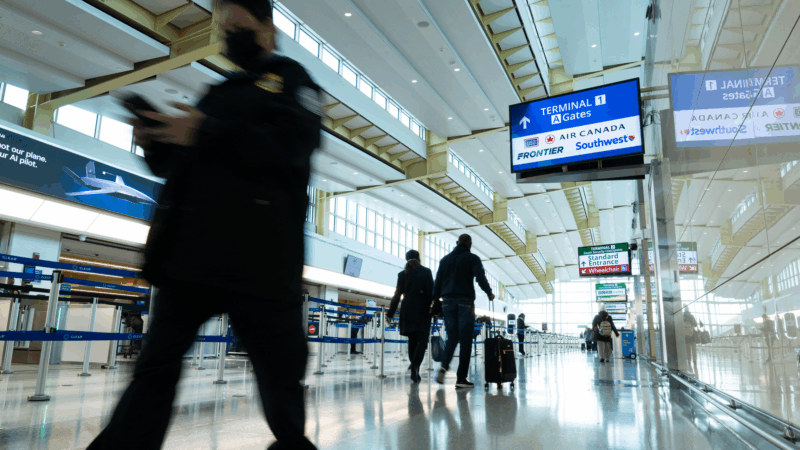
Many TSA workers received no money in their paychecks Friday as the partial DHS shutdown drags on. Fees paid by airline passengers keep piling up, even as airport security officers work without pay.
How Italy became the darlings (and contenders, too) of the World Baseball Classic
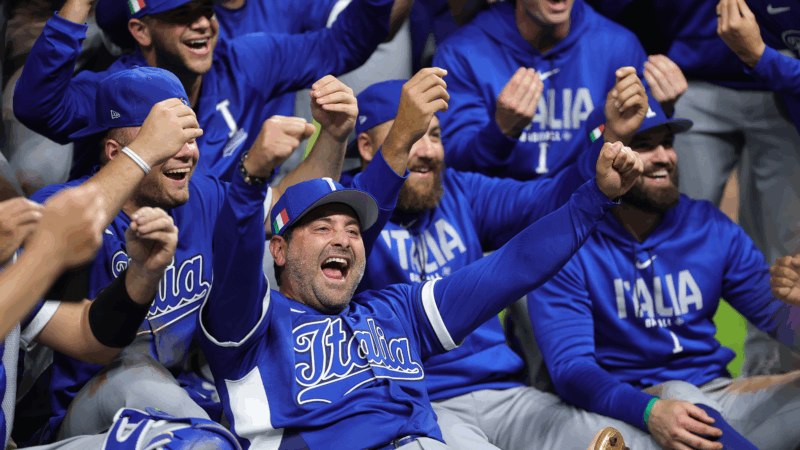
With espresso shots, kisses on the cheek and Andrea Bocelli singalongs, Team Italy has charmed the baseball world. But their mission is more ambitious: Turn Italy into a bona fide baseball factory.
