
Prisoners’ bodies returned to families without heart, other organs, lawsuit alleges
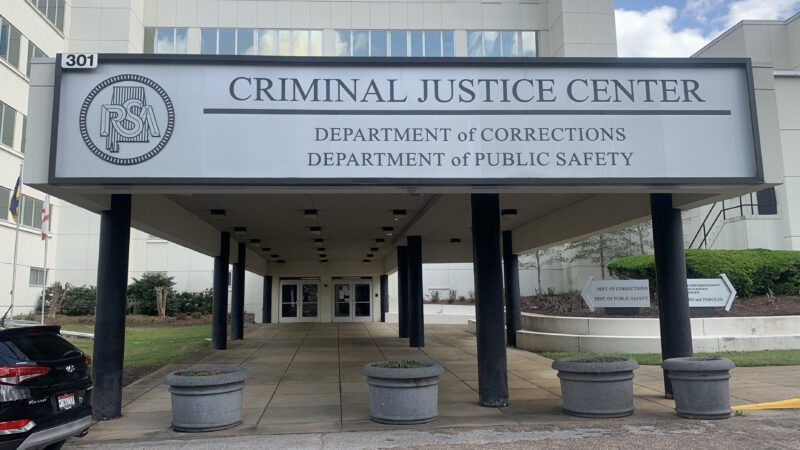
The Alabama Department of Corrections Headquarters, located in in Montgomery.
BIRMINGHAM, Ala. (AP) — The bodies of two men who died while incarcerated in Alabama’s prison system were missing their hearts or other organs when returned to their families, a federal lawsuit alleges.
The family of Brandon Clay Dotson, who died in a state prison in November, filed a federal lawsuit last month against the Alabama Department of Corrections and others saying his body was decomposing and his heart was missing when his remains were returned to his family.
In a court filing in the case last week, the daughter of Charles Edward Singleton, another deceased inmate, said her father’s body was missing all of his internal organs when it was returned in 2021.
Lauren Faraino, an attorney representing Dotson’s family, said via email Wednesday that the experience of multiple families shows this is “absolutely part of a pattern.”
The Associated Press sent an email seeking comment late Wednesday afternoon to the Alabama Department of Corrections.
Dotson, 43, was found dead on Nov. 16 at Ventress Correctional Facility. His family, suspecting foul play was involved in his death, hired a pathologist to do a second autopsy and discovered his heart was missing, according to the lawsuit. His family filed a lawsuit seeking to find out why his heart was removed and to have it returned to them.
“Defendants’ outrageous and inexcusable mishandling of the deceased’s body amounts to a reprehensible violation of human dignity and common decency,” the lawsuit states, adding that “their appalling misconduct is nothing short of grave robbery and mutilation.”
Dotson’s family, while seeking information about what happened to his heart, discovered that other families had similar experiences, Faraino said.
The situation involving Singleton’s body is mentioned in court documents filed by Dotson’s family last week. In the documents, the inmate’s daughter Charlene Drake writes that a funeral home told her that her father’s body was brought to it “with no internal organs” after his death while incarcerated in 2021.
She wrote that the funeral director told her that “normally the organs are in a bag placed back in the body after an autopsy, but Charles had been brought to the funeral home with no internal organs.” The court filing was first reported by WBMA.
A federal judge held a hearing in the Dotson case last week. Al.com reported that the hearing provided no answers to the location of the heart.
The lawsuit filed by Dotson’s family contended that the heart might have been retained during a state autopsy with intent to give it to the medical school at the University of Alabama at Birmingham for research purposes.
Attorneys for the university said that was “bald speculation” and wrote in a court filing that the university did not perform the autopsy and never received any of Dotson’s organs.
The candy heir vs. chocolate skimpflation
The grandson of the Reese's Peanut Butter Cups creator has launched a campaign against The Hershey Company, which owns the Reese's brand. He wants them to stop skimping on ingredients.
Scientists make a pocket-sized AI brain with help from monkey neurons
A new study suggests AI systems could be a lot more efficient. Researchers were able to shrink an AI vision model to 1/1000th of its original size.

U.S. evacuates diplomats, shuts down some embassies as war enters fourth day
The United States evacuated diplomats across the Middle East and shut down some embassies as war with Iran intensified Tuesday while President Trump signaled the conflict could turn into extended war.
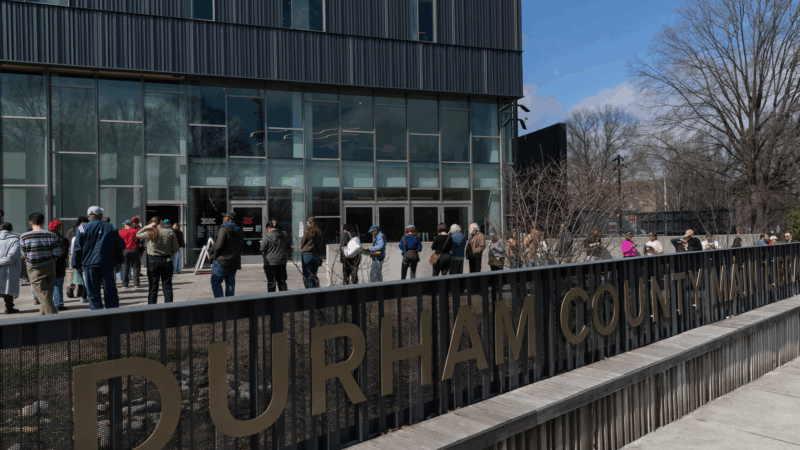
North Carolina and Texas have primary elections Tuesday. Here’s what you need to know
The midterm elections are officially underway and contests in Texas and North Carolina will be the first major opportunity for parties to hear from voters about what's important to them in 2026.
Kristi Noem set to face senators over DHS shutdown, immigration enforcement
The focus of the hearing is likely to be on how Kristi Noem is pursuing President Trump's mass deportation efforts in his second term, after two U.S. citizens were killed by immigration officers.
College students, professors are making their own AI rules. They don’t always agree
More than three years after ChatGPT debuted, AI has become a part of everyday life — and professors and students are still figuring out how or if they should use it.
