
‘White Lies’ sheds light on a prison takeover in Talladega that led to today’s immigration system
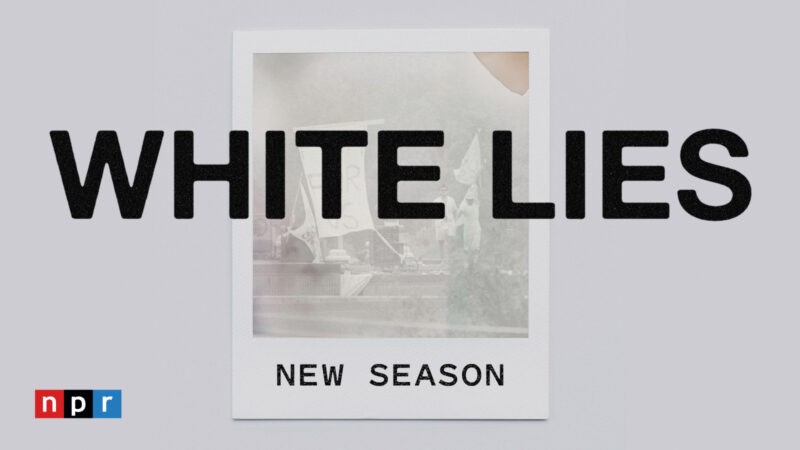
White Lies season 2
One of the most contentious political fights right now is over immigration. But many don’t realize a notable moment that shaped our current immigration system happened in Talladega, Alabama. In 1991, Cuban detainees took over a federal prison there. That event is the starting point for the new season of the NPR podcast White Lies.
Co-hosts Chip Brantley and Andrew Beck Grace first learned of the takeover while digging through a photo archive. Brantley spoke about it with WBHM’s Cody Short.
This interview was edited for length and clarity.
Chip, take me back to you finding this picture. How did you find it and what did you think when you first saw it?
So Andy and I both teach at the University of Alabama and for another class, we were looking through the photo archives of the Birmingham News, which came across these packets of negatives that said “Cubans take over federal prison in Talladega.” There’s a little code on the top right corner that just has the year. The year was 1991. I graduated high school in 1991 and I had no memory of it. Well, first of all, I didn’t know what the photos were. So we scanned them and started looking through them.
With a prison takeover like this, there’s not a whole lot to see until there is. But among these photos were these men on the roof and they had these homemade signs that you could make out. One said, “pray for us.” One said, “please, media justice, freedom or death.” It very quickly was revealed to us that this is a much bigger story than just a prison takeover.
And in the first episode, you cover what happens. But tell me what happened in Talladega, Alabama, in 1991.
In 1991, there were 120 men from Cuba who were being detained there at the prison. And in Talladega, the federal prison was basically the last stop for these men, many of whom had been detained for years in federal prison. So as immigration detainees, not as prisoners serving a sentence, but as immigration detainees awaiting deportation. Once they were approved for deportation, or as the U.S. government says, repatriation to Cuba, they were moved to Talladega. And so these men were awaiting a deportation flight in late August of 1991. Three of these men were out in a recreation yard playing handball, and they were able to basically overtake a guard, take his keys, go back into the unit very quickly, kind of took it over, and released the other 115 or so detainees, and that takeover lasted 10 days.
And so what exactly were they protesting?
That’s a good question. It’s sort of complicated because most directly they did not want to be deported. They didn’t want to go back to Cuba. Many of them feared persecution. They had left Cuba in the first place to come to the United States. All these men had come to the U.S. during the Mariel boatlift in 1980 when 125,000 people came to the U.S. in a matter of months. It’s like one of the largest refugee, mass migrations in the Western Hemisphere. So they’d been in the country at this point 11 years, and many of them had been detained for a lot of that time. So they were protesting their conditions and the conditions of their confinement.
And at what point did you realize that this isn’t about detainees taking over a prison in Alabama? How did you know there was something larger going on here?
It’s a story that unless you are Cuban or Cuban-American or you live in Miami, it’s not a story that’s very well known, I think, for a lot of Americans, that this mass migration event happened in 1980. The implications of this story of the boatlift and these detainees, we are still feeling today. We’ve come to think of the story as sort of the first chapter in our modern immigration detention system. At the time in 1980, we detained very few people who came to this country as immigrants. Today, we detain tens of thousands. And so this really is the root of it. We had somebody say to us the law had existed for immigration detention for a long time. We just hadn’t been using it. And Mariel was really the excuse for the U.S. government to begin doing it.
The first season of White Lies focused on civil rights and how white people lie. How does that theme continue to play out in the second season?
Neither Andy nor I am Cuban. No claims to Cuban identity. And so we’re careful not to make characterizations about the different waves of Cuban immigrants over the years. But undeniably, the first wave of Cubans after the revolution was generally sort of considered white. They were professional class. Many of them, once they got to this country, sort of identified as white.
Meaning they had the identity of a white person, but they were actually from Cuba.
That’s right. I think once they came here, one Cuban-American said they sort of leaned into whiteness. They were zoned for white schools and segregation academies in Miami. They built an empire in South Florida. Mariels are a much different group of Cubans, broadly speaking. Estimates have about a third of them as Afro-Cuban or to use the racial categories of our country, Black. And so what happened with this wave of Mariel refugees, was it very quickly went from being called the Freedom Flotilla, and being celebrated, and ‘we’re freeing these people from communist Cuba’ to, once white Americans saw images of single Black men getting off overcrowded shrimp boats, it became something much darker. And the narrative about Mariel changed all of that. This sort of perception of criminality very quickly took hold about the Mariel boatlift. And that perception, that story that was told about the Mariel Cubans would impact these men on the roof for the 10 years they were here.
Is it safe to say that white people lied to not just other people, but to themselves to contend with their own racism?
Yes. I think for sure. I think that’s what we explored in the first season, that we explored in a slightly different way in this season. And I should say, Andy and I are both white. And we have especially felt this way with season one, but I think it’s true of season two, the things that white people say to each other when they’re alone. I mean, we’ve had all sorts of people that we’ve interviewed for this season sort of talk about race, while we’re interviewing them, that felt immaterial to the conversation. But sometimes I think white people just can’t resist the sort of like, “Well, you know what I’m talking about, you know?” And so I think that’s one of the things that benefit us as white reporters, frankly, telling these sorts of stories is that people confide in us in a way that feels like we’re co-conspirators.
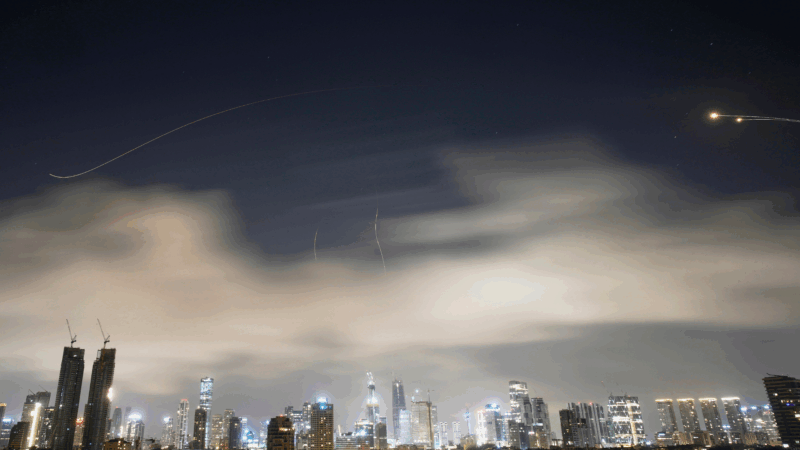
U.S. military names six killed in plane crash as Iran war enters third week
The conflict in the Middle East has entered a third week, with Israel announcing a barrage of new strikes on western Iran on Sunday, while the U.S. defense department released the names of six service members who died when their military refueling aircraft crashed.
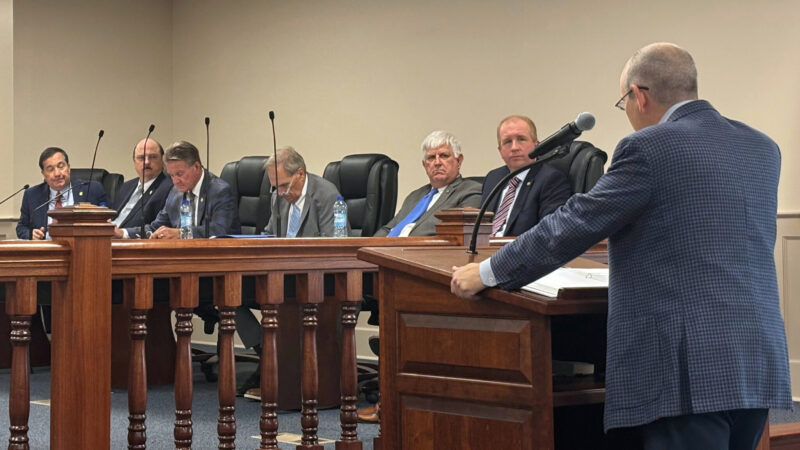
Alabama poised to drastically overhaul utility regulation. Will it lower electric bills?
The Alabama Senate unanimously voted to expand the public service commission, and create a Secretary of Energy to address rising electricity prices. A bill in the House would go even further, requiring rate case hearings and limiting utility profits.
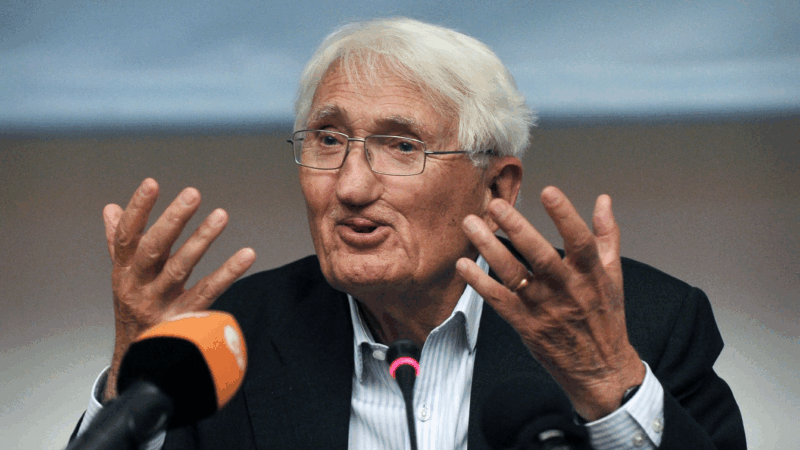
Acclaimed 20th century philosopher Jürgen Habermas dies at 96
Associated with the Frankfurt School, Habermas was a world-renowned thinker on modernity and democracy who helped shape German post-war and post-reunification political discourse.
Why the Chicago Bears could be moving to Indiana
While Illinois is trying to keep the team in Chicago's suburbs, Indiana lawmakers are offering a plan to finance a new stadium
Pentagon tightens controls over Stars and Stripes after calling it “woke”
The new rules for the independent military newspaper are the Defense Department's latest effort to put extraordinary restrictions on journalists covering the agency.
‘War of the Worlds’ remake sinks to the bottom at this year’s Razzie Awards
The surveillance industry version of HG Wells' 1898 classic sci-fi novel stars Ice Cube, and won accolades for worst picture, actor, director and more.
