
Families, doctors contest Alabama transgender treatment ban
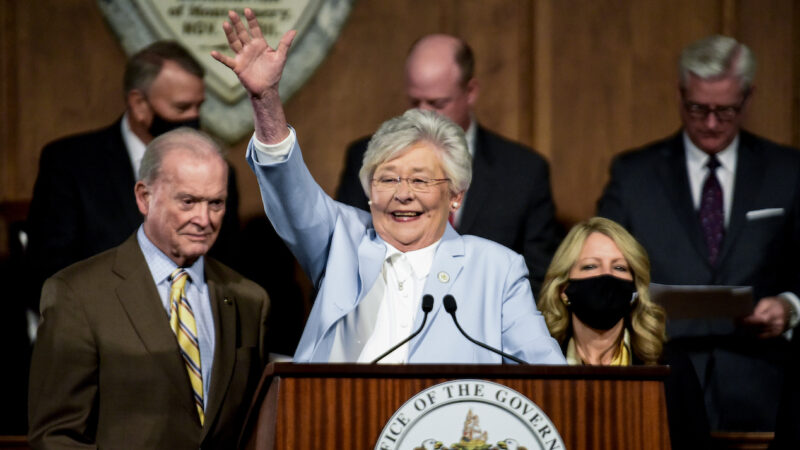
Alabama Governor Kay Ivey waves as she arrives to deliver her State of the State Address at the State Capitol Building in Montgomery, Ala., on Tuesday evening January 11, 2022.
MONTGOMERY, Ala. (AP) — Families with transgender teens sued the state of Alabama in federal court on Monday to overturn a law that makes it a crime for doctors to treat trans youth under 19 with puberty blockers or hormones to help affirm their gender identity.
The two lawsuits — one on behalf of two families and another on behalf two families and the physicians who treat their children— pose legal challenges to legislation signed into law Friday by Republican Gov. Kay Ivey.
“Transgender youth are a part of Alabama, and they deserve the same privacy, access to treatment, and data-driven health care from trained medical professionals as any other Alabamian,” Tish Gotell Faulks, legal director of the American Civil Liberties Union of Alabama, said in a statement. Faulks added that lawmakers are using children, as, “political pawns for their reelection campaigns.” Ivey and legislators face primaries next month.
Unless blocked by the court, the Alabama law will take effect May 8, making it a felony for a doctor to prescribe puberty blockers or hormones to aid in the gender transition of anyone under age 19. Violations will be punishable by up to 10 years in prison. It also prohibits gender transition surgeries, although doctors told lawmakers those are not performed on minors in Alabama.
“The level of legislative overreach into the practice of medicine is unprecedented. And never before has legislative overreach come into pediatric examination rooms to shut down the parent voice in medical decision making between a parent, their pediatrician and their child,” Dr. Morissa Ladinsky, a medical provider and a plaintiff in one of the lawsuits, told The Associated Press in an interview.
Ivey signed the legislation Friday, a day after it was approved by the Alabama Legislature. At a campaign stop Monday, the governor invoked religion when asked about her decision to sign the legislation.
“If the good Lord made you a boy at birth, then you are a boy. If the good Lord made you a girl at birth, then you are a girl,” she said. “We should especially focus our efforts on helping these young people become healthy adults just like God wanted them to be rather than self-induced medical intervenors.”
Asked if the law would survive a court challenge, she replied, “We’ll wait and see.”
The two lawsuits were filed by advocacy groups on behalf of families with transgender children, as well as by two medical providers. The children were not identified in the lawsuits because of their age,
“I know that I am a girl and I always have been,” one of the 15-year-old plaintiffs said in a statement provided by the American Civil Liberties Union of Alabama. “Even before I learned the word ‘transgender’ or met other trans people, I knew myself.”
In one of the lawsuits, parents described their fears that their transgender daughter, called “Mary Roe” in the suit, would harm herself or try to commit suicide if she loses access to the puberty blockers she began taking last year. “For Mary to be forced to go through male puberty would be devastating; it would predictably result in her experiencing isolation, depression, anxiety, and distress,” the lawsuit states.
Similar measures have been pushed in other states, but the Alabama legislation is the first to lay out criminal penalties for doctors.
In Texas, Republican Gov. Greg Abbott has ordered the state’s child welfare agency to investigate as abuse reports of gender-confirming care for kids. And a law in Arkansas bans gender-affirming medications. That law has been blocked by a court, however.
Ivey also signed a separate measure that requires students to use bathrooms that align with their original birth certificate and prohibits instruction of gender and sexual identity in kindergarten through fifth grades.
US military used laser to take down Border Protection drone, lawmakers say
The U.S. military used a laser to shoot down a Customs and Border Protection drone, members of Congress said Thursday, and the Federal Aviation Administration responded by closing more airspace near El Paso, Texas.

Deadline looms as Anthropic rejects Pentagon demands it remove AI safeguards
The Defense Department has been feuding with Anthropic over military uses of its artificial intelligence tools. At stake are hundreds of millions of dollars in contracts and access to some of the most advanced AI on the planet.
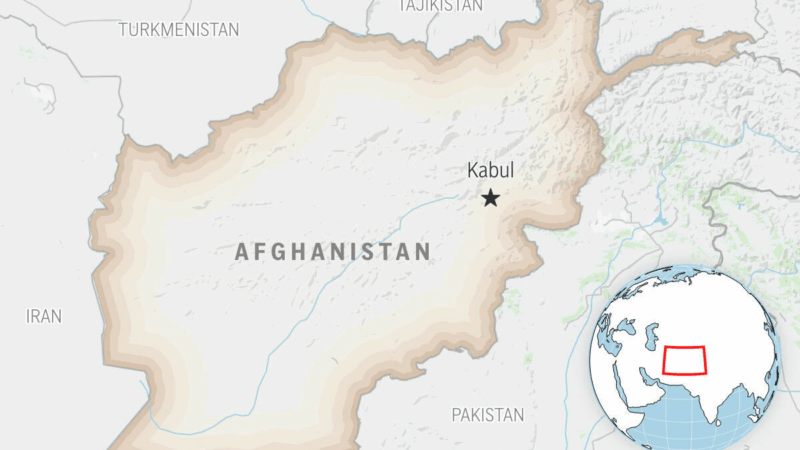
Pakistan’s defense minister says that there is now ‘open war’ with Afghanistan after latest strikes
Pakistan's defense minister said that his country ran out of "patience" and considers that there is now an "open war" with Afghanistan, after both countries launched strikes following an Afghan cross-border attack.

Hillary Clinton calls House Oversight questioning ‘repetitive’ in 6 hour deposition
In more than seven hours behind closed doors, former Secretary of State Hillary Clinton answered questions from the House Oversight Committee as it investigates Jeffrey Epstein.
Chicagoans pay respects to Jesse Jackson as cross-country memorial services begin
Memorial services for the Rev. Jesse Jackson Sr. to honor his long civil rights legacy begin in Chicago. Events will also take place in Washington, D.C., and South Carolina, where he was born and began his activism.

In reversal, Warner Bros. jilts Netflix for Paramount
Warner Bros. says Paramount's sweetened bid to buy the whole company is "superior" to an $83 billion deal it struck with Netflix for just its streaming services, studios, and intellectual property.
