
New Report Outlines Voter Suppression In 2020 Election
A new report from the Southern Poverty Law Center says Alabama did not do enough during the 2020 election to make voting easier for residents.
The report claims that Alabama added 500,000 new voters ahead of the election, but that the state saw a 4% decrease in voter turnout compared to the 2016 presidential election.
“Unfortunately, we had government-backed efforts to make it more difficult [to vote],” said Nancy Abudu, the SPLC’s deputy legal director for the voting rights division. “[We] had to sue states like Mississippi, Louisianna and Alabama who refused to lift restrictions such as that a photo ID be included in [an] absentee ballot application or the actual ballot, that refused to lift restrictions or requirements that people have a witness sign their application or that they get a notary.”
The report also claims that a refusal to allow statewide curbside voting, long lines and voter intimidation played a role in the decreased voter turnout.
Wade Henderson, interim president and CEO of the Leadership Conference on Civil and Human Rights, said states like Alabama made an effort to help voters cast their ballots during the pandemic.
“But in the end, they didn’t do enough to protect the interest of voters – particularly those who sought to vote absentee because of the pandemic,” Henderson said. “Or who faced additional hurdles in their own districts dealing with access to the polls, particularly the elderly, people with disabilities and some communities of color that were denied voting sites in their local jurisdictions.”
The report also claims that a denial of statewide curbside voting, long lines and voter intimidation played a role in the decreased voter turnout.
Alabama Secretary of State John Merrill told WBHM that the SPLC’s report is “disingenuous.”
“I am very proud of the efforts that were made in Alabama to provide smooth, sanitary, and safe elections during 2020,” Merrill said.
Alabama witnessed record voter participation with 2,329,114 ballots cast, according to Merrill’s office. Merrill said that’s partially attributed to the state including COVID-19 as an excuse to vote absentee.
“This change allowed for record absentee participation with 305,663 absentee ballots being cast, which more than tripled the state’s previous record for absentee participation,” Merrill said.

How could the U.S. strikes in Iran affect the world’s oil supply?
Despite sanctions, Iran is one of the world's major oil producers, with much of its crude exported to China.
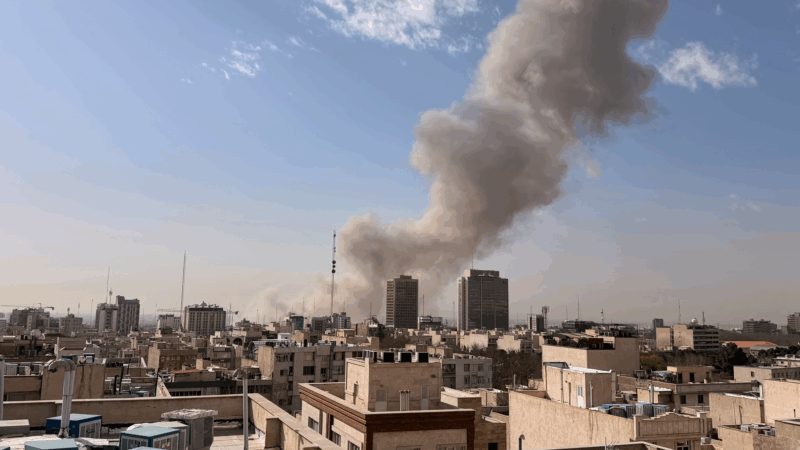
Why is the U.S. attacking Iran? Six things to know
The U.S. and Israel launched military strikes in Iran, targeting Khamenei and the Iranian president. "Operation Epic Fury" will be "massive and ongoing," President Trump said Saturday morning.
Sen. Tim Kaine calls on the Senate to vote on the war powers resolution
NPR's Scott Simon talks to Sen. Tim Kaine, D-Va., about the U.S. strikes on Iran.
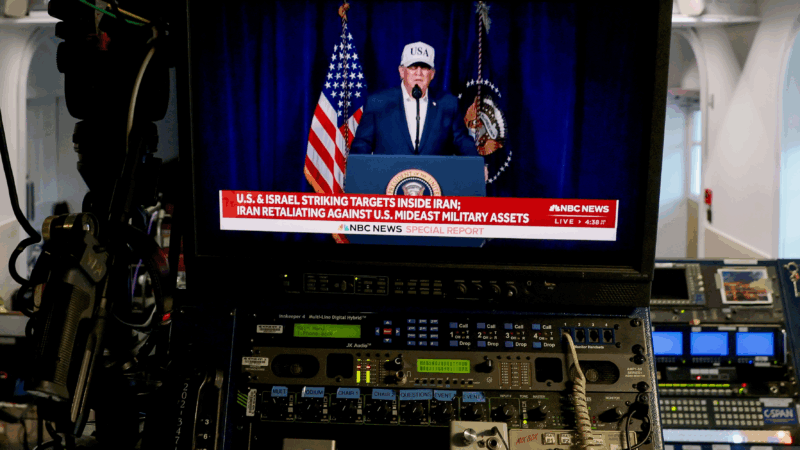
Iran strikes were launched without approval from Congress, deeply dividing lawmakers
Top lawmakers were notified about the operation shortly before it was launched, but the White House did not seek authorization from Congress to carry out the strikes.
Political science expert weighs in on Iran’s nuclear program in light of U.S. strikes
NPR's Scott Simon speaks to Ariane Tabatabai, the Public Service Fellow at Lawfare, about U.S. attacks on Iran and how President Trump's calls for regime change might be received there.
Week in Politics: Does Trump have political support for his actions in Iran?
We look at what President Trump's decision to attack Iran means, what kind of support he has in Iran and what this moment means for his administration.
