
It’s Not Just Hair: New Orleans CROWN Act Is A First For The Deep South But, Advocates Hope, Just The Beginning
New Orleans attorney Nia Weeks remembers the concerned comments she received from older Black women when she decided to grow locs three years ago.
“You can’t go into a court with locs. No one’s gonna hire you,” they told her.
At its last meeting in 2020, New Orleans City Council made a move to address those worries when it passed the C.R.O.W.N. Act Ordinance, which prohibits race-based hair discrimination, including the denial of employment and housing because of hair texture or protective hairstyles like braids, dreadlocks and bantu knots.
C.R.O.W.N. is an acronym for Creating a Respectful and Open World for Natural Hair. The C.R.O.W.N. Study, by cosmetic company Dove, revealed Black women are 80 percent more likely to change their hair to fit social norms and workplace expectations. Those changes often include straightening their hair with extreme heat or harsh chemical relaxers.
While Birmingham passed a resolution to recognize July 3 as National C.R.O.W.N. Day last summer, New Orleans was the first municipality in the Deep South to adopt a C.R.O.W.N. Act.
“It was the best Christmas present that I could have even thought of giving to Black women. It was a love letter and a thank you in action,” Weeks said. “Black women are not a monolith, but our hair and the experiences, the prejudice that we experience, is a unified issue, regardless of age, demographics, geography [and] socioeconomic status.”
At about 38 and 32 percent respectively, the Black populations in Mississippi and Louisiana make up a larger proportion of the population than in any other state. Still, race-based hair discrimination persists in these states, creating barriers to employment and education and to freedoms that others take for granted.
Read the full story from our partners at WWNO here.
This story was produced by the Gulf States Newsroom, a collaboration between Mississippi Public Broadcasting, WBHM in Birmingham, Alabama, WWNO in New Orleans and NPR.

Why farmers in California are backing a giant solar farm
Many farmers have had to fallow land as a state law comes into effect limiting their access to water. There's now a push to develop some of that land… into solar farms.
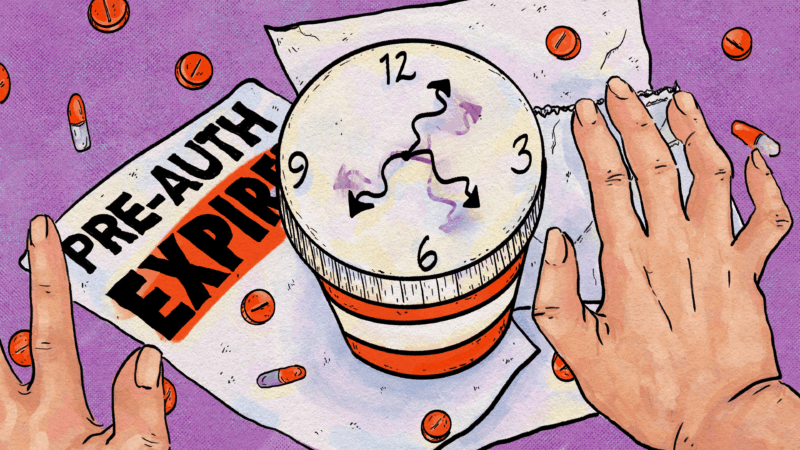
Can’t get a prescription renewed? Here’s how to cope with prior authorizations
These health care hurdles can stand in the way of getting treatment your doctor says you need. Here's what to know about how to deal with them.

Tariffs cost American shoppers. They’re unlikely to get that money back
After the Supreme Court declared the emergency tariffs illegal, the refund process will be messy and will go to businesses first.
Civil rights leaders say the racial progress Jesse Jackson fought for is under threat
Activists say racial progress won by the Rev. Jesse Jackson is under threat, as a new generation of leaders works to preserve hard-fought civil rights gains.
Every business wants your review. What’s with the feedback frenzy?
Customers want to read reviews and businesses need reviews to attract customers. But the constant demand for reviews could be creating a feedback backlash, experts say.
‘Get back to integrity’: Oklahoma’s Kevin Stitt on Republicans after Trump
NPR's Steve Inskeep asks Oklahoma Gov. Kevin Stitt about his spat with President Trump, immigration and the future of the Republican Party.
