
Birmingham Applies For Grants To Beef Up Surveillance, Readies To Open Real-Time Crime Center
The city of Birmingham will apply for state and federal grants to purchase new license plate readers and high-definition surveillance cameras, the city council decided Tuesday.
The city will apply for a grant from the U.S. Department of Justice, through the Alabama Law Enforcement Safety Division of the Alabama Department of Economic and Community Affairs, for $100,000 to purchase and maintain license plate readers “to improve the [Birmingham Police Department’s] response to violent crime.”
That decision comes just over a year after the council approved the installation of 10 license plate recognition cameras as part of a deal with Alabama Power. The city pays the utility a monthly rate of $2,291.67 to maintain the cameras. Those cameras had received pushback from activists concerned over “excessive” city funding for police, but Tuesday, the grant applications were approved without any discussion or controversy.
Another grant application approved Tuesday — also to DOJ through ADECA — requests $35,000 for the purchase, installation and maintenance of high-resolution surveillance cameras.
The council also approved a $394,231.50 increase in its contract with the Texas-based Tyler Technologies to add computer-aided dispatch maintenance services.
After multiple delays, the Birmingham Police Department is scheduled to launch its “real-time crime center” sometime this month. The $940,030 facility will serve as the BPD’s technological hub, consolidating technology such as ShotSpotter, PredPol, and Motorola’s CommandCentral Aware and BriefCam softwares.
These efforts are intended to combat the city’s rising rate of violent crime. Aside from a slight dip in 2018, the city’s homicide rate has increased steadily since 2014; 2020’s 124 homicides were the most the city had seen since 1994, and 2021 is roughly on track to match that number.
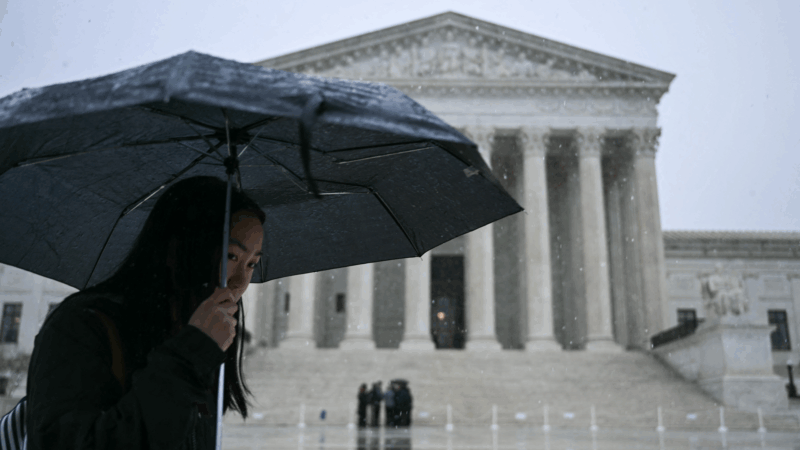
Snow and wind batter parts of US, with threat of thunderstorms and tornadoes
A broad and erratic patchwork of severe weather rumbled across much of the U.S. on Sunday, dumping heavy snow in the Upper Midwest while damaging high winds swept across the Plains.
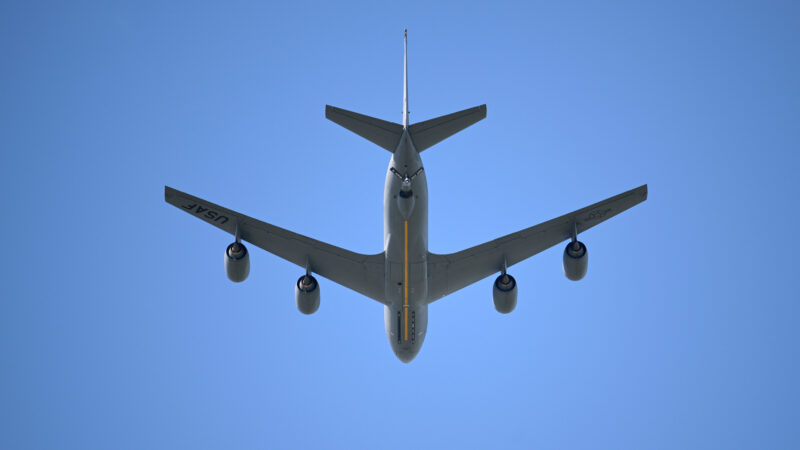
Crew of fatal US military crash included Alabama father recently deployed
The six U.S. service members who died in the crash of a U.S. military refueling aircraft included an Alabama father who had just been promoted and deployed. The U.S. government released the identities of the deceased service members Saturday.
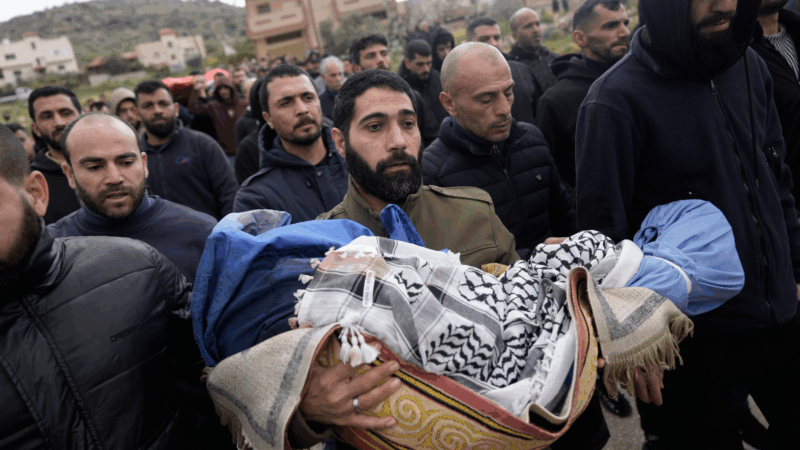
Israeli soldiers fire on family car in occupied West Bank, killing 4
Israeli soldiers fired on a car carrying a family in the northern West Bank, killing four people including two children, the Palestinian Authority's Health Ministry said.
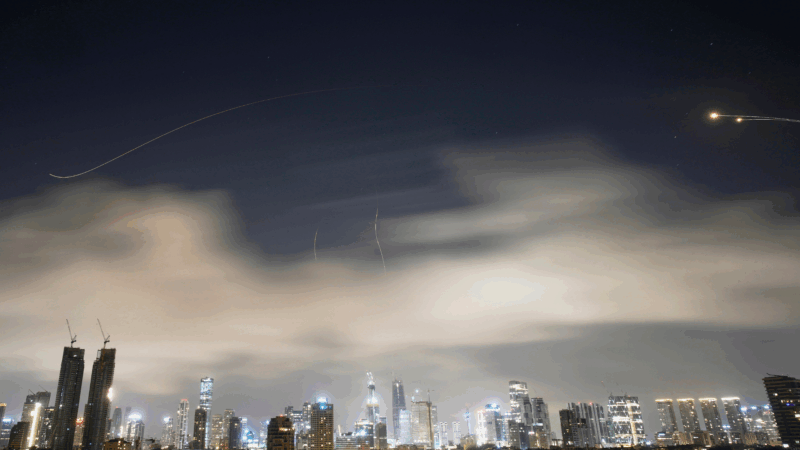
U.S. military names six killed in plane crash as Iran war enters third week
The conflict in the Middle East has entered a third week, with Israel announcing a barrage of new strikes on western Iran on Sunday, while the U.S. defense department released the names of six service members who died when their military refueling aircraft crashed.
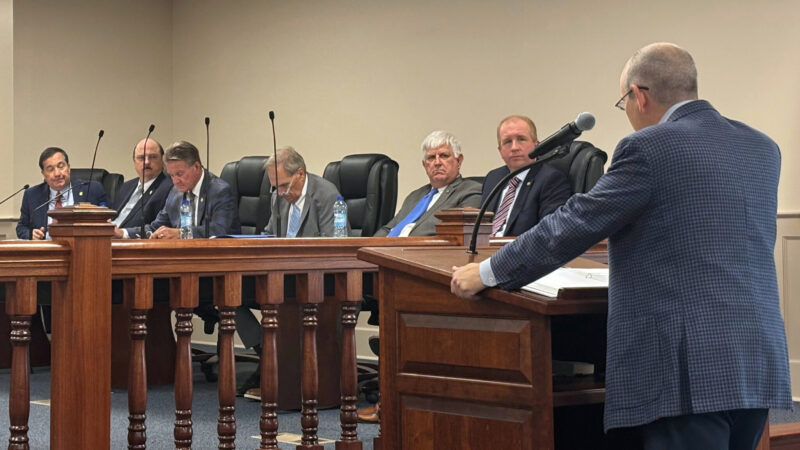
Alabama poised to drastically overhaul utility regulation. Will it lower electric bills?
The Alabama Senate unanimously voted to expand the public service commission, and create a Secretary of Energy to address rising electricity prices. A bill in the House would go even further, requiring rate case hearings and limiting utility profits.

Sunday Puzzle: BAD!
Ayesha Rascoe plays the puzzle with KCUR listener Justin Marciniak and Weekend Edition Puzzlemaster Will Shortz.
