
Birmingham Agrees To Sell Old Ensley High To Be Redeveloped As 244-Unit Housing
Plans are moving forward to redevelop the former Ensley High School property as a 244-unit housing development. The Birmingham City Council approved an ordinance Tuesday selling the campus, which has been abandoned since 2006, to the North Carolina-based Zimmerman Properties for $50,000.
The city also will provide incentives for the project in the form of a grant of up to $1.5 million, some of which will come from the U.S. Department of Housing and Urban Development Home Investment Partnerships Program.
The new apartments are being developed in partnership with the Housing Authority of Greater Birmingham. The total project is expected to cost $54.6 million.
The campus’ main building was severely damaged by fire in 2018 and will be demolished to make way for the new development.
The first phase of construction is planned to include a three-story apartment building, a community center and a three-story parking deck. Apartments will be available to those earning between $16,000 and $45,000 annually. The planned redevelopment also will convert the former Ensley High School gym to commercial space.
District 8 Councilor Steven Hoyt was the sole voice of opposition to the agreement, saying that the planned development includes too many units and will “condense” the area’s population, exacerbating rates of violent crime.
“We’re going to concentrate poverty in an area that already has experienced that,” he said. “It’s my opinion that we need more single-family detached homes there … Multifamily [housing], generally the persons who live there are transient. They move in and out. When you’ve got somebody who’s got a home, you’ve got an investment. They have some ownership, and it’s a little more stable than just multifamily. Just given the history of that community, the crime rate is still high in that community. We really want to promote homeownership.”
Hoyt argued that multifamily developments are more likely to be approved in majority-Black areas of Birmingham than they are in majority-white areas.
“There is a distinct dichotomy in how we view the Black community,” he said. “It really is a tale of two cities.”
The council approved the redevelopment deal, with Hoyt as the only “no” vote. Council President William Parker was absent.
In recent weeks, the council has addressed the future of several abandoned schools in the city. In March, it approved the demolition of Banks High School, which has been vacant since 2007. It’s also mulling a proposal from Mayor Randall Woodfin’s office to redevelop Hill Elementary School, which closed in 2014.

China sets a lower economic growth target of 4.5% to 5% for 2026 as challenges loom
China has signaled continuity rather than change for its economy, setting a slightly lower target for growth this year in the midst of a property slump and other headwinds at home and growing uncertainty abroad.
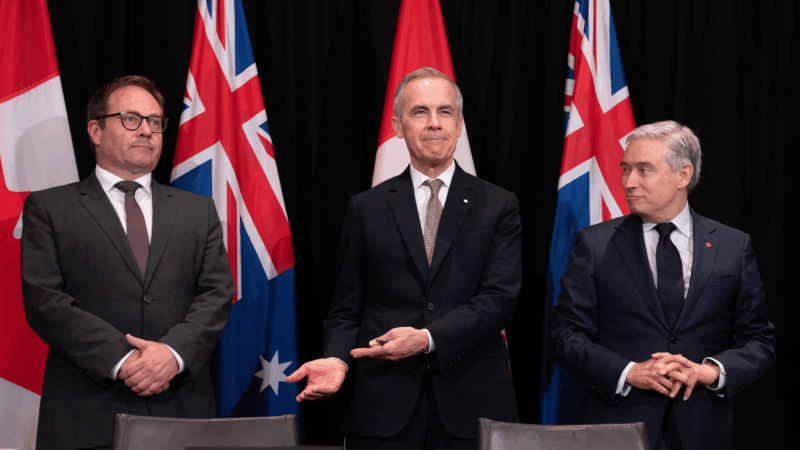
Carney says he backs strikes on Iran ‘with some regret’ as world order frays
Canadian Prime Minister Mark Carney says he supports the strikes on Iran "with some regret" as they represent an extreme example of a rupturing world order.
Iranian civilians are now fleeing the relentless bombing for neighboring Turkey
As the U.S. military broadens its strikes in Iran, traumatized Iranians are reaching the border with Turkey.

A split Senate votes against measure to constrain Trump’s authorities in Iran
Democrats in the Senate were facing an uphill climb Wednesday in their push to restrain President Trump's ability to wage war against Iran.
WATCH: How traffic dried up in the Strait of Hormuz since the Iran war began
The effective closure of the Strait of Hormuz is "about as wrong as things could go" for global oil markets. Iran achieved it not with a naval blockade, but with cheap drones.
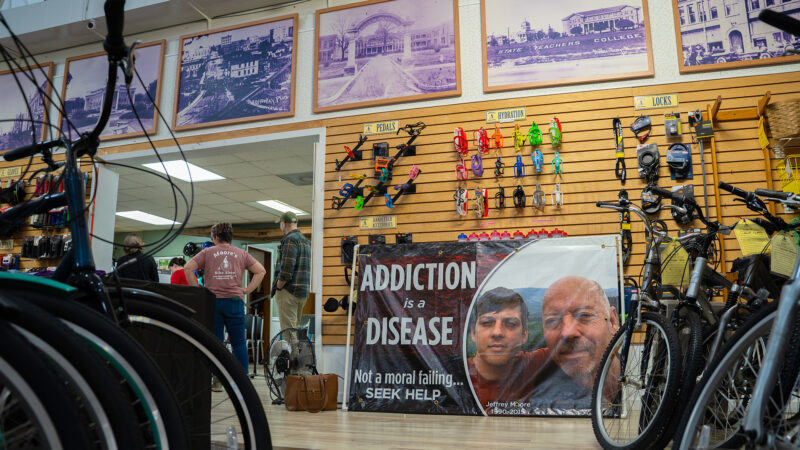
As Mississippi waits to spend opioid settlement funds, children and families suffer
Mississippi will receive more than $400M to fight the opioid epidemic. So far, officials haven't directed it toward programs that support addiction recovery.
