
Cam Ward Plans New Direction For Pardons And Paroles
A state lawmaker who has long advocated for changes to the criminal justice system will lead Alabama’s Bureau of Pardons and Paroles. State Sen. Cam Ward from Alabaster, takes over the new role on Monday and will resign from his position in the Senate.
Ward replaces outgoing director and former state judge Charlie Graddick, who announced his resignation last month.
The transition marks the end of a contentious one-year term for Graddick, who was appointed in 2019 by Gov. Kay Ivey to restructure the agency.
Graddick’s office said he made many improvements, hiring dozens of probation and parole officers and upgrading facilities. But Graddick has been criticized for discouraging paroles despite an overcrowding crisis in state prisons. According to the most recent report from the Alabama Department of Corrections, there are more than 20,000 state inmates in facilities built to house around 12,000 people.
Since Graddick took over in September 2019, the number of people granted parole has plummeted to the lowest level in years, according to a report by the American Civil Liberties Union. The Bureau’s three-member parole board is scheduling fewer hearings than in years past and has experienced additional delays due to the pandemic. Of the cases that came before it, the board granted fewer than 20 percent of paroles from September 2019 through August 2020.
While Graddick did not make parole decisions, he defended the board and the decline in parole rates during a 2020 state budget hearing, saying many incarcerated people do not qualify for parole.
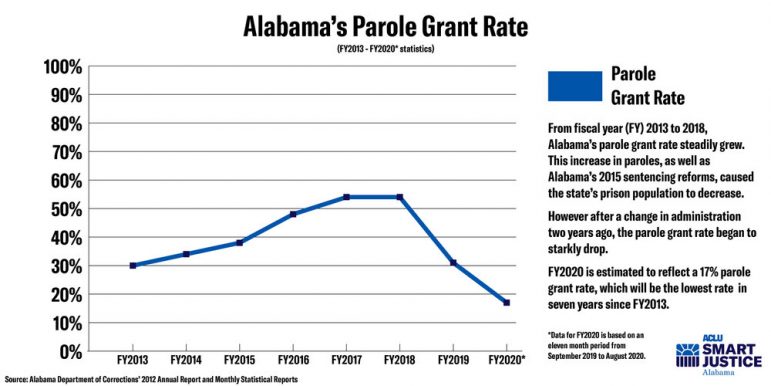
Ward has been critical of Graddick’s leadership of the Bureau in the past. As the incoming director, he said there needs to be a more balanced approach to making parole decisions and the parole board should not be “re-trying every case.”
During his 10 years in the state legislature, Ward led many efforts to change Alabama’s prison system, which is among the country’s most overcrowded and violent. He sponsored legislation in 2015 that helped lower the prison population and was part of a group of lawmakers spearheading several unsuccessful reform bills in 2020.
Ward said although the Bureau of Pardons and Paroles operates separately from the prison system, the two can work together to improve issues like recidivism.
“One of the Bureau’s biggest roles should be re-entry back into society,” Ward said. “And that’s something I do want to change and make that a big part of the mission.”
He said the Bureau faces many challenges, including low morale and a lack of communication between the director and the three-member parole board.
The state agency is understaffed and in high demand, with roughly 370 officers currently supervising more than 27,000 people on probation and parole throughout Alabama.

Auburn football player uses NIL funds to open a community hub in Birmingham
Jourdin Crawford, a freshman defensive lineman at Auburn, used earnings from a Name, Image, and Likeness deal to give back to his hometown.

Fear of Iranian mines in the Strait of Hormuz could further slow the flow of oil
Attacks by Iran have already nearly halted the flow of oil through the vital waterway as commercial ship crews fear being hit by missiles, drones or mines.

Bruno Mars adds yet another milestone to his career with ‘The Romantic’
Bruno Mars is the most-listened to artist in the world on Spotify. He's won 16 Grammys. In case you thought there were no battles left for him to win, this week he unlocked another achievement.
There’s more than one path to a confessional song
On new albums by viral sensation Yebba and studio whiz Pimmie, it's clear modern R&B has been clearing space for vastly different stripes of singer-songwriter.

Suspect in attack at Michigan synagogue is dead, officials say
Security officers at Temple Israel had "engaged the threat" that apparently started with a vehicle ramming into the building, according to Oakland County Sheriff Mike Bouchard.
This tale of a Chicago school book ban was inspired by true events
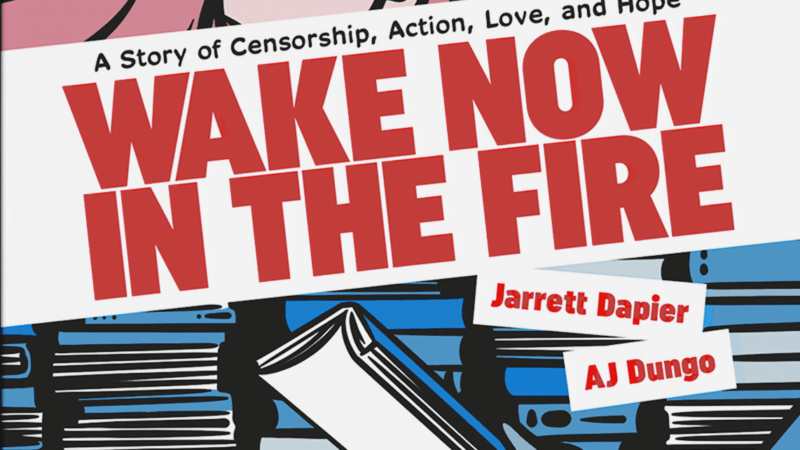
Librarian Jarrett Dapier's graphic novel tells a fictionalized account of real-life events in 2013 that restricted access to Marjane Satrapi's memoir Persepolis in Chicago Public Schools.
