
Alabama’s New Prisons Planned For Bibb, Elmore and Escambia Counties
Alabama officials announced Thursday the location of three new regional prisons planned for Bibb, Elmore and Escambia counties.
In a statement, Governor Kay Ivey’s office said the Alabama Department of Corrections (ADOC) will now enter into negotiations with two private developer teams who will build the facilities and lease them to the state. ADOC will still operate and staff the prisons, but the private developers will be responsible for long-term maintenance. Officials said they will announce financial details of the project in late 2020, after final negotiations.
The new prisons will replace several existing male facilities, which are chronically overcrowded, understaffed and violent. ADOC is currently under a court order to improve conditions and hire roughly 2000 correctional officers. It is also in negotiations with the US Department of Justice to address violence among both inmates and staff.
“It is no secret that the ADOC is facing real, longstanding challenges, most of which are decades in the making and rooted in inadequate, crowded, and structurally failing facilities,” ADOC Commissioner Jeff Dunn said in a statement. “Building new facilities that improve safety and security for staff and inmates and allow for effective inmate rehabilitation is the right and only path forward.”
Some lawmakers have voiced concerns about a lack of transparency and a lack of involvement in the construction planning process. Many critics have also argued that new, larger prisons will not address the root issues facing the prison system. In a statement Thursday, the advocacy group Alabamians for Fair Justice said the state should focus more on sentencing reform and alternatives to prison.
“A prison plan focused only on building more cages will only serve to feed the prison industrial complex, resulting in the disproportionate incarceration and exploitation of even more Black and Brown people to pad the pockets of private prison corporations,” the group said.
In Thursday’s announcement, the governor said the new prisons will provide more space for programming and recreation, and the buildings will be designed with more cells, rather than open dormitories found in many existing facilities. She said the ADOC faces $1 billion in deferred maintenance costs to continue using its current male prisons.
According to the plan, CoreCivic, a national private prison company, will build two of the new facilities, in Elmore County and Escambia County. The prison in Bibb County will be developed by Alabama Prison Transformation Partners, a group that includes Birmingham-based construction company BL Harbert International. Previously, officials said the new prisons will house between 3000 and 4000 inmates.
Editor’s Note: BL Harbert International sponsors some programming on WBHM, but our news and business departments operate independently.
House Dem. Leader Jeffries responds to air strikes on Iran by U.S. and Israel
NPR's Emily Kwong speaks to House Minority Leader Hakeem Jeffries (D-NY), who is still calling for a vote on a war powers resolution following a wave of U.S.- and Israel-led airstrikes on Iran.
Iran’s Ayatollah Ali Khamenei is killed in Israeli strike, ending 36-year iron rule
Khamenei, the Islamic Republic's second supreme leader, has been killed. He had held power since 1989, guiding Iran through difficult times — and overseeing the violent suppression of dissent.

Found: The 19th century silent film that first captured a robot attack
A newly rediscovered 1897 short by famed French filmmaker Georges Méliès is being hailed as the first-ever depiction of a robot in cinema.
‘One year of failure.’ The Lancet slams RFK Jr.’s first year as health chief
In a scathing review, the top US medical journal's editorial board warned that the "destruction that Kennedy has wrought in 1 in office might take generations to repair."
Here’s how world leaders are reacting to the US-Israel strikes on Iran
Several leaders voiced support for the operation – but most, including those who stopped short of condemning it, called for restraint moving forward.
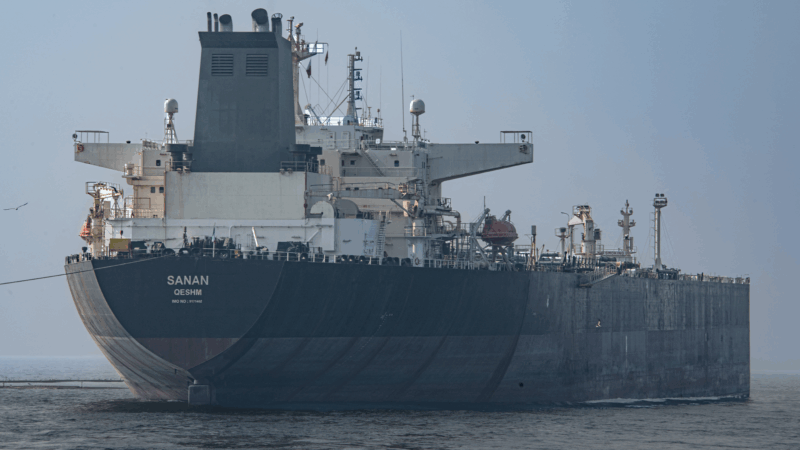
How could the U.S. strikes in Iran affect the world’s oil supply?
Despite sanctions, Iran is one of the world's major oil producers, with much of its crude exported to China.
