
A UAB Program Connects Resources For Pregnant Mothers Dealing With Substance Use Disorders

 ========= Old Image Removed =========Array
(
    [_wp_attached_file] => Array
        (
            [0] => 2018/09/Screen_Shot_2018-09-02_at_9.01.27_PM-e1535940286739.png
        )

    [_wp_attachment_metadata] => Array
        (
            [0] => a:5:{s:5:"width";i:594;s:6:"height";i:334;s:4:"file";s:63:"2018/09/Screen_Shot_2018-09-02_at_9.01.27_PM-e1535940286739.png";s:5:"sizes";a:6:{s:6:"medium";a:4:{s:4:"file";s:63:"Screen_Shot_2018-09-02_at_9.01.27_PM-e1535940286739-336x189.png";s:5:"width";i:336;s:6:"height";i:189;s:9:"mime-type";s:9:"image/png";}s:9:"thumbnail";a:4:{s:4:"file";s:63:"Screen_Shot_2018-09-02_at_9.01.27_PM-e1535940286739-140x140.png";s:5:"width";i:140;s:6:"height";i:140;s:9:"mime-type";s:9:"image/png";}s:9:"wbhm-icon";a:4:{s:4:"file";s:61:"Screen_Shot_2018-09-02_at_9.01.27_PM-e1535940286739-80x80.png";s:5:"width";i:80;s:6:"height";i:80;s:9:"mime-type";s:9:"image/png";}s:18:"wbhm-featured-home";a:4:{s:4:"file";s:63:"Screen_Shot_2018-09-02_at_9.01.27_PM-e1535940286739-553x311.png";s:5:"width";i:553;s:6:"height";i:311;s:9:"mime-type";s:9:"image/png";}s:22:"wbhm-featured-carousel";a:4:{s:4:"file";s:63:"Screen_Shot_2018-09-02_at_9.01.27_PM-e1535940286739-470x265.png";s:5:"width";i:470;s:6:"height";i:265;s:9:"mime-type";s:9:"image/png";}s:14:"post-thumbnail";a:4:{s:4:"file";s:63:"Screen_Shot_2018-09-02_at_9.01.27_PM-e1535940286739-125x125.png";s:5:"width";i:125;s:6:"height";i:125;s:9:"mime-type";s:9:"image/png";}}s:10:"image_meta";a:12:{s:8:"aperture";s:1:"0";s:6:"credit";s:0:"";s:6:"camera";s:0:"";s:7:"caption";s:0:"";s:17:"created_timestamp";s:1:"0";s:9:"copyright";s:0:"";s:12:"focal_length";s:1:"0";s:3:"iso";s:1:"0";s:13:"shutter_speed";s:1:"0";s:5:"title";s:0:"";s:11:"orientation";s:1:"0";s:8:"keywords";a:0:{}}}
        )

    [_wp_attachment_image_alt] => Array
        (
            [0] => A sign for UAB's Comprehensive Addiction in Pregnancy Program
        )

    [_media_credit] => Array
        (
            [0] => Source: Mary Scott Hodgin
        )

    [_navis_media_credit_org] => Array
        (
            [0] =>  WBHM
        )

    [_navis_media_can_distribute] => Array
        (
            [0] => 
        )

    [_wp_attachment_backup_sizes] => Array
        (
            [0] => a:9:{s:9:"full-orig";a:3:{s:5:"width";i:600;s:6:"height";i:448;s:4:"file";s:40:"Screen_Shot_2018-09-02_at_9.01.27_PM.png";}s:14:"thumbnail-orig";a:4:{s:4:"file";s:48:"Screen_Shot_2018-09-02_at_9.01.27_PM-140x140.png";s:5:"width";i:140;s:6:"height";i:140;s:9:"mime-type";s:9:"image/png";}s:11:"medium-orig";a:4:{s:4:"file";s:48:"Screen_Shot_2018-09-02_at_9.01.27_PM-336x251.png";s:5:"width";i:336;s:6:"height";i:251;s:9:"mime-type";s:9:"image/png";}s:14:"wbhm-icon-orig";a:4:{s:4:"file";s:46:"Screen_Shot_2018-09-02_at_9.01.27_PM-80x80.png";s:5:"width";i:80;s:6:"height";i:80;s:9:"mime-type";s:9:"image/png";}s:18:"wbhm-featured-orig";a:4:{s:4:"file";s:48:"Screen_Shot_2018-09-02_at_9.01.27_PM-600x338.png";s:5:"width";i:600;s:6:"height";i:338;s:9:"mime-type";s:9:"image/png";}s:25:"wbhm-featured-square-orig";a:4:{s:4:"file";s:48:"Screen_Shot_2018-09-02_at_9.01.27_PM-300x300.png";s:5:"width";i:300;s:6:"height";i:300;s:9:"mime-type";s:9:"image/png";}s:23:"wbhm-featured-home-orig";a:4:{s:4:"file";s:48:"Screen_Shot_2018-09-02_at_9.01.27_PM-417x311.png";s:5:"width";i:417;s:6:"height";i:311;s:9:"mime-type";s:9:"image/png";}s:27:"wbhm-featured-carousel-orig";a:4:{s:4:"file";s:48:"Screen_Shot_2018-09-02_at_9.01.27_PM-355x265.png";s:5:"width";i:355;s:6:"height";i:265;s:9:"mime-type";s:9:"image/png";}s:19:"post-thumbnail-orig";a:4:{s:4:"file";s:48:"Screen_Shot_2018-09-02_at_9.01.27_PM-125x125.png";s:5:"width";i:125;s:6:"height";i:125;s:9:"mime-type";s:9:"image/png";}}
        )

)
1677983449 
1536049340

Alabama’s Chemical Endangerment Law makes it a felony offense to use drugs during pregnancy. A UAB program funded by the U.S. Department of Health and Human Services wants to redirect the focus from criminalizing a woman’s addiction to treating it.

The Comprehensive Addiction in Pregnancy Program, or CAPP, is designed to address the needs of women who are pregnant and dealing with substance abuse. Dr. Lorie Harper is the medical director of the program.

“[Patients] can come just to this one little area and get addiction care, pregnancy care, social work and family services, and case coordination,” Dr. Harper says.

Harper says normally, women receive prenatal care separately from addiction recovery services. There can be a lack of communication between providers and women may not obtain adequate treatment. Additionally, women are often anxious about whether they will be in trouble after they deliver.

Abbie, who asked us not to use her last name, is one of the 16 participants enrolled in CAPP. She has struggled with an addiction to heroin and prescription drugs, but has been sober since starting the program.

“They teach us about you know, how to cope, while being pregnant and being a recovering addict, so it’s really helpful,” she says.

Abbie says she is ready to be a mom, and she is not worried about losing custody after birth. That is the goal, according to Suzanne Muir, project director of CAPP. Muir helped start the CAPP program after seeing women separated from their babies and sent to jail due to Alabama’s Chemical Endangerment Law, which criminalizes drug use during pregnancy.

“We’re hoping that more women leave the hospital with their baby,” Muir says, “because we can intervene with them early and get them the necessary treatment.”

The Comprehensive Addiction in Pregnancy Program began accepting patients in April. It is funded for five years, with plans to increase recruitment over time. The next group of participants begins treatment in September.


Iranian civilians are now fleeing the relentless bombing for neighboring Turkey

As the U.S. military broadens its strikes in Iran, traumatized Iranians are reaching the border with Turkey.

A split Senate votes against measure to constrain Trump’s authorities in Iran

Democrats in the Senate were facing an uphill climb Wednesday in their push to restrain President Trump's ability to wage war against Iran.

WATCH: How traffic dried up in the Strait of Hormuz since the Iran war began

The effective closure of the Strait of Hormuz is "about as wrong as things could go" for global oil markets. Iran achieved it not with a naval blockade, but with cheap drones.
As Mississippi waits to spend opioid settlement funds, children and families suffer

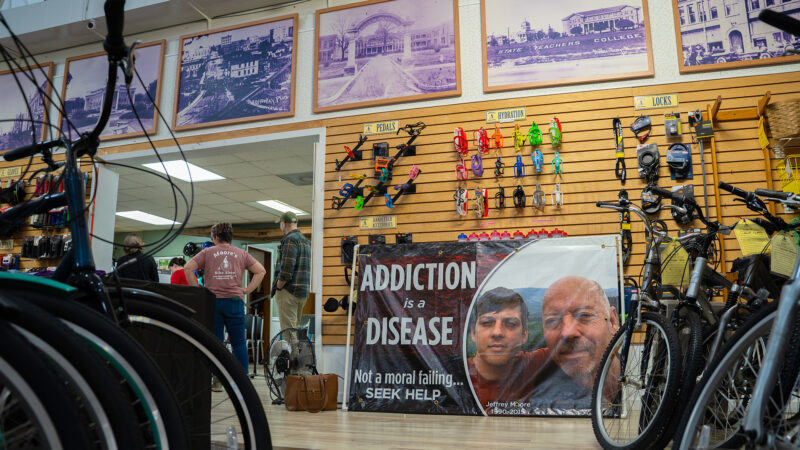
Mississippi will receive more than $400M to fight the opioid epidemic. So far, officials haven't directed it toward programs that support addiction recovery.
Alabama’s new state climatologist takes the reins

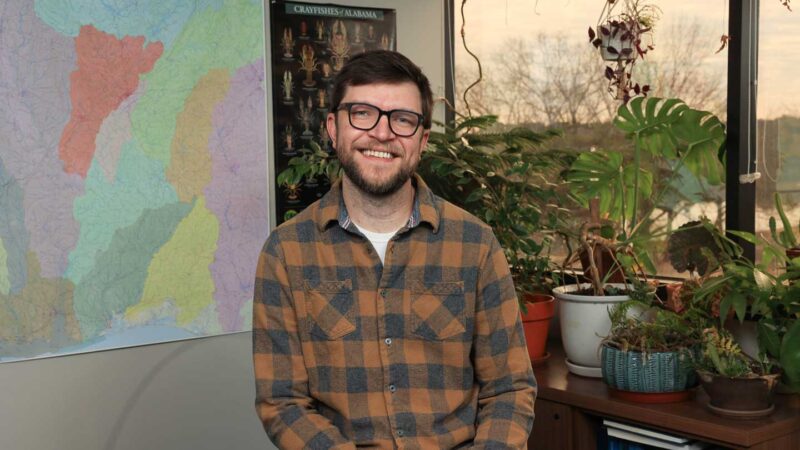
The controversial John Christy is retiring as Alabama’s state climatologist. Lee Ellenburg now assumes the role and is already making a few changes, including declaring that climate change is real and caused by humans.
Colossal Biosciences breeds controversy while trying to revive mammoths

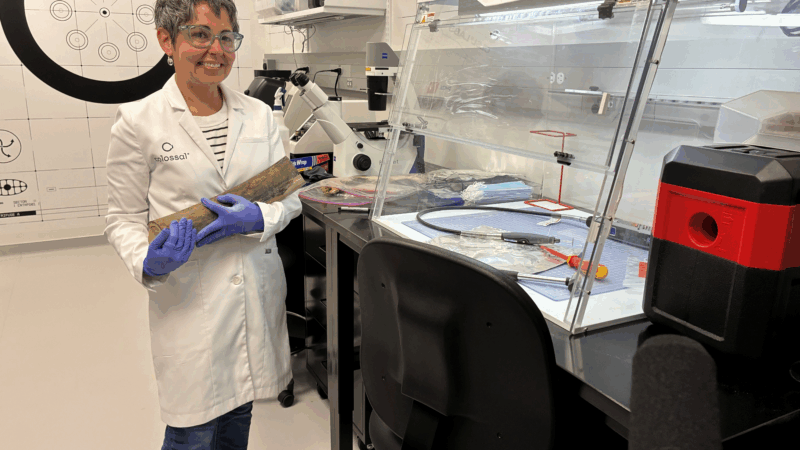
A Texas biotech company is trying to bring mammoths and other extinct creatures back to life. The science is as intriguing as the ethical questions are thorny.

More Front Page Coverage