
Legislative Update: Uber and Lyft Regulations, Guns in Church
This week, the Alabama Senate voted to regulate ride-sharing services such as Uber and Lyft. And a House committee endorsed legislation sponsored by Rep. Lynn Greer that would allow people at church to defend themselves with guns. Similar bills are advancing in states from Florida to Virginia. Don Dailey, host of Alabama Public Television’s Capitol Journal says not all churches are on board.
The bill would add churches to the state’s Stand Your Ground law, enacted in 2006. Under the legislation, people can use physical force against someone committing a crime or attempting to commit a crime and using physical force against a church employee, volunteer, congregant, or anyone else permitted on church grounds.
In his arguments before the House Judiciary Committee this week, Greer noted recent deadly church shootings outside Nashville and in Sutherland Springs, Texas last November. He said the measure would give immunity to church security personnel. Greer acknowledged the bill as written does not require training for anyone using a gun on church grounds. Law enforcement has expressed concern over the bill. Churches are mixed. Some religious representatives say they want to maintain the holiness of the church. Groups that advocate stricter gun laws such as members of the Alabama chapter of Moms Demand Action for Gun Sense opposed the bill.
Similar measures have been filed in recent years to allow Briarwood Presbyterian Church to have its own police force. That bill last year didn’t pass.
Ridesharing Company Regulations
The Senate passed a bill this week that would implement statewide regulations for ride-sharing services Uber and Lyft. The legislation, sponsored by Sen. Bobby Singleton, expands the availability of ride-sharing companies beyond the 15 Alabama cities that already license and regulate them.
The state regulations would take the place of city ordinances. Supporters of the bill noted Alabama is one of only six states with no statewide regulations for ride-sharing companies, advocates for the bill say.
According to the bill, these companies would need to obtain a permit from the Public Service Commission. The PSC takes a 1 percent fee on each fare. Of those total revenues, the PSC could keep up to 50 percent to cover the cost of regulation. The rest would be issued back to cities and counties where the rides originate. The PSC also regulates and sets rates for utility companies such as Alabama Power and Spire Inc.

Forget the State of the Union. What’s the state of your quiz score?
What's the state of your union, quiz-wise? Find out!

A team of midlife cheerleaders in Ukraine refuses to let war defeat them
Ukrainian women in their 50s and 60s say they've embraced cheerleading as a way to cope with the extreme stress and anxiety of four years of Russia's full-scale invasion.
Nancy Guthrie case: How do families of missing people cope with the uncertainty?
When a loved one goes missing, relatives can feel guilty simply for eating, says Charlie Shunick, whose sister was kidnapped. Shunick now helps others navigate a nightmare "nobody is prepared for."
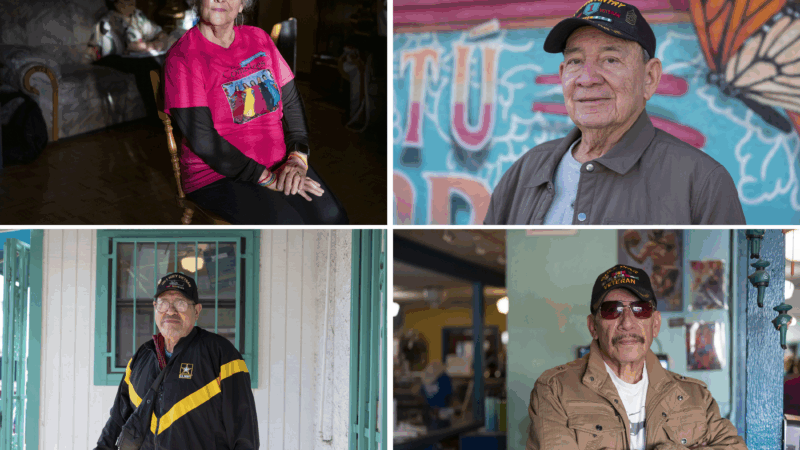
As the U.S. celebrates its 250th birthday, many Latinos question whether they belong
Many U.S.-born Latinos feel afraid and anxious amid the political rhetoric. Still, others wouldn't miss celebrating their country
US military used laser to take down Border Protection drone, lawmakers say
The U.S. military used a laser to shoot down a Customs and Border Protection drone, members of Congress said Thursday, and the Federal Aviation Administration responded by closing more airspace near El Paso, Texas.
Deadline looms as Anthropic rejects Pentagon demands it remove AI safeguards
The Defense Department has been feuding with Anthropic over military uses of its artificial intelligence tools. At stake are hundreds of millions of dollars in contracts and access to some of the most advanced AI on the planet.
