
UAB Program Unravels Mysteries Of The Human Body
Each year thousands of people suffer from diseases that remain a mystery. And sometimes, these illnesses can stay undiagnosed for decades. But UAB is trying to change that. By delving into a patient’s gene pool, the Undiagnosed Diseases Program can solve the mysteries of the human body and give loved ones peace of mind.
Kendra Edwards is a shy, quiet 22 year old with long brown hair. She lives in Arkansas with her grandmother, and is confined to a wheelchair. But it wasn’t always that way. Several years ago, Kendra started having difficulty walking. Pat Bronner is Kendra’s grandmother.
“When we first noticed the condition, Kendra was around 6 years old,” she said. “We noticed she had been doing a little bit of toe walking and then she started dragging her right foot. So, we got a little concerned and we started taking her to doctors.” Edward’s parents even took her to the Mayo Clinic, but doctors were stumped. A few years later, Edward’s lost both her parents to cancer. But Kendra’s family continued to look for a diagnosis of her condition. Still no answers. “We left the doctor’s office a lot of times almost in tears.” said Ms. Bronner.
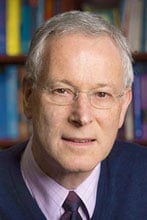
Dr. Bruce Korf heads the UAB Undiagnosed Diseases Program and the University’s Department of Genetics
Kendra’s condition became progressively worse. She lost all use of her legs. After years of seeing different doctors and specialists, she eventually found her way to the UAB Undiagnosed Diseases Program or UDP. And after many hours of interviews, tests and procedures, what had been elusive to so many physicians, was finally diagnosed as ADCY5-related dyskinesia, a movement disorder that stems from a genetic mutation. Approximately 100 people worldwide have been diagnosed with the disease.
When the UDP takes on a case, a team of specialists is created specifically for that patient. A team might include pediatricians geneticists cardiologists and oncologists. Martin Rodriquez specializes in infectious diseases and is on the UDP team. He says nowadays many doctors don’t have much time to spend with patients. “With this program, we do take the time,” he said. “Sometimes we have evaluations that take hours to really go into depth of the illness and go and back and review the records and gather complete histories so that’s very important I think in the evaluation of these patients.”
Dr. Martin Rodriquez specializes in infectious diseases and is a member of the UDP team.
Bruce Korf heads the UDP and the UAB Department of Genetics. He says in addition to spending time with patients another factor is essential to the mystery-solving process: investigating links between a disease and a patient’s genetics.
“We’re sifting though potentially four million genetic variances on any particular patient,” he said. “Looking for that needle in a haystack. For the most part, at first blush, doesn’t stand out. It’s not like it’s painted red or something. And, it’s really laborious, but sometimes it’s kind of an exciting task trying to figure out which of these needles is the one that’s actually different.”
It’s the in-depth family history combined with a deep dive into a genetic pool that allows doctors to solve these types of medical mysteries. Ashley Cannon is a genetic counselor for the UDP. She says often by the time families get to her, they’ve given up on a diagnosis. “If I were these families I think I would be coming into the room and be like, this is the story, but I don’t really think you’re going to find anything,” she said. “But, I’ve found so many people are just happy to sit and talk to someone. Someone believes that there is something truly going on.”
Korf says the entire health care community benefits by solving these mysteries. The UDP shares its findings with other health care professionals saving countless hours and dollars on lengthy and costly investigations. Since its creation, UDP has seen about 100 patients. Its success rate is a little more than 50 percent. As for the future of the program, Korf says as technology, especially in genetics, becomes more sophisticated, he expects the success rate will improve. He says currently there is no cure for Kendra’s condition, and it’s so rare, no one knows how it will progress. But for Kendra and her family, knowing what she’s up against makes all the difference.

Ilia Malinin, figure skater favored for gold, finishes 8th
Malinin, undefeated since 2023, stumbled and fell multiple times, landing far off the podium. Mikhail Shaidorov of Kazakhstan won gold in an upset that shocked even himself.

DHS says immigration agents appear to have lied about shooting in Minnesota
Julio Cesar Sosa-Celis was shot in the leg during the incident. Another Venezuelan man was also accused of attacking an immigration officer.

Venezuela debates sweeping amnesty for political prisoners
After the fall of Nicolás Maduro, the Venezuelan regime promise amnesty and reconciliation — but for hundreds still jailed and thousands facing charges, justice remains uncertain.
It’s been five years since catastrophic Texas blackouts. How much has changed?
Power companies say they're better prepared for extreme weather, but challenges remain to electricity production as the state's demand grows

FBI releases description of suspect, increases reward in Nancy Guthrie case
The FBI describes the armed man caught on Nancy Guthrie's camera as 5-foot-9-inches to 5-foot-10 and of average build. The 84-year-old mother of Savannah Guthrie has been missing since Feb. 1.
Virginia court allows Democrats’ redistricting vote in their plan to counter to Trump
The ruling allows an April election where voters can let the legislature draw a new congressional map. It could help Democrats win more House seats. Republicans might still fight it in court.
