
StoryCorps: “I’m not complicated…”
Lacey: I identify as bisexual so that means that I am attracted to people of multiple genders. I used to feel like, in queer spaces, that I wasn’t queer enough to be there. I was constantly having this fear that other people were sort of assessing my queerness. It constantly felt like it was insufficient to me.
Sarah: Can you take us back to a moment or that series of moments when you didn’t feel queer enough for that space?
Lacey: There were groups on campus who were supportive, a gay/straight student alliance, and I remember going to meetings and just feeling like the language was so exclusive and it was either “gay and lesbian this” or “gay and lesbian that.” There was sort of an idea that I had that I was faking it or something, that I didn’t deserve to be in the spaces.
Sarah: It sounds really isolating. I think that sometimes we have to be each other’s guides into those conversations, which leads me to the Bi Brunches.
Lacey: I really just wanted a space where other bi people could be around each other. It’s hard sometimes for us as bi people to see each other.
Sarah: I think Bi Brunch for me is a really simple way of opening our community up and allowing people to connect with us.
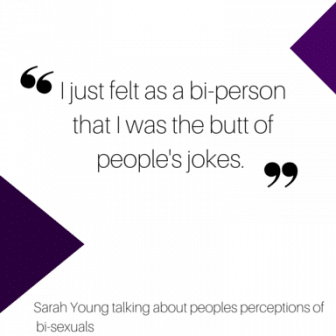
I think knowing that you’re not alone … I just felt as a bi person that I was the butt of people’s jokes. I had an out gay man say to me “bisexuals aren’t real,” like we’re some sort off figment of somebody’s imagination. I had a female partner for a long time, and she would come to Thanksgivings. People assumed then that I was identifying as lesbian. Years later, when my partner, who is male-identified, came to Thanksgiving, I had an uncle who asked my mom, “So has Sarah turned straight now?” My mom’s response, even though she’s pretty educated, she said, “No, no, no. It’s complicated.” And that was her way of stopping the conversation. I talked to her about it later, and I said “Mom, you know, I’m not complicated, my identity’s not complicated.” I think bisexuality is a pretty easy thing to understand.

How could the U.S. strikes in Iran affect the world’s oil supply?
Despite sanctions, Iran is one of the world's major oil producers, with much of its crude exported to China.
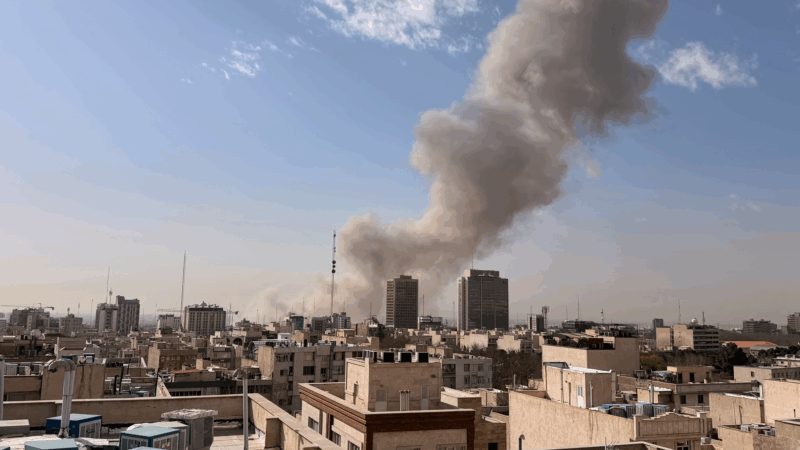
Why is the U.S. attacking Iran? Six things to know
The U.S. and Israel launched military strikes in Iran, targeting Khamenei and the Iranian president. "Operation Epic Fury" will be "massive and ongoing," President Trump said Saturday morning.
Sen. Tim Kaine calls on the Senate to vote on the war powers resolution
NPR's Scott Simon talks to Sen. Tim Kaine, D-Va., about the U.S. strikes on Iran.
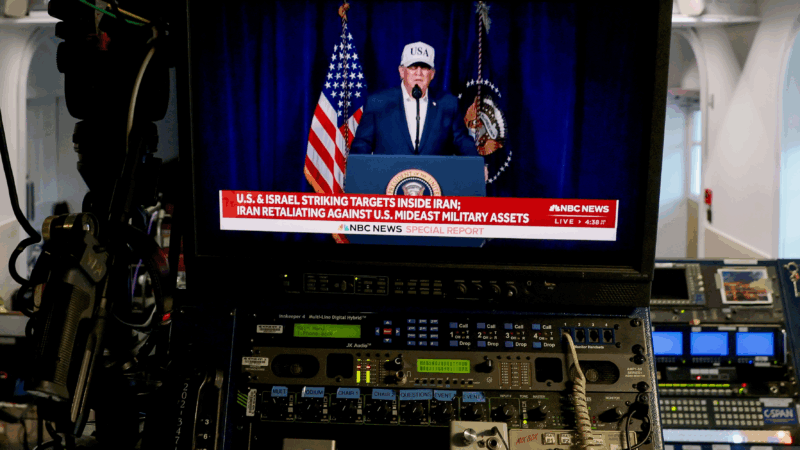
Iran strikes were launched without approval from Congress, deeply dividing lawmakers
Top lawmakers were notified about the operation shortly before it was launched, but the White House did not seek authorization from Congress to carry out the strikes.
Political science expert weighs in on Iran’s nuclear program in light of U.S. strikes
NPR's Scott Simon speaks to Ariane Tabatabai, the Public Service Fellow at Lawfare, about U.S. attacks on Iran and how President Trump's calls for regime change might be received there.
Week in Politics: Does Trump have political support for his actions in Iran?
We look at what President Trump's decision to attack Iran means, what kind of support he has in Iran and what this moment means for his administration.
