
Civil Rights Activist Amelia Boynton Robinson Dies At 104
Amelia Boynton Robinson, a civil rights activist who nearly died while helping lead the “Bloody Sunday” civil rights march in 1965, championed voting rights for blacks and was the first black woman to run for Congress in Alabama, died early Wednesday at age 104, her son Bruce Boynton said.
Boynton Robinson was among those beaten during the voting rights march across the Edmund Pettus Bridge in Selma, Alabama, in March 1965 that became known as “Bloody Sunday.” State troopers teargased and clubbed the marchers as they tried to cross the bridge. A newspaper photo showing Boynton Robinson, who had been beaten unconscious, drew wide attention to the movement.
Fifty years later, Barack Obama, the first black president of the United States, pushed her across the span in a wheelchair during a commemoration.
Boynton Robinson, who was hospitalized in July after having a major stroke, turned 104 on Aug. 18. Her son said she had been living in Tuskegee and was hospitalized in Montgomery. Boynton Robinson’s family said in a written statement that she was surrounded by relatives and friends when she died around 2:20 a.m.
In January, Boynton Robinson attended the State of the Union address as a special guest of Democratic Alabama Rep. Terri Sewell, who said Boynton’s 1964 run for Congress paved the way for her. Sewell is Alabama’s first elected black congresswoman. Boynton was the first woman to run on a Democratic ticket in Alabama and the first black woman to run for Congress in the state, according to the Encyclopedia of Alabama.
“Mrs. Boynton Robinson suffered grave injustices on the Edmund Pettus Bridge in Selma at the hands of state troopers on Bloody Sunday, yet she refused to be intimidated,” Sewell said in January. “She marched with Dr. Martin Luther King, my colleague Rep. John Lewis and thousands of others from Selma to Montgomery and ultimately witnessed the day when their work led to the passage of the historic Voting Rights Act of 1965.”
Boynton Robinson had asked Martin Luther King Jr. to come to Selma to mobilize the local community in the civil rights movement. She worked with the Southern Christian Leadership Conference and helped plan the Selma to Montgomery march. She was invited as a guest of honor to attend the signing of the Voting Rights Act of 1965 by President Lyndon B. Johnson.
Her role in the event was reprised in the movie “Selma,” where she was portrayed by actress Lorraine Toussaint.
“The truth of it is that was her entire life. That’s what she was completely taken with,” Bruce Boynton said of his mother’s role in shaping the civil rights movement. “She was a loving person, very supportive – but civil rights was her life.”
Boynton Robinson, born in Savannah, Georgia, worked as an educator there and with the U.S. Department of Agriculture in Selma, Alabama. She educated local residents on food production, nutrition health care and more, according to the Encyclopedia of Alabama.
Tuskegee University officials have said Boynton Robinson graduated from the school in 1927 and in recent years donated much of her personal memorabilia from the 1950s and 1960s to the university.
WBHM’s Andrew Yeager spoke with Selma civil rights leader Rev. F.D. Reese about his memories of Amelia Boynton Robinson.
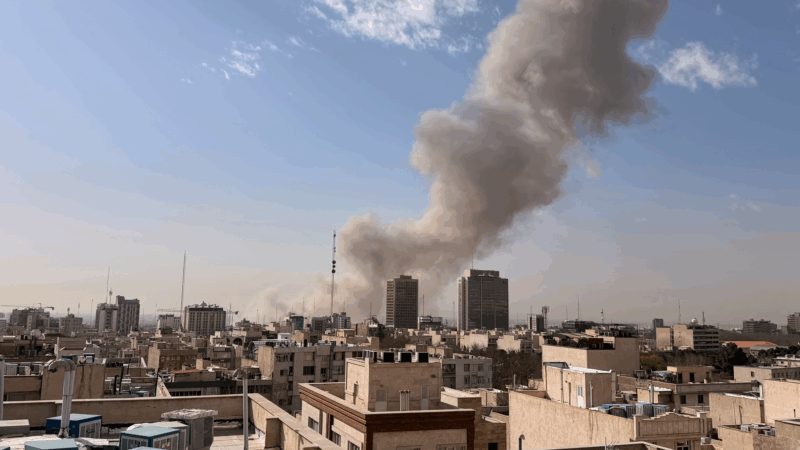
Why is the U.S. attacking Iran? Six things to know
The U.S. and Israel launched military strikes in Iran, targeting Khamenei and the Iranian president. "Operation Epic Fury" will be "massive and ongoing," President Trump said Saturday morning.
Sen. Tim Kaine calls on the Senate to vote on the war powers resolution
NPR's Scott Simon talks to Sen. Tim Kaine, D-Va., about the U.S. strikes on Iran.
Political science expert weighs in on Iran’s nuclear program in light of U.S. strikes
NPR's Scott Simon speaks to Ariane Tabatabai, the Public Service Fellow at Lawfare, about U.S. attacks on Iran and how President Trump's calls for regime change might be received there.
Week in Politics: Does Trump have political support for his actions in Iran?
We look at what President Trump's decision to attack Iran means, what kind of support he has in Iran and what this moment means for his administration.
Unlocking the secrets of an ancient plague
The first historically recorded pandemic is believed to have struck the walled city of Jirash, in what is now modern-day Jordan, in the 7th century. A new study reveals details about those who died.
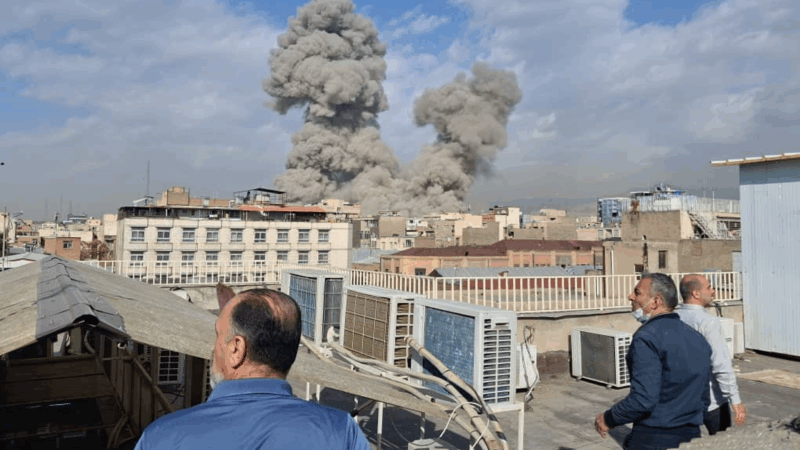
Panic, fury, and some hope, in Iran as U.S. launches strikes
In Tehran, panicked residents rushed home to shelter and terrified children poured out of classrooms as U.S. air strikes hit the capitol.
