
Babec’s Pacemaker
It is a bright, sunny day at the Birmingham Zoo and Babec is training. The 345-pound gorilla stands at his cage door doing what seems like an elaborate form of the hokey pokey. The incentive? Babec’s favorite treats and some whipped cream. But this is about more than just a little snack. Babec has to learn to present his chest when asked so his keeper and doctors can get a reading on his pacemaker.
“Babec’s training consists of him presenting his body parts on cue and he will present those body parts and what we’ve done is work him up to presenting his chest and his chest is what needs to be presented at the side of the cage and that’s for us to put the wand over to read his CRT {pacemaker}.”
Primate keeper Denise Monroe puts Babec through his paces most days. She says while Babec is getting better about doing what she asks training’s not been easy.
“Babec, he’s been stubborn in some ways because he is not as food driven as some animals. If you don’t offer him the reward that is special enough to him he could care less about training, he would rather ignore you.”
Scientists have known for years that gorillas in captivity are at risk of developing cardiac disease; Head Zoo Veterinarian Dr. Marie Rush says they just aren’t sure why.
“A very large number of gorillas, especially male gorillas over the age of thirty will develop cardiac disease. We’re very fortunate that in captivity we can monitor that, in the wild this probably also happens as well.”
The normal course of treatment for a Great Ape with a heart problem is medications similar to what you or I would take — they worked for a while for Babec, but not long enough. A local newspaper did a story on Babec’s plight and Rush says it wasn’t long after that she was contacted by representatives of Guidant, a company that makes pacemakers for humans. The reps suggested a pacemaker for Babec.
“I said we’ve talked about this in this business for several years but it’s not really been considered feasible in these guys because of maintenance and size and the need for special equipment. Well, that lead to a further discussion and the need to do something for him.
So, Rush says, they decided to go for it. The zoo pulled together a team of specialists from Auburn University, the University of Alabama at Birmingham and private practice to perform the procedure on the gorilla. UAB’s Dr. Neal Kay is an expert on pacemakers in humans and implanted the device in Babec.
“The anatomy of the gorilla was actually very similar to the human anatomy. As you might expect the gorilla’s muscles were bigger than a man’s but the operation went very smoothly and what was really quite gratifying was how well the gorilla did. He went from really being at the point of death to making dramatic improvement.”
But there was a hairy moment in Babec’s progress. He had to undergo the procedure a second time, just this past spring, after a tussle with his roommate Jamie, a younger silverback. During the fight the wires that control Babec’s heart’s functcion came loose. But the team was quickly reassembled and the wires replaced. He hasn’t had any problems since, all though Mammal Curator Marcia Riedmiller says the two don’t really live together anymore.
“To this day … we’ve made the decision, management-wise in husbandry to keep them separate. We do feel that Jamie probably knows Babec’s compromised.”
While the pacemaker’s doing wonders for Babec now, it could provide a wealth of information for primate researchers in the future. All readings of gorilla hearts up to this point have been made while the animals were sedated. Babec’s pacemaker will give readings of his heart while he’s awake. Those readings could help clue scientist in on why gorillas develop heart disease. But most importantly, Dr. Neal Kay says, the pacemaker will make Babec’s, and other gorillas’, lives easier.
And there may be more gorillas getting pacemakers. Rush says she’s getting calls from other zoos about the procedure and there’s the possibility the Birmingham Zoo could become a kind of cardiac care center for gorillas in the future.
“Albeit sounding like a pipedream I’m hopeful that maybe in the future that is something that we could consider and maybe that’s something that we could do.”
Until then they’ll have their hands full caring for their first patient.
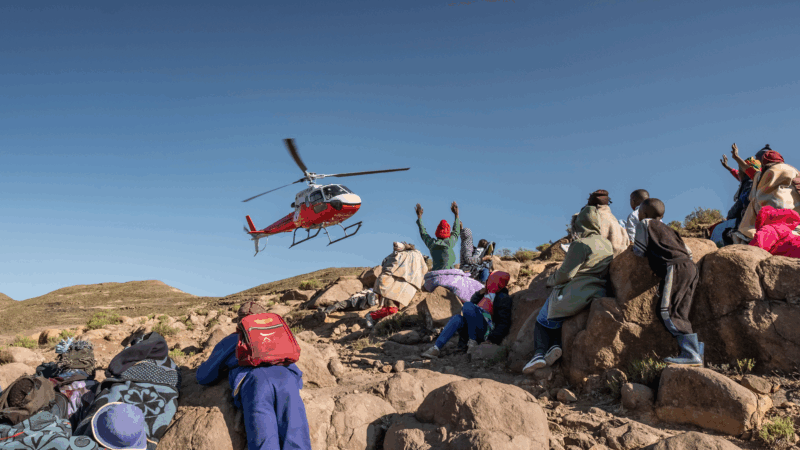
Photos: The flying doctors of Lesotho won’t let their wings be clipped
This band of airborne health workers bring essential medical care to isolated communities in the southern African nation. In addition to turbulence, they face a new obstacle: budget cuts.

For U.S. pairs skater Danny O’Shea, these Olympics are 30 years in the making
Danny O'Shea turned 35 at his first Olympics, after three decades of skating and two reversed retirements.
Want a mortgage for under 3% in 2026? Meet the ‘assumable mortgage’
Low mortgage rates from the COVID era might still be attainable for homebuyers, if they find the right house and have the cash.

Epstein files fallout takes down elite figures in Europe, while U.S. reckoning is muted
Unlike in Europe, officials in the U.S. with ties to Epstein have largely held their positions of power.

Four people on NASA’S Crew-12 arrive at the International Space Station
The crew will spend the next eight months conducting experiments to prepare for human exploration beyond Earth's orbit.

American speedskater Jordan Stolz wins second Olympic gold with 500-meter race victory
With the win, Stolz joins Eric Heiden as the only skaters to take gold in both the 500 and 1,000 at the same Olympics.
