Zelenskyy faces outcry after signing a bill curbing Ukraine’s anti-corruption agencies
KYIV, Ukraine — A controversial new law removing the independence of Ukraine’s top anti-corruption watchdogs has sparked the first major protests in the country since Russia’s full-scale invasion 3 1/2 years ago.
Despite a ban on mass gatherings under martial law, thousands of Ukrainians took to the streets in Kyiv and other Ukrainian cities, chanting “shame” and “Ukraine is not Russia.” Surveys have repeatedly shown that Ukrainians are as concerned about corruption in the country as they are about ending the war.
“It’s totally a betrayal of everyone who is on the front line, for everyone who is fighting for our liberty, for everyone who is fighting for Ukraine not being Russia,” Polina Tymchenko, a 29-year-old doctor, told NPR. “And it’s definitely not an honest move.”
The protests happened just before the third round of ceasefire talks between Kyiv and Moscow in Istanbul. The two sides have made little progress toward a ceasefire in previous negotiations.
Ukraine’s parliament, which is controlled by Ukrainian President Volodymyr Zelenskyy’s Servant of the People party, passed the law on Tuesday and Zelenskyy signed it later that day. The law gives Ukraine’s prosecutor general, appointed by Zelenskyy, new powers over the National Anti-Corruption Bureau and Special Anti-Corruption Prosecutor’s Office.
In his nightly video address Tuesday, Zelenskyy justified the move by saying corruption cases took too long to be investigated under the agencies. He also suggested the agencies were compromised. On Monday, Ukraine’s security service claimed the anti-corruption watchdogs had Russian moles.

“Anti-corruption infrastructure will work without Russian influences,” Zelenskyy said.
The anti-graft agencies were created in the wake of Ukraine’s pro-democracy Euromaidan protests. The movement forced Viktor Yanukovych, a notoriously corrupt former president aligned with the Kremlin, to flee the country in 2014.
Mustafa Nayyem, a former investigative journalist who helped lead the protests, went on to run the Zelenskyy government’s agency overseeing reconstruction of the country after the war. As part of his work, he and his team created transparency mechanisms to avoid graft. He quit last year, saying Zelenskyy’s government was undermining his agency’s work.
Nayyem participated in the protests Tuesday, later writing on Facebook that the law “won’t help us as a country.” He said there is a big gap between the young protesters who turned out on Tuesday demanding a functional, transparent democracy and the lawmakers in parliament who voted for the bill.
“This gap is about a completely different understanding of justice, responsibility and state,” Nayyem wrote. “For some, Ukraine is a country that has a future. For others, it is a territory from which you have to seize everything while you can.”
Marta Kos, the European Union’s enlargement commissioner, said the law is a “step back” for Ukraine’s aspirations to join the EU in a post on X.
Yaroslav Yurchyshyn, who chairs the committee for freedom of speech in Ukraine’s parliament, voted against the bill. At Tuesday night’s protest in Kyiv, he told NPR that Zelenskyy seemed out of touch with Ukrainians.

The president of a country at war, he said, “must feel connection with society. We see all young people who are all pro-European, who do believe in our democracy.”
Meaghan Mobbs, president of the R.T. Weatherman Foundation, a charity that supports Ukraine, and daughter of President Trump’s special envoy to Ukraine, Keith Kellogg, wrote on X that the decision to adopt the law is “truly, unbelievably, mind-bogglingly stupid. It happens at the worst possible time given the recent positive shifts in U.S. policy. This gifts a strong narrative to bad actors.”
The Kremlin, which has often characterized Zelenskyy as an illegitimate ruler, called the protests “an internal matter for Ukraine,” but used the occasion to recycle talking points that the Zelenskyy government had not spent money allocated to Ukraine by American taxpayers “for its intended purposes.”
“There is a lot of corruption in the country,” Kremlin spokesman Dmitry Peskov said in his daily press briefing on Wednesday.
NPR’s Charles Maynes contributed reporting from Moscow.

‘Bomb cyclone’ forecasted to bring heavy snow, blizzard conditions and dangerous travel
A 'bomb cyclone' is intensifying severe winter weather for millions of people across the U.S. The system is expected to knock out power and disrupt holiday travel.

Russia sends 3 Iranian satellites into orbit, report says
The report said that a Russian rocket sent the satellites on Sunday from a launchpad in eastern Russia.

Viral global TikToks: A twist on soccer, Tanzania’s Charlie Chaplin, hope in Gaza
TikToks are everywhere (well, except countries like Australia and India, where they've been banned.) We talk to the creators of some of the year's most popular reels from the Global South.
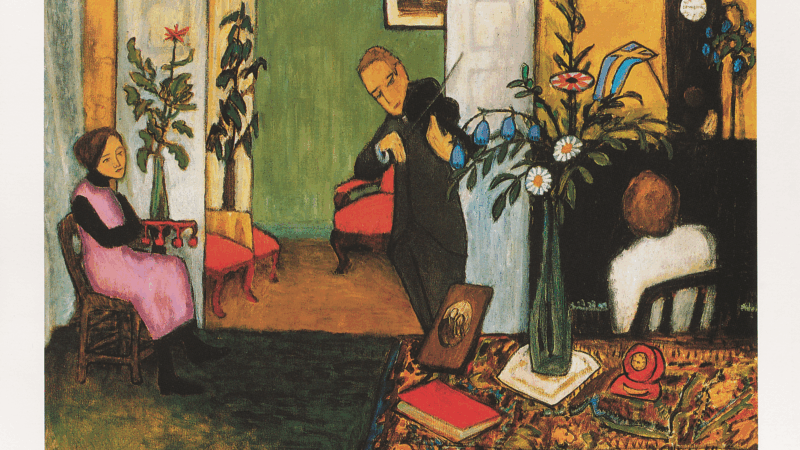
This painting is missing. Do you have it?
An important work from a rediscovered artist has been absent from public view since the 1970s. A New York curator is hunting for it.

Memory loss: As AI gobbles up chips, prices for devices may rise
Demand for memory chips currently exceeds supply and there's very little chance of that changing any time soon. More chips for AI means less available for other products such as computers and phones and that could drive up those prices too.

Brigitte Bardot, sex goddess of cinema, has died
Legendary screen siren and animal rights activist Brigitte Bardot has died at age 91. The alluring former model starred in numerous movies, often playing the highly sexualized love interest.