
What’s happening with the anti-HIV program PEPFAR? It depends whom you ask
A memo regarding HIV treatment and prevention, issued by the State Department on February 6, offers a stark illustration of the impact of the Trump administration on global health.
One section of the memo refers to an HIV medication known as PrEP (pre-exposure prophylaxis), given to people at high risk of infection.
In the past, the pills or shots have been distributed to a range of individuals, among them men who have sex with men, girls and young women between the ages of 15 and 24, sex workers and people who inject drugs.
The memo, which NPR obtained, states that if a clinic receives funding through the U.S. program PEPFAR, this preventative medication can “only” be given to “pregnant and breastfeeding women” during the 90-day freeze on foreign aid that the Trump administration instituted.

Anyone else at risk of getting the virus “can not be offered PEPFAR-funded PrEP during this pause,” the memo says. The words “only” and “can not” are underlined for emphasis.
PEPFAR, the U.S. President’s Emergency Plan for AIDS, was founded by President George W. Bush in 2003 and provides funding for HIV clinics around the world.
In response to a request from NPR to clarify this order, the State Department sent an email taking note of “a limited waiver by Secretary Rubio to implement urgent life-saving HIV care and treatment and prevention of mother-to-child transmission services” such as “testing, prevention and treatment of opportunistic infections” and confirmed that these services will be provided specifically to “pregnant and breastfeeding women.”
Orders with an impact on PEPFAR
The memo comes in the wake of two major announcements from the Trump administration that have sent shockwaves through the global health community.
First there was the 90-day freeze on virtually all programs run by USAID, the U.S. foreign aid agency that oversees PEPFAR, on Jan. 24. Most other forms of foreign assistance were also halted.
Then, nearly all USAID staff was laid off or furloughed.
In the wake of protests about this aid suspension, the State Department released a waiver on Feb. 1 for some HIV treatments and testing to continue.
But limits like these mean that far fewer people will receive preventative treatments.
“What about PEP [post-exposure treatment] for rape victims? What about PrEP for sero-discordant couples (where one has HIV and the other doesn’t), gay men, young girls or other high-risk groups?” said a source who worked for PEPFAR until being laid off last month. “Do they not matter if they’re not pregnant?”
Condoms, too, may only be offered to pregnant or breastfeeding women and their sexual partners as a way to prevent infection by HIV from a partner — but not to anyone else at risk of contracting HIV, the waiver said.
A debate over the waiver
At a Congressional hearing on USAID on Thursday, Rep. Brian Mast, a Republican from Florida, said “funding was restored” to the PEPFAR program “just in case you were not aware.” He said $500 million of PEPFAR was reauthorized; the program had a budget of $6.9 billion in 2023.
But Andrew Natsios, former administrator at USAID under President George W. Bush and a self-described conservative Republican, said he’d spoken with leaders of some NGOs [nongovernmental organizations] who have not seen their funding return.
“There’s no money flowing to them,” Natsios said in a testimony to the House Foreign Affairs committee. “Many of them are old friends of mine. They would not make this up.”
The waivers “are not working. PEPFAR programs are not back online,” Elisha Dunn-Georgiou, president and CEO of the Global Health Council, confirmed at a press conference on Wednesday.

Because of the layoffs and furloughs, there are few people to work on these programs, she said.
“Health systems, NGOs, community-based organizations have been so decimated — in terms of staffing, in terms of infrastructure — because of this foreign aid freeze that it is nearly impossible to restart those programs,” Dunn-Georgiou said.
NPR also spoke to five sources who until recently worked on HIV issues at USAID and humanitarian nonprofit groups. These sources asked for anonymity for fear of retribution from the Trump administration that would put their careers or organizations at risk. They all confirmed that HIV drug distribution and testing are still at a standstill.
For many nonprofits, PEPFAR represented all of their funding, and so they had to close their doors and layoff staff immediately, said a humanitarian worker who has partnered with PEPFAR.
“Once the waiver was issued the public thought the issue was dealt with,” the humanitarian worker told NPR. “But it’s not.”
The biggest achievement of PEPFAR was to set up a system to distribute medications for people at risk of contracting HIV and for those who are HIV positive to keep the virus from progressing to AIDS and to keep them from spreading it – that’s the perspective of Joia Mukherjee, chief medical officer for Partners in Health, a global health nonprofit that receives some U.S. funding.
“More PEPFAR money went to programmatic support, which includes people’s salaries, community health workers, lab commodities, transportation,” Mukherjee told NPR.
Now, “people are losing their jobs. They’ve been told to stay home, not to do their work,” Mukherjee said, referring to the Jan. 24 stop-work order.
Partners in Health is able to continue operating through other sources of funding. But their work in Haiti, for example, is still affected. Usually, another nonprofit follows up with HIV patients who live in rural areas – people who are difficult to reach because they live “20 hours away by terrible roads through gangs,” Mukherjee said.
“The NGO that has been doing that outreach was exclusively funded by PEPFAR, so they’ve stopped their operations,” she said.
Many of the HIV clinics supported by PEPFAR provide health care for trans people, but “gender or DEI ideology” is also expressly forbidden under the stop-work order.
The order banning work on gender also makes it difficult to reach girls, who are more than five times more likely to get HIV in some contexts, the former PEPFAR employee said.
The order also halted all research funded with foreign assistance. That means HIV researchers have been laid off and furloughed, said one African HIV scientist, who also asked for anonymity, fearing a loss of funding from the Trump administration.
“HIV services for prevention pay a critical role toward epidemic control and gains of last 40 years may be dented by this move,” the researcher said, describing researchers they knew who are now out of work. “Loads of colleagues are at home as we speak and hanging their coats.”
Melody Schreiber is a journalist and editor of What We Didn’t Expect: Personal Stories About Premature Birth.
Additional reporting by Gabrielle Emanuel.

Trump says 8 EU countries to be charged 10% tariff for opposing US control of Greenland
In a post on social media, Trump said a 10% tariff will take effect on Feb. 1, and will climb to 25% on June 1 if a deal is not in place for the United States to purchase Greenland.
‘Not for sale’: massive protest in Copenhagen against Trump’s desire to acquire Greenland
Thousands of people rallied in Copenhagen to push back on President Trump's rhetoric that the U.S. should acquire Greenland.
Uganda’s longtime leader declared winner in disputed vote
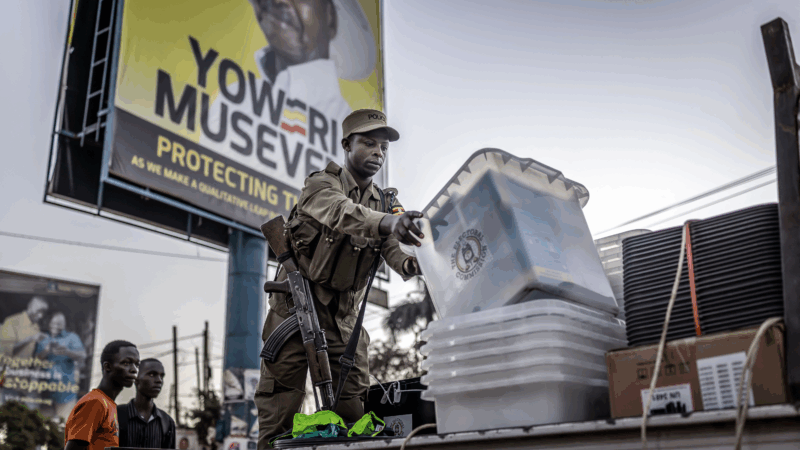
Museveni claims victory in Uganda's contested election as opposition leader Bobi Wine goes into hiding amid chaos, violence and accusations of fraud.
Opinion: Remembering Ai, a remarkably intelligent chimpanzee
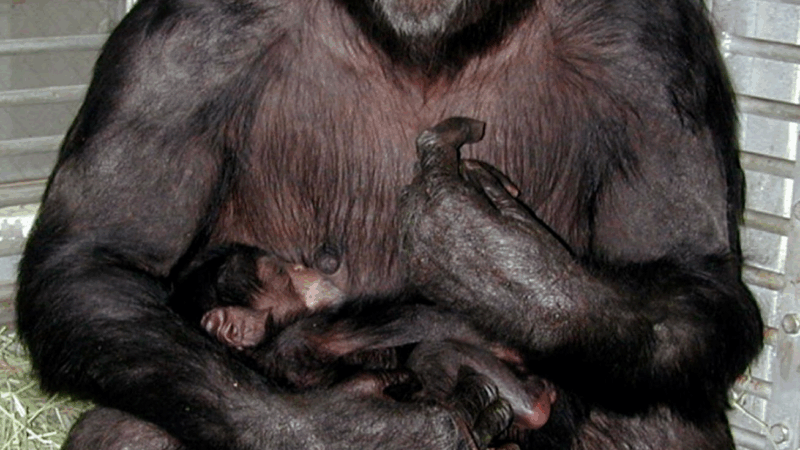
We remember Ai, a highly intelligent chimpanzee who lived at the Primate Research Institute of Kyoto University for most of her life, except the time she escaped and walked around campus.
The near death — and last-minute reprieve — of a trial for an HIV vaccine
A trial was about to launch for a vaccine that would ward off the HIV virus. It would be an incredible breakthrough. Then it looked as if it would be over before it started.

Bessemer data center developer to request rezoning for additional 900 acres
The city’s attorney informed council members of the request on Tuesday, warning that there may be media scrutiny.
