
What to know about Trump’s ugly feud with the Federal Reserve
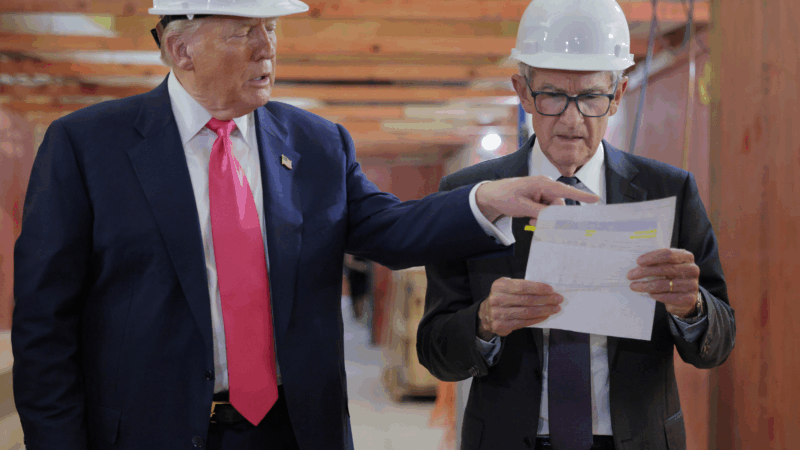
Federal Reserve Chairman Jerome Powell has studiously tried to avoid adding gasoline to the fire as the Trump administration has waged a long-running pressure campaign to bend the central bank to the president’s will.
By Sunday evening, Powell had evidently had enough.
Word the Justice Department had launched a criminal probe into the Fed led Powell to respond. In an unusually combative video statement, Powell accused the administration of using federal prosecutors to interfere with the Fed’s decision-making on interest rates.
“No one—certainly not the chair of the Federal Reserve — is above the law,” Powell said. “But this unprecedented action should be seen in the broader context of the administration’s threats and ongoing pressure.”
Here are 3 things to know about Trump’s latest fight with the Federal Reserve.
The president has long wanted lower interest rates
Trump is not the first president to want lower interest rates — but he is unusual in waging such a public pressure campaign.
It includes not only regular criticism from President Trump that rates are too high, but threats to fire the Fed chairman, and an effort to remove another member of the Fed’s governing board, Lisa Cook. The Supreme Court has so far allowed Cook to remain in her post. A hearing in the case will be held next week.
Trump regularly criticized Powell during his first term in the White House for not lowering interest rates more aggressively. He once suggested Powell was a bigger threat to the United States than Chinese President Xi Jinping.
Powell was careful to resist taking the bait, insisting that he and his colleagues make decisions on interest rates without regard to politics.
The Fed has cut interest rates at each of its last three meetings, in an effort to shore up a sagging job market. But Trump thinks rates should be much lower, to goose the economy and perhaps reduce the federal government’s own borrowing costs.
Loading…
Fight over the costly Fed renovation
The administration has also used cost overruns on the renovations at the central bank as a line of attack against the Fed.
Powell has acknowledged the cost of that project increased — from an initial estimate of $1.9 billion to $2.5 billion. But the Fed says that’s driven by inflation and unexpected developments like excess lead and asbestos, not extravagant new features.
“There’s no new marble,” Powell told the Senate Banking Committee last June. “There are no new water features. There’s no beehives and there’s no roof garden terraces.”
Conflict over the building appeared to die down after Trump and Powell toured the construction project last summer. But on Friday, Powell says the central bank received grand jury subpoenas about the makeover and his Senate testimony.
In his video statement on Sunday, Powell said the cost concerns were a mere pretext for the Justice Department probe.
“This is about whether the Fed will be able to continue to set interest rates based on evidence and economic conditions—or whether instead monetary policy will be directed by political pressure or intimidation,” Powell said.
It was a striking departure for the normally tight-lipped Fed chairman.
“It looks like they just pushed Jay Powell too far, and he came out with all guns blazing,” David Wessel, director of the Hutchins Center at the Brookings Institution and the author of In FED We Trust told NPR’s Morning Edition.
Fed’s independence is at stake
At the heart of the battle is a fight over the central bank’s independence.
Economists generally agree that central banks function best when they’re allowed to make decisions free from political interference. Powell has carefully guarded that independence in the face of relentless pressure from Trump and his allies.
“Public service sometimes requires standing firm in the face of threats,” Powell said Sunday. “I will continue to do the job the Senate confirmed me to do, with integrity and a commitment to serving the American people.”
Powell was first nominated to the Fed’s board of governors by then-President Obama in 2012 and elevated to chairman by Trump in 2018. His term as chairman expires in May, but he could remain on the board for two more years if he chooses.
Trump will soon nominate Powell’s successor as Fed chair, which is bound to keep the focus on the central bank’s independence. Some of the senators who will vote on that nominee have expressed concern about the latest move by the Justice Department.
“If there were any remaining doubt whether advisers within the Trump Administration are actively pushing to end the independence of the Federal Reserve, there should now be none,” Sen. Thom Tillis, R-N.C., wrote in a social media post. “I will oppose the confirmation of any nominee for the Fed—including the upcoming Fed Chair vacancy—until this legal matter is fully resolved.”

As Iran’s protests continue, Israelis and Palestinians watch closely
There is broad support for the protests among Israeli officials, but Palestinians say they hope the Iranian regime stays in place and the protests die down soon.
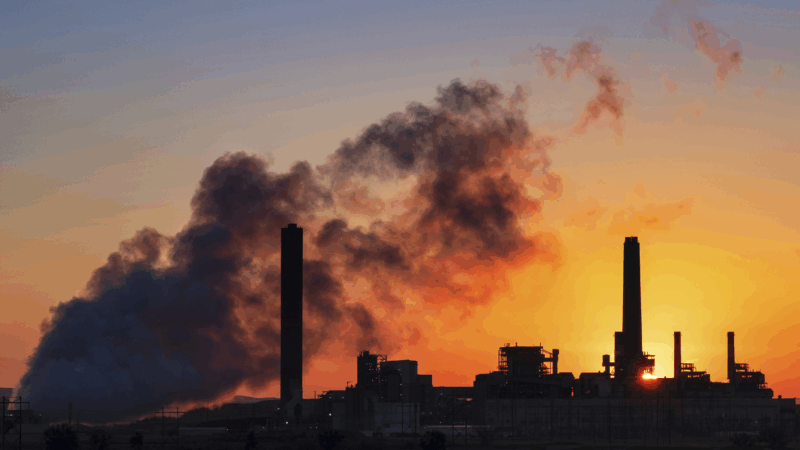
The EPA is changing how it considers the costs and benefits of air pollution rules
The EPA won't consider the economic costs of harms to human health, at least for now. Legal and health experts are concerned that the change could make it easier for the agency to roll back rules.
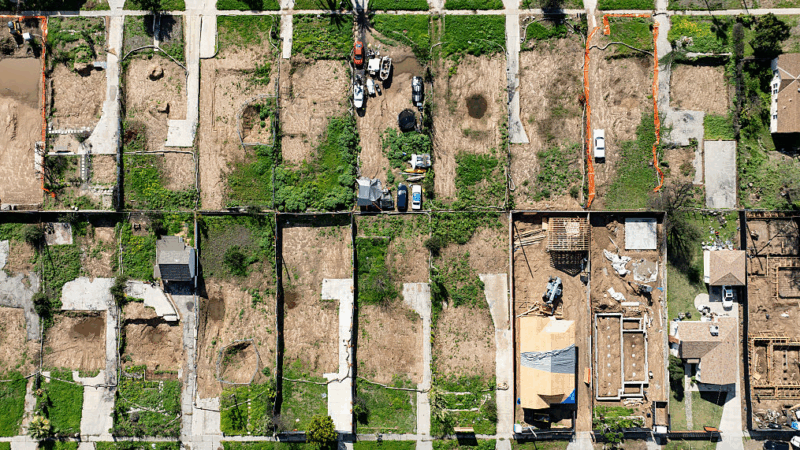
California fire victims say fighting with insurance companies has delayed rebuilding
Wildfires last January destroyed communities around Los Angeles. Homeowners say recovery has been slowed by fights with insurers to get their claims paid.
‘Fly, Wild Swans’ is Jung Chang’s painfully personal tribute to her mother
A historian of modern China, Jung Chang turns the lens back on herself in her newest book to understand how she sees the world and why she writes about China today.
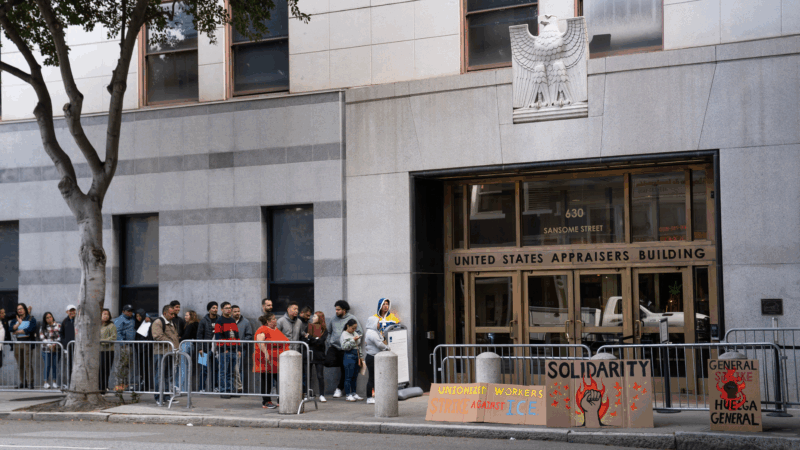
Trump administration to shutter an immigration court, adding to judges’ backlog
The planned closure of the San Francisco Immigration Court comes as immigration judges spent the last year facing pressure to move through their caseloads faster and streamline deportations.

Trump heads to Detroit to give a speech refocusing on the American economy
The speech at the Detroit Economic Club comes after major foreign policy moves have overshadowed domestic policy.
