
What to know about a federal proposal to help families pay for private school

A first-of-its-kind effort to leverage federal tax dollars to help families pay for private school tuition anywhere in the U.S. is one step closer to becoming a reality.
Republicans on the House Ways and Means Committee voted this week to include a federal school voucher program, worth $20 billion over four years, in the broader reconciliation bill that would also extend President Trump’s 2017 tax cuts.
The voucher vote was hailed by Republicans and school choice advocates.
“Expanding President Trump’s tax cuts is about preserving the American Dream. Giving parents the ability to choose the best education for their child makes the dream possible,” Sen. Bill Cassidy, R-La., said in a statement. Cassidy helped lead the voucher effort in the Senate.
“We are one step closer to bringing school choice to every state in America,” Tommy Schultz, CEO of the American Federation for Children, said in a statement. “Ultimately, every child, especially from lower-income families, should have access to the school of their choice, and this legislation is the only way to make that happen.”
The response from traditional public school advocates was withering.
“Vouchers weaken public education and limit opportunities for students,” said NEA President Becky Pringle, head of the nation’s largest teacher union. “They siphon crucial funding from public schools—serving 90 percent of students—and redirect it to private institutions with no accountability.”
Public schools receive a portion of their funding based on per-pupil student enrollment. If they lose students to private schools, they will eventually lose that funding as well.
Among the measure’s strongest critics are advocates for students with disabilities, who argue it would not protect them from being poorly served or even turned away by private schools.
Public schools must follow federal disability law, which requires that they provide every child with a disability a free and appropriate public education. Private schools are not bound by the same rules.
“It is quite possible that families with disabilities will use a voucher under the pretense that their child will have the same rights when in fact they do not,” said Jacqueline Rodriguez, CEO of the National Center for Learning Disabilities.
Rodriguez said any promise to parents guaranteeing students will enjoy the same rights and protections in private schools that they do in public schools “is disingenuous at best and crooked at worst.”
How the proposed national school voucher would work
The proposed plan would use the federal tax code to create a national school voucher even in states where voters have fought such efforts.
Funding for these vouchers would come from private citizens who make charitable donations to what are known as Scholarship Granting Organizations (SGOs). To incentivize these donations, the federal government would give these donors a generous dollar-for-dollar tax credit.
For example: A donor who gives $5,000 to an SGO, to be used for private school scholarships, would then be able to reduce their overall tax burden by $5,000.
“It’s about three times as generous as what you’re gonna get from donating to a children’s hospital or a veteran’s group or any other cause,” said Carl Davis at the Institute on Taxation and Economic Policy. “It really preferences voucher groups over every other kind of charity.”
This is tax revenue the federal government is choosing to forego in the name of supporting education options outside the traditional public school system.
The SGO would then distribute the donated money in the form of scholarships for students to use on a range of expenses, including private school tuition, books and homeschooling costs.
The bill language would cap the tax credit at $5 billion dollars in each of the next four years, from 2026 through 2029.
This proposal is not targeted simply at low-income students, as some smaller, state-based voucher programs have been. In fact, under this federal proposal, most students in the U.S. could qualify for a voucher, as the household income limit would be set at 300% of a given area’s median gross income. Put another way, a student from an area of the country where the median gross income is $70,000 could qualify as long as their household income is below $210,000.
What we know about school voucher programs
School voucher programs have been around for decades, but broadly accessible, statewide programs have exploded in recent years – and with them the fight over whom and how much these programs really help.
Early results from these voucher programs show much of the money has gone to students who were already enrolled in private schools. After Oklahoma enacted its voucher program, state data revealed fewer than 10% of applicants were public school students.
In Iowa, a review also found that many private schools raised tuition after the launch of a statewide voucher program.
In terms of academic benefits, a recent review of Ohio’s program found voucher students were more likely to enroll in and complete college than their public school peers, and early studies of student test scores from small, targeted voucher programs showed some promise, though reviews of larger, newer programs have found a host of worrying results for students, including lower achievement in math and other subjects.
“The bigger and the more recent the voucher system, the worse the results for kids,” says Josh Cowen, a professor at Michigan State University who, after studying vouchers for more than two decades, publicly opposes them.
“If you think that test scores are the be all and end all measure of the effectiveness of a school choice intervention, then private school choice programs of late have fallen short,” says Patrick Wolf, a professor of education policy at the University of Arkansas. But Wolf points out, opinion polling suggests parents who turn to private school vouchers have more on their minds than just academic rigor, including safety and a fear of bullying.
President Trump tried and failed to pass a similar federal voucher initiative during his first term.
This current push to create a federal voucher program coincides with an unprecedented effort by the Trump administration to otherwise gut the federal government’s role in education.
The measure currently in the House must next survive a full vote there and ultimately find agreement in the Senate, where Republicans would need a simple majority to pass the bill.

HUD proposes time limits and work requirements for rental aid
The rule would allow housing agencies and landlords to impose such requirements "to encourage self-sufficiency." Critics say most who can work already do, but their wages are low.
Paramount and Warner Bros’ deal is about merging studios, and a whole lot more
The nearly $111 billion marriage would unite Paramount and Warner film studios, streamers and television properties — including CNN — under the control of the wealthy Ellison family.

A new film follows Paul McCartney’s 2nd act after The Beatles’ breakup
While previous documentaries captured the frenzy of Beatlemania, Man on the Run focuses on McCartney in the years between the band's breakup and John Lennon's death.

An aspiring dancer. A wealthy benefactor. And ‘Dreams’ turned to nightmare
A new psychological drama from Mexican filmmaker Michel Franco centers on the torrid affair between a wealthy San Francisco philanthropist and an undocumented immigrant who aspires to be a dancer.
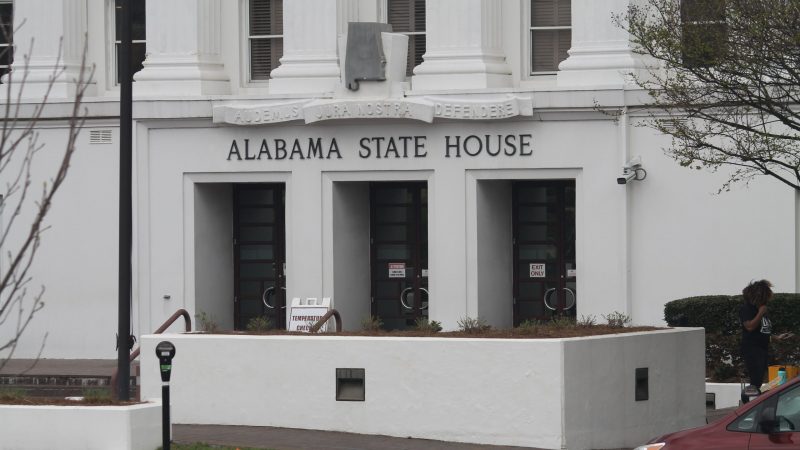
Bill making the Public Service Commission an appointed board is dead for the session
Usually when discussing legislative action, the focus is on what's moving forward. But plenty of bills in a legislature stall or even die. Leaders in the Alabama legislature say a bill involving the Public Service Commission is dead for the session. We get details on that from Todd Stacy, host of Capitol Journal on Alabama Public Television.
My doctor keeps focusing on my weight. What other health metrics matter more?
Our Real Talk with a Doc columnist explains how to push back if your doctor's obsessed with weight loss. And what other health metrics matter more instead.
