
Water failure at Guantánamo Bay affects U.S. migrant operations there
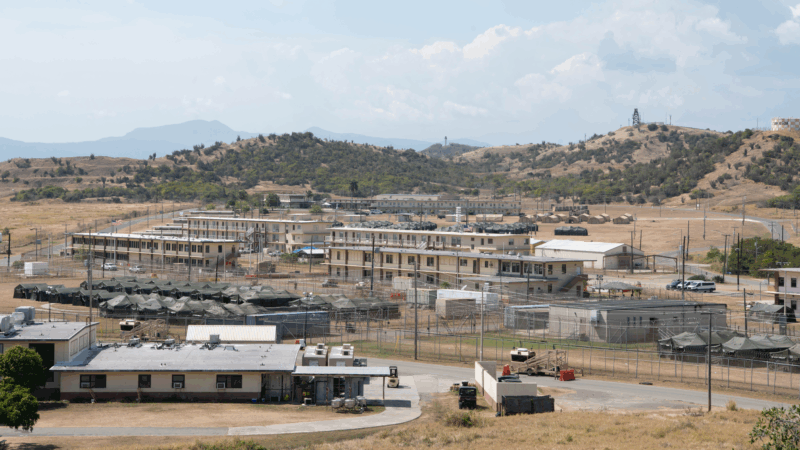
Several migrants sent by the United States to Guantánamo Bay, Cuba, had to be relocated to another part of the U.S. naval base there because of a water supply failure, raising more questions about whether Guantánamo can accommodate the 30,000 migrants President Trump has said he wants to send there.
Part of the naval base gets its drinking water from a treatment facility connected by an underwater pipeline, and the Justice Department notified a federal court on Thursday of a “disruption to water service” in late August to the area where the government’s Migrant Operations Center, or MOC, is located. That’s where the U.S. is housing what it calls “low-threat aliens.”
As a result, the three migrants being held at the MOC at the time were transferred to another part of the base where “high-threat aliens” are held. An official at Immigration and Customs Enforcement, or ICE, which runs the facility, told the court that the two categories of migrants are being housed in separate areas.
The government filing did not state the total number of migrants at Guantánamo when the water problem was discovered, but it said 24 migrants were on the base as of Sept. 9. Migrants have been cycled on and off the island since early February.
Water is not expected to be restored for at least another week, the government said.
Critics of sending migrants to Guantánamo say the base’s infrastructure is too primitive to hold large numbers of people there, and the ongoing water failure has added to their skepticism.
The water problem is “another example of the fact that Guantánamo was not built for and cannot accommodate the thousands of migrants that the Trump administration wants to send there,” said Lee Gelernt, deputy director of the ACLU’s Immigrants’ Rights Project. “And that’s on top of the fact that it costs so much more money than detaining them in the U.S. It shows once again this is about theatrics, not safety and not doing something that’s more efficient.”
The average daily cost of holding a migrant at Guantánamo is about $100,000, whereas it costs about $165 a day to keep a migrant in ICE detention in the U.S., according to court filings, government documents, and congressional delegates who visited the base earlier this year.
The government said naval personnel found the water supply problem on Aug. 28, and the Defense Department notified ICE on Aug. 30 of “structural damage” to the pipeline.
The part of the island where the MOC is located also houses government and military personnel, as well as residents. Some of those people, along with the three migrants in the MOC, were relocated to a more populous part of the base that still has potable water. Some “essential” personnel remain in the area without running water, so water trucks are being transported there by ferry, according to the government.
In addition, “larger-capacity trucks and a large water purification unit will arrive as early as September 19, 2025, which will allow for the return of normal operations,” wrote Jason Lynch of ICE’s Enforcement and Removal Operations division. “Until the water supply is restored, no migrant will be detained at the MOC.”
Those larger trucks and the purification unit are currently en route to Guantánamo by barge and tugboat, according to Capt. Michael Stephen, commanding officer of Guantánamo’s naval base. He said the cause of the water disruption is “unknown and under investigation” and there will be a “full assessment” of the damaged underwater pipeline, which may need long-term repairs.
“There is currently no estimated time for pipeline repair,” Stephen added.
According to the government, due to the water problem, all migrants sent to Guantánamo are being held in Camp 6, a prison facility that used to house suspected terrorists rounded up during the so-called War on Terror. There are still 15 of those prisoners at the base and they are now being held in a different prison facility, the government said.
The documents disclosing the water failure were submitted as part of a lawsuit filed by a coalition of advocacy organizations that wants to stop the transfer of migrants to Guantánamo. Gelernt is the lead counsel for the plaintiffs in that suit.
According to those documents, the average length of stay for migrants sent to Guantánamo is 14 days.
The Department of Homeland Security, which oversees ICE, did not immediately respond to an email seeking comment.

Kate Hudson on regret, rom-coms and finding a role that hits all the notes
Hudson always wanted to sing, but feared it would derail her acting career. Now she's up for an Oscar for her portrayal of a hairdresser who performs in a Neil Diamond tribute band in Song Sung Blue.
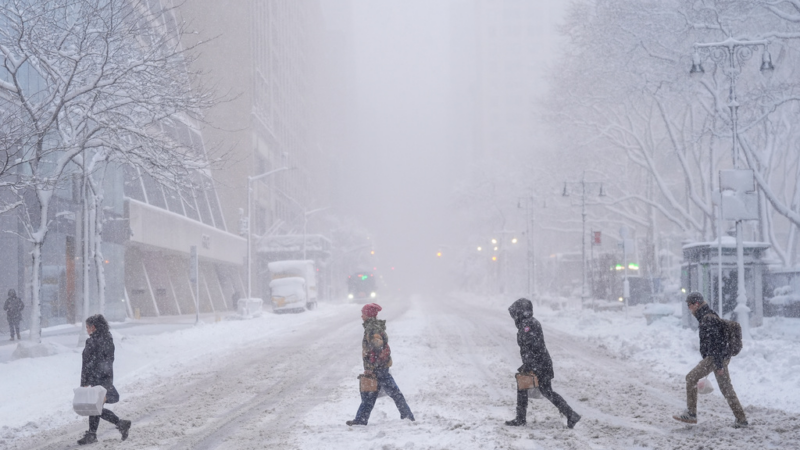
A powerful winter storm is roiling travel across the northeastern U.S.
Forecasters called travel conditions "extremely treacherous" and "nearly impossible" in areas hit hardest by the storm, and air and train traffic is at a standstill in many parts of the region.

U.K. arrests ex-ambassador to the U.S. on suspicion of misconduct over Epstein ties
Police have arrested Peter Mandelson, a veteran Labour Party politician who served as British ambassador to the U.S., as part of an investigation into his ties with Jeffrey Epstein.

What NPR reporters will remember most about these Winter Olympics
NPR's reporters on the ground in Italy reflect on a far-flung, jam-packed Winter Olympics.

In the shadow of the Olympics, migrants search for a welcome in Milan
As Italy cracks down on migration, Milan takes a different path — offering shelter and integration to asylum seekers even as the central government tightens borders and funds deterrence abroad.
Trump to raise global tariffs. And, most say the state of the union is weak, poll says
President Trump says he is raising global tariffs to 15%. And ahead of the president's address tomorrow, most Americans say the state of the union is not strong, according to an NPR poll.
