
Uncertainty hangs over the status of a ceasefire between Israel and Iran
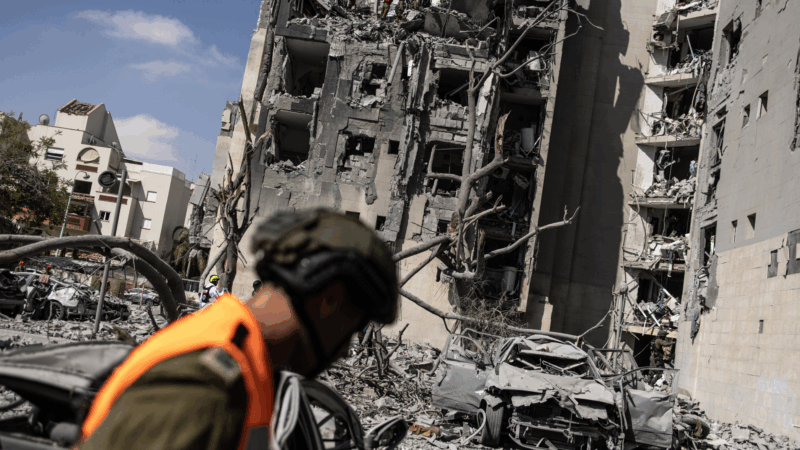
Israel and Iran said they agreed to a ceasefire on Tuesday, following President Trump’s announcement that the warring countries had agreed to stop fighting.
But the future of such a ceasefire came under immediate question, as reports persisted Tuesday morning of further airstrikes in Israel. Soon after those reports, Israeli Defense Minister Israel Katz announced he had ordered the Israeli military to “respond forcefully” to what he labeled Iranian airstrikes. Iran denied firing a missile in violation of the ceasefire, according to Iran’s state broadcaster IRIB.
Iran’s state media reported its agreement to the ceasefire earlier Tuesday, and the Israeli Prime Minister’s Office has followed with a statement that it also agreed.
The tenuous ceasefire comes more than a week and a half after Israel launched its attack on Iran, leading to deadly exchanges of missile and drone barrages between them and threatening to draw the Middle East — and the United States — into wider war. It comes a few days after the U.S. bombed Iranian nuclear facilities.
“In light of the operation’s objectives being achieved, and in full coordination with President Trump, Israel has agreed to the president’s proposal for a bilateral ceasefire,” the Prime Minister’s Office said in a statement.
Before the Israeli statement, Trump wrote on social media in all caps: “The ceasefire is now in effect. Please do not violate it!”
Earlier in the morning, Iran’s state TV said Tehran had “imposed” a ceasefire on the “Zionist enemy.” Iran’s government does not officially recognize Israel as a state.
Israel and Iran exchanged attacks up to the final moments when the ceasefire was due to begin, causing casualties, according to Iranian state media and Israeli emergency services.
The final death toll from the war is not immediately clear. Over the weekend, Iran’s Health Ministry said 430 civilians had been killed by Israel’s strikes in Iran. An independent activist group called the Human Rights Activists News Agency counted 974 total fatalities, as it also included 268 Iranian military personnel.
Israel’s previous death toll was 24, according to the Israeli government, but recent barrages have caused new fatalities.
On Monday, Trump first said Israel and Iran agreed to a ceasefire that could lead to an end to the war between the two countries.
Soon afterward, Vice President Vance, speaking on Fox News, said Trump wanted to work on a “long-term settlement” between Iran and Israel.
“I think the Iranians are at a place where they don’t want to keep on fighting,” Vance said in the interview.
Earlier Monday, Iran’s state-run news agency Tasnim said that Tehran launched missile attacks on U.S. bases in Qatar and Iraq. The U.S. Central Command said the U.S. and Qatari forces successfully intercepted the Iranian missiles targeting the air base.
Trump said on social media that U.S. officials had been given advance notice by Iran of the strikes.
NPR’s Hadeel Al-Shalchi contributed to this report from Tel Aviv, Israel.
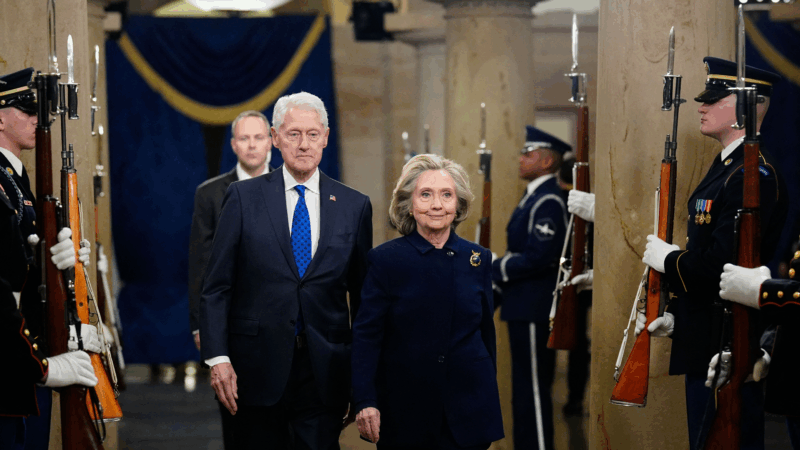
Video of Clinton depositions in Epstein investigation released by House Republicans
Over hours of testimony, the Clintons both denied knowledge of Epstein's crimes prior to his pleading guilty in 2008 to state charges in Florida for soliciting prostitution from an underage girl.
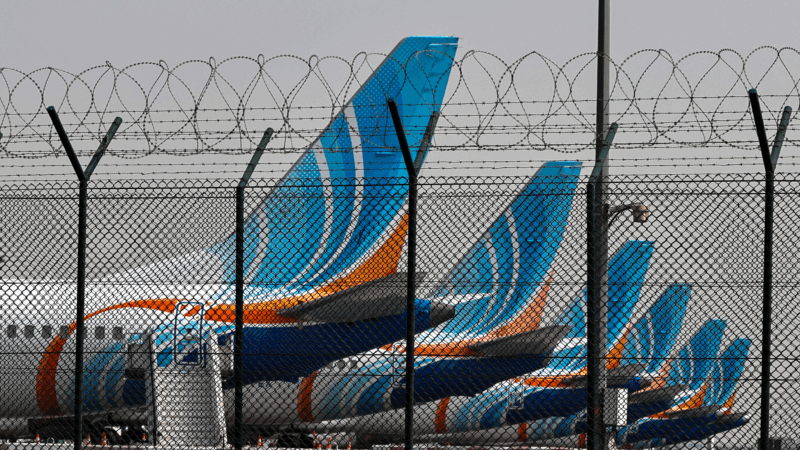
Some Middle East flights resume, but thousands of travelers are still stranded by war
Limited flights out of the Middle East resumed on Monday. But hundreds of thousands of travelers are still stranded in the region after attacks on Iran by the U.S. and Israel.

‘Hamnet’ star Jessie Buckley looks for the ‘shadowy bits’ of her characters
Buckley has been nominated for a best actress Oscar for her portrayal of William Shakespeare's wife in Hamnet. The film "brought me into this next chapter of my life as a mother," Buckley says.

How, who, and why: NPR flips its famous letters to defend the right to be curious
NPR is standing up for the public's right to ask hard questions in a national campaign dubbed "For your right to be curious." At NPR's headquarters, on billboards in New York City, Chicago, and Washington, D.C., and across social media, NPR's three iconic letters transform into "how," "who," and "why" — a bold declaration of its commitment to fight for Americans' right to ask questions both big and small.
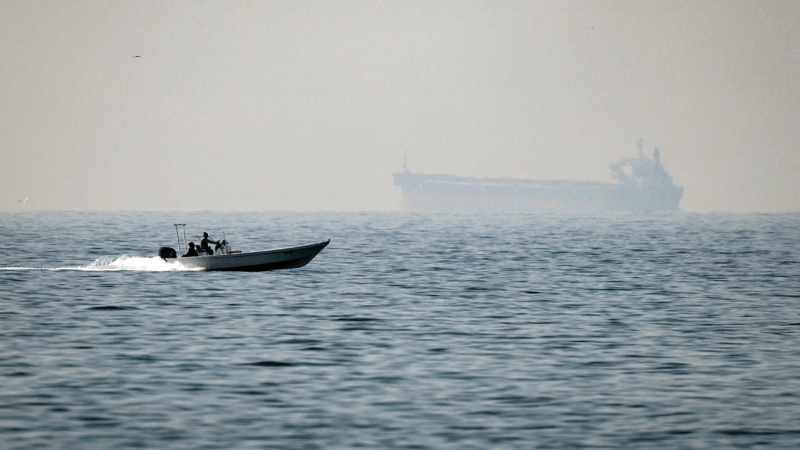
Oil prices surge, but no panic yet, as Iran war continues
Global oil prices are in the high $70s as traffic through Strait of Hormuz comes to a halt. Some analysts have warned they could top $100 a barrel if the stoppage is prolonged.
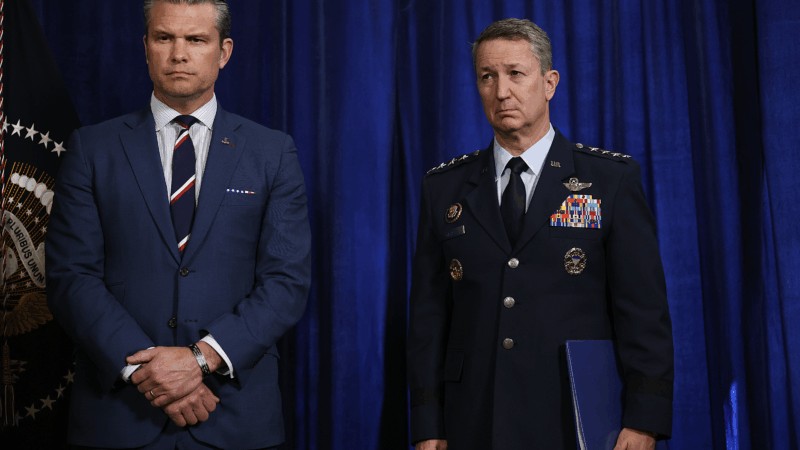
Hegseth: ‘We didn’t start this war but under President Trump we’re finishing it’
The remarks are the first to reporters since the U.S.-Israeli military operations against Iran began Saturday despite weeks of talks designed to stave off a conflict.
