
Ukraine approves law restoring independence of anti-graft watchdogs following backlash
KYIV – After a public outcry and pressure from the European Union, a new law is now in force in Ukraine restoring the independence of state agencies investigating corruption.
Ukrainian President Volodymyr Zelenskyy introduced this bill after facing his first major domestic political crisis since Russia’s full-scale invasion three and a half years ago. He and Ukraine’s parliament reversed course after approving a previous bill to place anti-corruption agencies under a Zelenskyy-backed prosecutor.
Thousands of Ukrainians took the streets in protest, calling it an authoritarian move.
“It is very important that the state listens to public opinion and hears its citizens,” Zelenskyy said in a video address on Thursday. “Ukraine is a democracy for sure. There is no doubt.”

The two agencies – the National Anti-Corruption Bureau and the Specialized Anti-Corruption Prosecutor’s Office – were created after 2014, when a pro-democracy revolution brought down a corrupt, Kremlin-aligned president, Viktor Yanukovych. The EU, which has given Ukraine more than $178 billion since January 2022, sees these agencies as crucial to institutional reforms Ukraine is required to complete before the country possibly joins the 27-member bloc.
After last week’s move to weaken the anti-corruption agencies, the EU froze $1.7 billion in non-military aid. Writing on social media, Marta Kos, the EU commissioner for enlargement, said the new law “restores key safeguards but challenges remain.”
Thursday’s vote in parliament was livestreamed. Ukrainians watching at a square outside waited nervously as a timer inside parliament’s chambers counted down to the end of voting. When they saw that nearly all lawmakers supported the new law, they cheered and chanted.
Yehor Soboliev is a former lawmaker who, years ago, helped draft the legislation allowing anti-corruption agencies to conduct investigations independently. He now serves in the military and says transparency is especially crucial now.
“We are fighting a country that is many times larger than us, has many more resources and can throw them at us to conquer us,” he says. “Efficiency means survival. It’s simple: anything that weakens Ukraine’s ability to fight or preserve its freedom is a problem that must be solved immediately.”
Soboliev says this past week has shown that Ukraine “is probably the last country in the world where you can create a dictatorship.” And, he adds, that applies even as the country defends itself in a war against Russia.
“We must simultaneously hold the frontline,” he says, “while also pushing democracy and this country forward.”
Trump administration’s embattled FDA vaccine chief is leaving for the second time
The FDA's controversial vaccine chief, Dr. Vinay Prasad, is leaving the agency. It's the second time he has abruptly departed following decisions involving the review of vaccinations and specialty drugs.

Family, former presidents and a Hall of Famer give Rev. Jesse Jackson a final sendoff
Several speakers at Jackson's funeral invoked his hallmark catchphrases: "Keep hope alive" and "I am somebody."
Bernard LaFayette, Selma voting rights organizer, dies at 85
Bernard LaFayette, who died Thursday, laid the foundations of the Selma, Alabama, campaign that culminated in the passage of the Voting Rights Act. He was a Freedom Rider and helped found the Student Nonviolent Coordinating Committee.
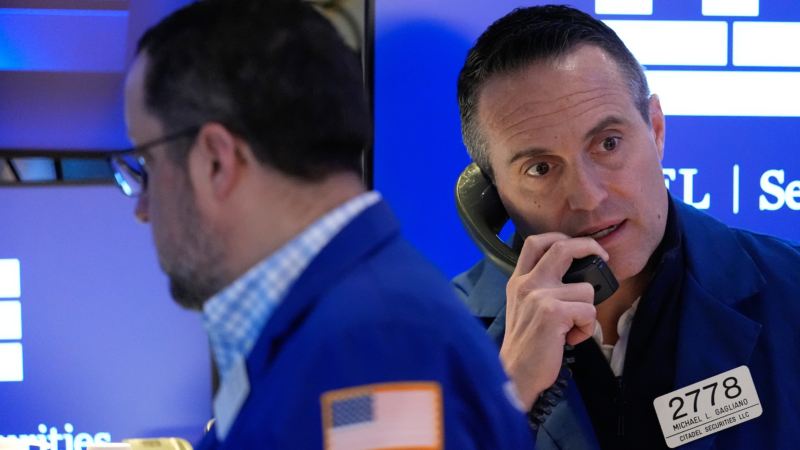
Oil surges to its highest price since 2023, and stocks drop after U.S. jobs report
Stocks fell Friday on worries that the economy could become stuck in a worst-case scenario of stagnating growth and high inflation. Oil prices touched their highest levels since 2023 after surging again because of the Iran war.
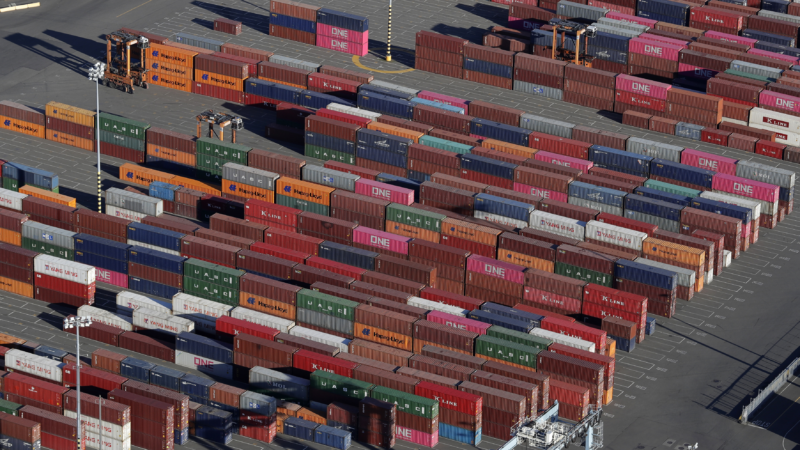
No lawsuits required: U.S. Customs is working on a system to refund tariffs
U.S. Customs told the trade court it aims for a streamlined process in 45 days to return importers' money without requiring individual lawsuits.

Poll: A majority of Americans opposes U.S. military action in Iran
Most Americans disapprove of President Trump's handling of Iran, and a majority sees Iran as either only a minor threat or no threat at all, an NPR/PBS News/Marist poll finds.
