
U.S. egg prices fall for the first time in months but remain near record highs
U.S. retail egg prices fell in April from the record-high prices they hit earlier this year, according to government data released Tuesday.
The average price for a dozen Grade A eggs declined to $5.12 last month after reaching a record $6.23 in March, according to the U.S. Bureau of Labor Statistics. It was the first month-to-month drop in egg prices since October 2024.
Overall, the average price of eggs of all sizes fell 12.7%, the steepest monthly decline since March 1984.
Still, retail egg prices remain near historic highs as a persistent outbreak of bird flu wipes out flocks of egg-laying hens. The April average price for a dozen large eggs was 79% higher than the Bureau of Labor Statistics reported for the same month a year ago, when the price averaged $2.86 per dozen.
David L. Ortega, a professor of food economics and policy at Michigan State University, said he thinks U.S. egg prices will continue to fall in May and June. Consumer demand tends to fall after Easter, which helps lower prices, he said.
Fewer bird flu outbreaks at commercial poultry operations in recent weeks also has helped to stabilize the country’s egg supply, Ortega said.
According to the U.S. Department of Agriculture, there were 59 bird flu outbreaks at commercial poultry operations in February, 12 in March and three in April.
But Ortega said the progress of the virus is uncertain, and prices could edge up again if outbreaks expand again.
Bird flu has killed more than 169 million birds since early 2022. Any time a bird gets sick, the entire flock is killed to help keep the virus from spreading. Once a flock is slaughtered, it can take as long as a year to clean a farm and raise new birds to egg-laying age.
Even one outbreak at a commercial facility can impact supply, because massive egg farms may have millions of birds. Outbreaks on two farms in Ohio and South Dakota in April affected more than 927,000 egg-laying hens.
Lowering egg prices has been a particular focus of President Donald Trump. In February, the U.S. Department of Agriculture said it would invest $1 billion to help farmers improve their biosecurity measures to fight bird flu.
The U.S. has also increased imports of eggs from South Korea, Turkey, Brazil and other countries. According to Wells Fargo Agri-Food Institute Sector Manager Kevin Bergquist, the volume of egg and egg product imports increased 77.5% during the first three months of the year compared to the same period a year ago.
The antitrust division of the U.S. Department of Justice is also investigating Cal-Maine Foods, the largest U.S. egg producer, which supplies around 20% of America’s eggs. Cal-Maine confirmed the investigation in early April..
Ridgeland, Mississippi-based Cal-Maine said its net income more than tripled to $508.5 million in its most recent quarter, which ended March 1.
British Columbia to make daylight saving time permanent
The Canadian province is permanently ending the biannual time shifts for more light at the day's end. But research shows daylight saving increases health risks.
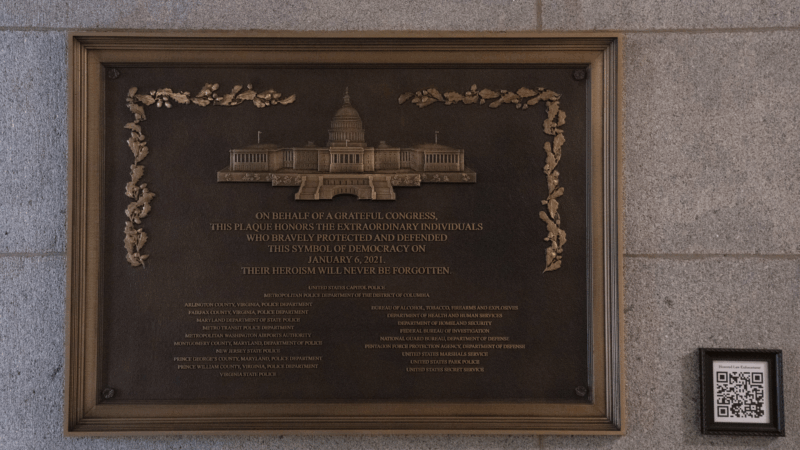
Jan. 6 plaque honoring police officers is now displayed at the Capitol after a 3-year delay
Visitors to the Capitol in Washington now have a visible reminder of the siege there on Jan. 6, 2021, and the officers who fought and were injured that day.

Authorities searching debris after suspected tornadoes kill 6 in Michigan, Oklahoma
A 12-year-old boy is reported to be among the dead following powerful storms that stretched across the middle of the country.
Opinion: The immorality of betting on war
Traders on prediction markets bet on nearly anything. One made more than half a million dollars betting on the U.S. strike against Iran. But should people wager on human suffering?
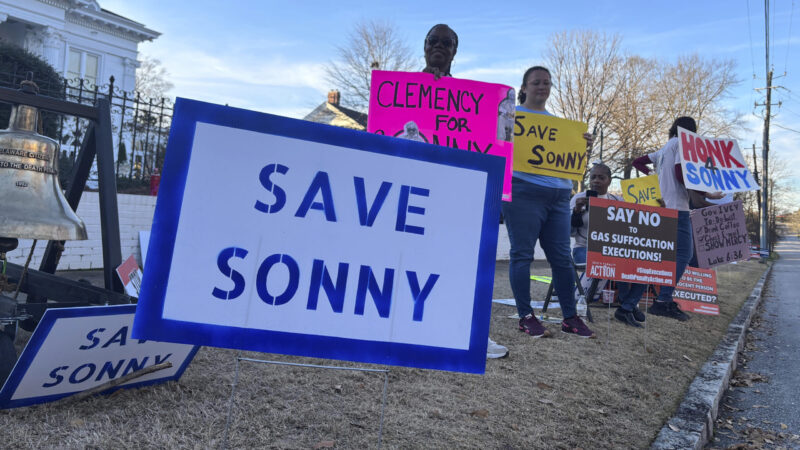
Alabama man facing execution for deadly robbery asks for clemency as he didn’t kill victim
Charles “Sonny” Burton is scheduled to be executed March 12 for his role in a 1991 robbery in which a man was fatally shot. His supporters and attorney are asking the governor for clemency, arguing that his life should be spared because Burton didn’t fire the gun or witness the killing.
One week into the Iran war, the fallout is global
The war is no longer just about the U.S., Israel and Iran. More countries are getting caught in the political crossfire or being drawn into the fighting themselves.
