
Tyshawn Sorey’s powerful sounds of silence
It was a busy week for Tyshawn Sorey this past spring at the Big Ears Festival in Knoxville, Tenn., packed with a mix of collaborative projects, public talks and performances. We had a hard time fitting this conversation into his schedule, but as soon as we sat down together in the vast open space of the abandoned railroad depot that had become NPR’s makeshift recording studio, all the rush and noise seemed to disappear, and our conversation turned instead to the power of space and silence.
One of the pieces Tyshawn presented at Big Ears was Monochromatic Light (Afterlife), inspired by the Rothko Chapel in Houston and by Morton Feldman’s 1971 score that commemorated the chapel’s opening. That launch event was shrouded in darkness: one year earlier, Mark Rothko had killed himself after completing the suite of 14 large paintings that cover the chapel’s walls. The darkness of this origin story is preserved in Rothko’s color-field paintings, so dark they appear black at first. But really, those paintings are opportunities for the revelation of light. As you stay with them in the space, as rays of sun shift through the chapel’s skylight, the canvases pull you into an awareness of nearly undetectable changes of light and shade. Time loses its normal contours. Space takes on new meaning.
To achieve a distillation of that intensity in music means letting go of conventions and structures. For Tyshawn, that is common practice. As a drummer, trombonist and pianist, as well as a composer, he moves fluidly through both improvisational and notated music, centering the exploration of texture and time in a prolific body of work that ranges from solo piano to symphony orchestra. Like Rothko’s chapel paintings, Tyshawn’s musical canvas leaves room for the listener’s experience, evolving slowly through the subtlest shifts of color and light.
The night before my conversation with Tyshawn, I had dinner with bass-baritone Davóne Tines, one of the lead artists in Monochromatic Light (Afterlife). He met me in between his afternoon and evening performances of the nearly hour-long piece, an immersive invocation that requires unbreaking focus from the musicians as they navigate its wandering trajectory. But Davóne didn’t seem exhausted, just hungry. “I feel really chill,” he told me. “It’s the silences, the spaces — those are places of reflection and rest.”
Reflection and rest, and perhaps release and relief. Just as the extreme darkness of Rothko’s canvases lets light find its way, Tyshawn Sorey’s silences allow for space and time, and blessed respite from the speed and noise of this fast-moving world.

Between Megan Moroney and Ella Langley, country women rule the charts
It's a big week for women in country music — and, it turns out, for women whose songs are favored by women in figure skating.
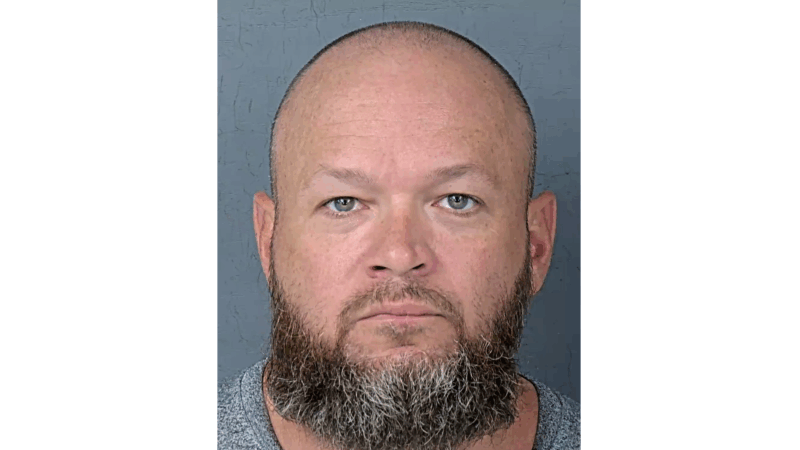
A Jan. 6 rioter pardoned by Trump was sentenced to life in prison for child sex abuse
Since receiving presidential pardons, dozens of former Capitol rioters have gotten into more legal trouble. In Florida, Andrew Paul Johnson was sentenced to life in prison for child sex abuse.

President Trump, Pam Bondi sued over sale of TikTok assets
The case, filed in a federal court in Washington, D.C., accuses the Trump administration of ignoring legislation designed to stop the spread of Chinese propaganda — and instead helping to broker a partial sale to businessmen close to Trump.
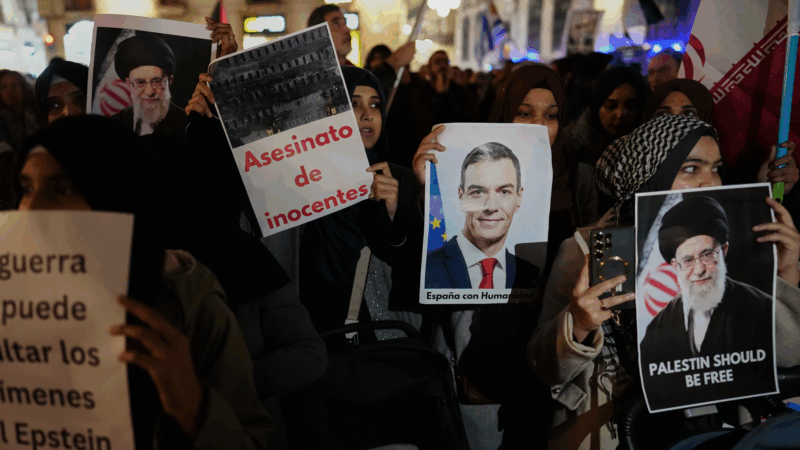
A rift between Spain and Trump widens over Spanish opposition to the Iran war
The Spanish government reiterated it would not let U.S. forces use two joint military bases in Spain as the U.S.-Israeli war in Iran escalates, widening a rift with the Trump administration.
Blackpink, modern K-pop’s trailblazing group, tries to find its way home
A new mini-album finds the world's biggest girl group in a tight spot: competing with its own legacy.
If you loved ‘Sinners,’ here’s what to watch next
So you loved best picture nominee Sinners. What should you watch next? We asked our audience to share their recommendations. They suggested Near Dark, The Wailing and other vampire horror films.
