
Trump moves to scrub national parks sites of signs that cast America in a “negative light”


Transcript:
MARY LOUISE KELLY, HOST:
National Parks face a deadline today to address signs, statues and markers that the Trump administration thinks make America look bad. The Department of the Interior says that parks should highlight America’s achievements and not, quote, “inappropriately disparage Americans past or living.” And the administration says it wants to rid parks of what it calls improper partisan ideology. One site under scrutiny, President George Washington’s house in Philadelphia. NPR’s Frank Langfitt paid a visit.
FRANK LANGFITT, BYLINE: Here’s something you probably didn’t learn about America’s first president back in elementary school. Washington lived in Philadelphia when it was the temporary capital of the U.S. And there was this law back then that said enslaved people who remain for more than six months there could become free. But the president made sure that didn’t happen. Michelle Flamer explains.
MICHELLE FLAMER: George Washington would take the enslaved people and rotate them out of Philadelphia, sometimes just driving over to – in a carriage to New Jersey. He just did this so that they could not gain their freedom if they were here for longer than six months. So…
LANGFITT: Is this historically accurate?
FLAMER: Absolutely.
LANGFITT: Flamer used to serve as the city attorney for Philadelphia. She worked with a team of lawyers and activists to ensure that the President’s House told that story and others about the enslaved people who lived under Washington’s roof. Now, she worries the Trump administration could erase much of that.
FLAMER: This is truth. It is history. It’s American history. It’s a history of the founding of this country. There’s good and there’s bad. And it’s just like life itself.
LANGFITT: The President’s House and more than 400 other sites, including battlefields, monuments and recreation areas, were ordered by the Trump administration to address anything that disparages the U.S. by today’s official deadline. President Trump has said focusing on the darker aspects of American history can be divisive. In addition to the National Parks, he’s ordered a review of the Smithsonian museums, which he wrote put too much emphasis on, quote, “how bad slavery was.”
Michael Coard is a Black activist and an attorney in Philadelphia who helped push to create the President’s House exhibit. Last weekend, he spoke at a rally to defend the site. He says there was a debate years ago with Park Service historians about how to portray Washington’s years here.
MICHAEL COARD: How much will be pertaining to George Washington and how much will be pertaining to his so-called enslaved property. And our argument was that George Washington has more monuments and memorials in America than any other American in the history of this country. So if George Washington got all that attention then, we need to get some attention now.
LANGFITT: Michael Lewis takes a more nuanced view of the site. Lewis teaches architecture at Williams College and has written about the President’s House exhibit.
MICHAEL LEWIS: The problem is so many issues today that divide Americans are treated as the perpetual Army-Navy game. You’re on one side or the other, and there’s no room for compromise.
LANGFITT: Lewis says he never knew that Washington rotated his enslaved workers out of state, and the President’s House should highlight facts like that. But, Lewis adds, not to the exclusion of some of the positive things Washington did, like set an example for other leaders by leaving office after two terms.
LEWIS: It’s an extraordinary story in world history. It’s virtually absent there.
LANGFITT: Over the summer, the Park Service encouraged visitors to use QR codes to flag signs with a negative take on American historical figures. NPR obtained a list containing nearly 2,200 submissions from the public between June and July. Only a tiny percentage were critical of exhibits or signs. Alan Spears works for the National Parks Conservation Association, an advocacy group. He says the lack of complaints shows that most people aren’t that bothered by how the parks present American history.
ALAN SPEARS: If I can take Jack Nicholson’s phrase from “A Few Good Men” and turn it around on him, we can handle the truth.
LANGFITT: If the government does take down some signs, supporters of the President’s House exhibit say they’ll look to display them elsewhere nearby to make sure the story of those enslaved there is told.
Frank Langfitt, NPR News, Philadelphia.
(SOUNDBITE OF CURTIS MAYFIELD’S “THINK (INSTRUMENTAL)”)
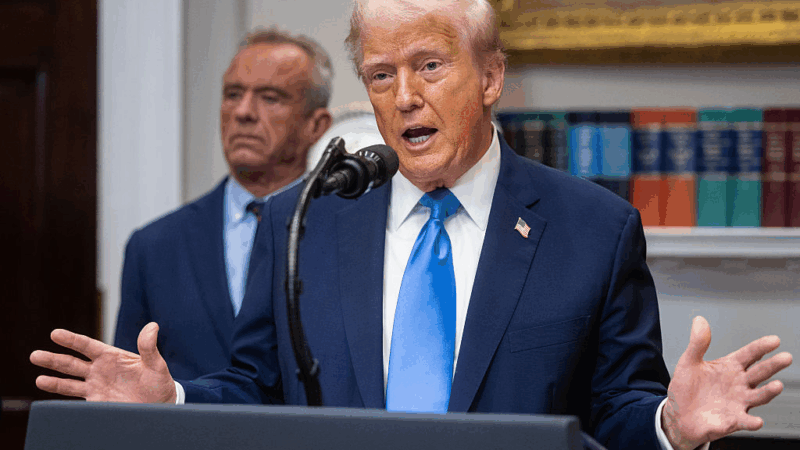
Pregnant women in ERs took less Tylenol after Trump autism warning
A study in The Lancet finds that pregnant women in emergency rooms used less Tylenol after President Trump said it could raise their babies' risk of autism. Scientists say there is no proven link.
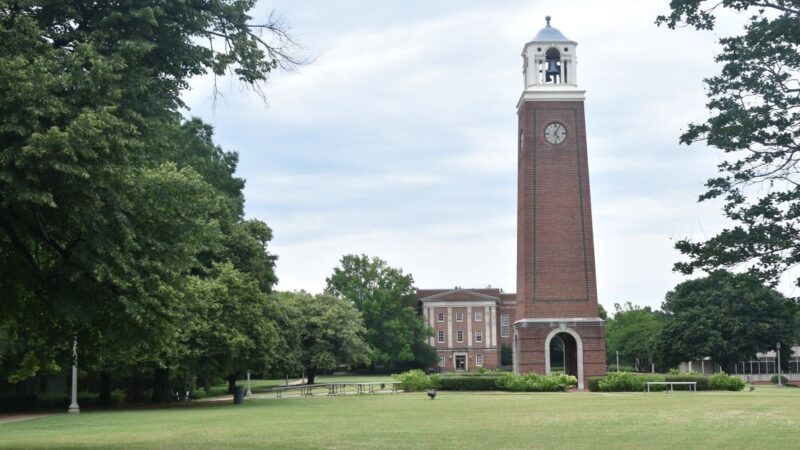
Mixed reactions, including relief, greet news the Coast Guard is buying BSC campus
The U.S. Coast Guard will take possession of the 192-acre campus in the northeast corner of Birmingham’s Bush Hills Neighborhood and will begin work to refit it as a training center for officers and enlisted personnel.
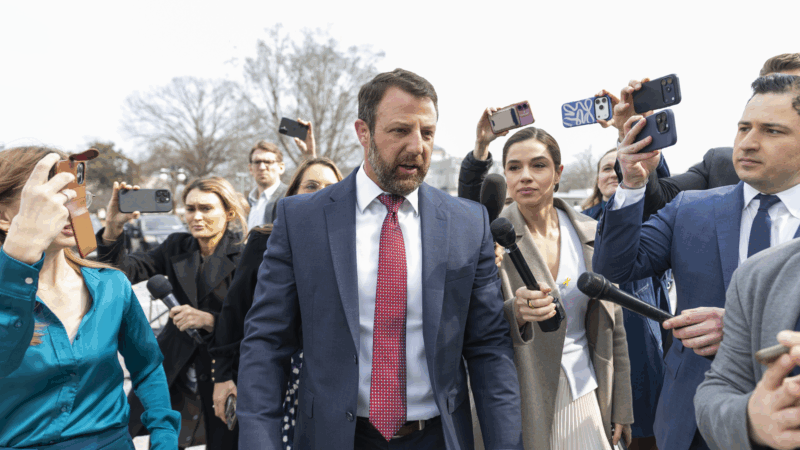
What you need to know about Sen. Markwayne Mullin, Trump’s new pick to lead DHS
President Trump announced Thursday that Sen. Markwayne Mullin, R-Okla., is his pick to replace Kristi Noem as the head of the Department of Homeland Security.
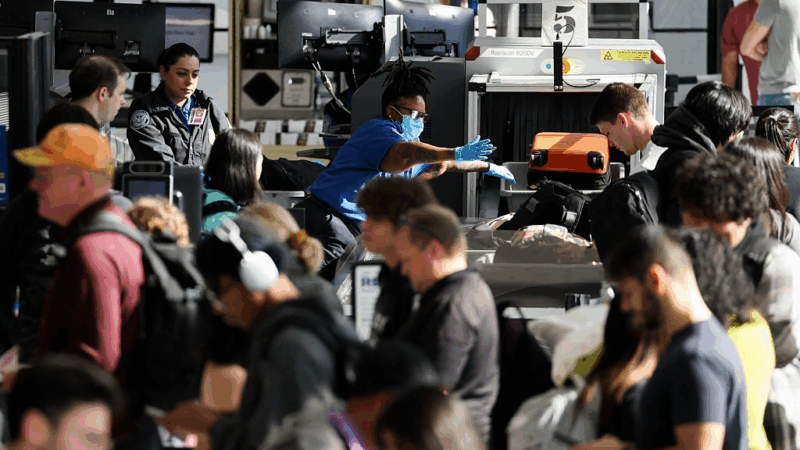
Travel industry pushes Congress to end DHS shutdown and pay federal security workers
With the busy spring break travel season looming, travel and aviation industry leaders urged Congress to end the stalemate over DHS funding before workers at TSA and ports miss a full paycheck.
Trump fires Kristi Noem as DHS chief, names Sen. Markwayne Mullin to replace her
President Trump has fired his homeland security secretary, Kristi Noem, and said Markwayne Mullin, a senator from Oklahoma, would replace her.
Can a digital tablet cut back a country’s overuse of antibiotics?
Overprescribing antibiotics breeds antibiotic resistance. A new tool aims to lower a notably high rate of such prescriptions in Rwanda.
