
Trump heads to Davos after upending European relations over Greenland
Just two weeks ago, President Trump posted on social media that he’d address affordability when he spoke at the World Economic Forum in Davos.
Trump may well talk about the cost of living in that speech Wednesday, but his belligerent foreign policy is once again overshadowing his attempts at a cohesive economic message. Trump’s aggressive push to acquire Greenland has turned to open antagonism toward allies in recent days, becoming a central focus of this year’s forum.
Watch President Trump’s speech set for 8:30 a.m. EST:
Just days before the forum began, Trump on social media threatened to tariff goods from eight European nations and NATO members until they support a U.S. deal to purchase Greenland.
Those countries responded with a statement saying that they stand in solidarity with Denmark and Greenland, which is an autonomous territory of the Kingdom of Denmark.
Over the weekend, Norwegian Prime Minister Jonas Gahr also revealed a text conversation in which Trump said that not receiving the Nobel Peace Prize – which the Norwegian government does not confer – is influencing his decision to pursue Greenland.
It also became clear in recent days that other world leaders were seeking to dissuade Trump from attempting to take over Greenland, when Trump Monday night posted screenshots of text messages from NATO Secretary General Mark Rutte and French President Emmanuel Macron.
Rutte began his message with flattery, praising Trump’s recent strikes in Syria. Rutte added, “I am committed to finding a way forward on Greenland.”
Macron, for his part, was harsher: “I do not understand what you are doing on Greenland,” he wrote, but added that he wanted to get dinner after Davos.
And Trump on Tuesday reposted a social media message that cast the U.N. and NATO as the “real threat” to the U.S., as opposed to China and Russia.
All of this buildup has brought American foreign policy to center stage at Davos. When Treasury Secretary Scott Bessent took the stage with Fox Business’s Maria Bartiromo yesterday, her first question was about Greenland: “How do you justify taking over a country when in fact Denmark and Greenland have said they’re not interested?”
“Greenland’s becoming more and more attractive for foreign conquest, and he very strongly believes that it must be part of the US to prevent a conflict,” Bessent said as part of his answer.
Meanwhile, Canadian Prime Minister Mark Carney on Tuesday delivered a forceful speech that, without mentioning Trump explicitly, argued that his policies are leading to the breakdown of the international order.
“Let me be direct: We are in the midst of a rupture, not a transition,” Carney said. “Great powers have begun using economic integration as weapons, tariffs as leverage, financial infrastructure as coercion, supply chains as vulnerabilities to be exploited.”
“We stand firmly with Greenland and Denmark and fully support their unique right to determine Greenland’s future. Our commitment to NATO’s Article 5 is unwavering,” he later added. “Canada strongly opposes tariffs over Greenland.”
But Trump, speaking at length with reporters Tuesday, seemed to step off the gas slightly when it came to his harsh rhetoric. Asked about how his push for Greenland could result in breaking up NATO, Trump seemed to demur.
“Something’s going to happen that’s going to be very good for everybody,” he said.
The foreign policy Trump is bringing to Davos goes beyond Greenland. On Thursday, he will participate in what the White House is calling a Board of Peace Charter Announcement.
The “Board of Peace” is being created as part of Trump’s 20-point plan to end the conflict between Israel and Hamas and has come under sharp criticism. A copy of the charter obtained by NPR said that countries that want permanent membership will have to pay $1 billion, and that Donald Trump is the permanent chair, even after he’s president. The charter also says that the world needs a more effective international peace-building body – which may signal the board is hoping to act as a rival to the U.N.
The board’s membership is still unsettled, but Trump said he has asked President Vladimir Putin to take part. Meanwhile, French President Emmanuel Macron has said he will not join the board.
Trump told reporters this week that his main message in Davos will be “how well the United States is doing.” Economic advisor Kevin Hassett has said the president will also be revealing a new housing policy.
Trump is scheduled to give his speech at 8:30 a.m. Eastern on Wednesday at the conference – the theme of which this year is “A Spirit of Dialogue.”
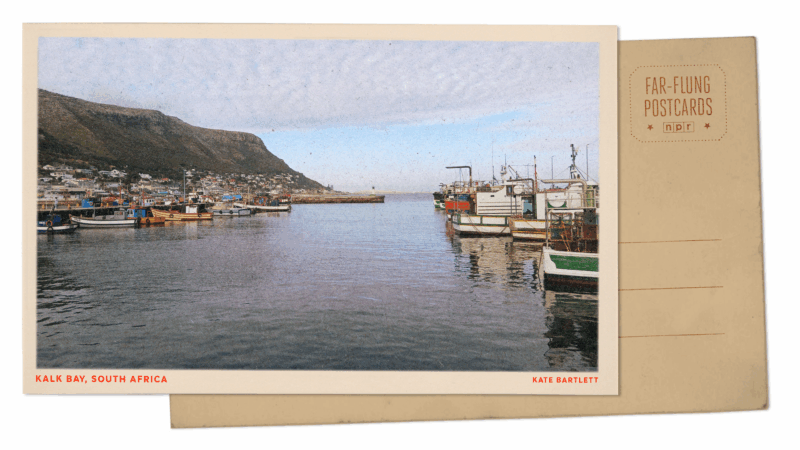
Greetings from Kalk Bay, a South African fishing village where wild seals await scraps
Far-Flung Postcards is a weekly series in which NPR's international team shares moments from their lives and work around the world.

Public domain contest challenges filmmakers to remix Betty Boop, Nancy Drew and more
Nearly 280 filmmakers entered the Internet Archive's annual contest celebrating creative freedom without copyright restrictions.
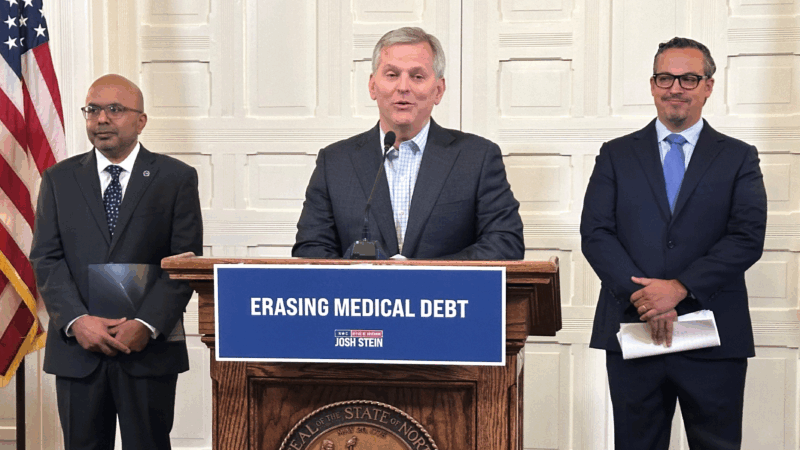
How North Carolina erased medical debt for 2.5 million people
The state partnered with a nonprofit to wipe out the debts. It also has a plan in place to prevent medical debt for people in specific income brackets.

1 year into Trump’s second term, a consumer watchdog agency is ‘hanging by a thread’
The Trump administration has ordered work stoppages and layoffs and has tried cutting off funding to effectively dismantle the Consumer Financial Protection Bureau.

How ICE grew to be the highest-funded U.S. law enforcement agency
ICE's budget hovered around $10 billion for years. But President Trump and the Republican-controlled Congress are taking the agency's funding to unprecedented levels.
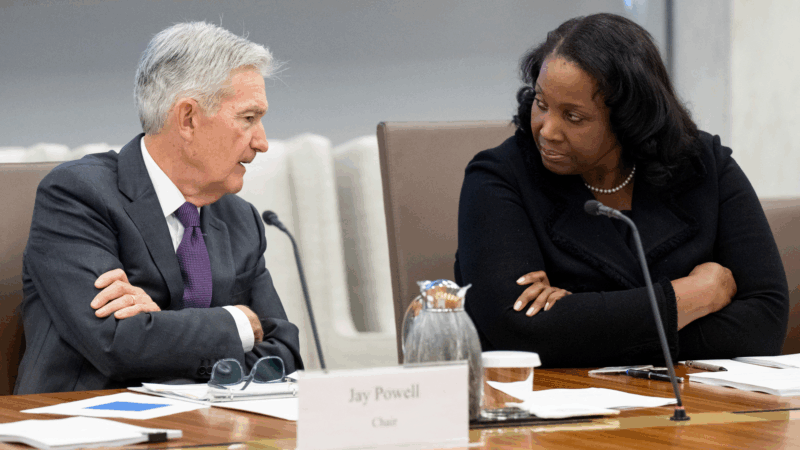
It’s showdown time for the Fed’s independence at the Supreme Court
At issue are President Trump's efforts to break with 112 years of law and precedent by firing Lisa Cook, a member of the Federal Reserve's governing board.
