
Trump fires more immigration judges even as he aims to increase deportations
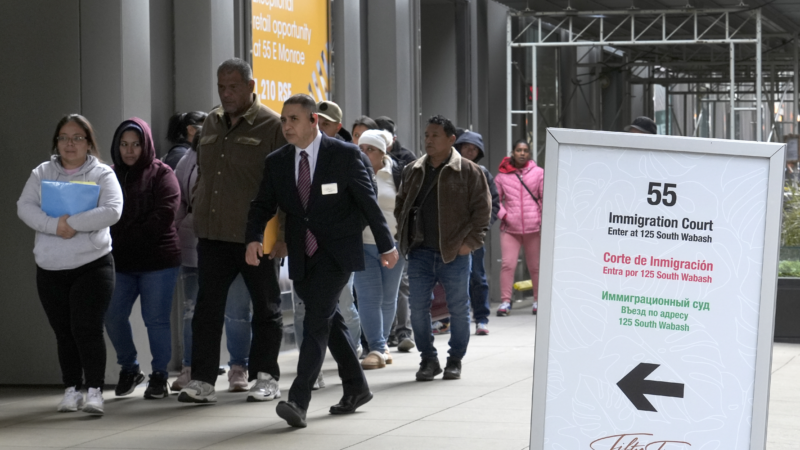
Another round of firings hit immigration courts in Massachusetts, California and Louisiana, as the Trump administration continues its twin efforts of downsizing the government and increasing immigration-related arrests.
At least eight immigration judges received notices that they would be put on leave and their employment would be terminated on April 22, according to two people familiar with the firings and to the International Federation of Professional and Technical Engineers union, which represents immigration judges. The two people spoke on condition of anonymity for fear of reprisals.
The judges who received the notices weren’t given a reason for the terminations. They were at the end of their two-year probationary period with the Executive Office for Immigration Review, or EOIR, which is part of the Justice Department. EOIR declined to comment on personnel matters.
The administration has moved to fire probationary workers at a score of other federal agencies. But getting rid of judges adds to criticism of the Trump administration for not giving migrants or noncitizens enough due process before they’re deported. Trump’s own comments this week prompted similar concerns.
“We cannot give everyone a trial, because to do so would take, without exaggeration, 200 years,” Trump posted on social media on Monday. “We would need hundreds of thousands of trials for the hundreds of thousands of Illegals we are sending out of the Country. Such a thing is not possible to do.”
There are about 700 immigration judges across the country’s 71 immigration courts and adjudication centers. These judges are the only ones who can revoke someone’s green card and issue a final order of removal for those who have been in the country for more than two years and are in the deportation process.
The latest firings comes as dozens of courts around the country are already facing vacancies after the Trump administration laid off or received resignations from over 100 court staff, including over two dozen judges. Earlier this month, EOIR posted several openings for immigration judge positions across the country, including in courts where judges were fired.
Matt Biggs, president of the union representing judges, said firing judges adds to the courts’ backlog of millions of cases.
“This is pure hypocrisy. We shouldn’t be firing judges, we should be hiring them,” he said.
Thirteen judges already fired since Trump started his second term filed a class appeal earlier this month, asserting that they had been wrongfully terminated.
“These immigration judges were appointed to serve the American people and uphold the rule of law—and they were fired by President Trump in violation of long-standing civil service protections,” Skye Perryman, president and CEO of Democracy Forward, said in a statement at the time of the filing.
Immigration law experts warn that the system is already backed up. Judges review on average 500 to 600 cases a year. Still, there were almost 4 million pending cases in the last quarter of 2024, including nearly 1.5 million asylum cases. In fiscal year 2024, immigration courts issued only 666,177 initial case decisions.
With judges leaving, voluntarily or not, the administration is also putting pressure to speed up the pace of case reviews in order to reduce the backlog.
In an April 11 memo sent to staff at the EOIR, acting Director Sirce Owen criticized judges for not “efficiently managing their dockets,” and encouraged them to drop “legally deficient asylum cases without a hearing.”
The directive could result in immigration judges determining someone is not eligible for asylum without a hearing, based solely on what is filed on a lengthy and complex asylum request form.
Biggs argues that the firings of judges make reaching the goals of increasing deportations harder to reach.
“He may be right — at the rate that his administration is firing judges, rather than a few years, it may take a couple hundred years to complete the pending cases,” Biggs said about Trump’s comments.

Iran fires missiles at Israel and Gulf states after U.S.-Israeli strike kills Khamenei
Iran fired missiles at targets in Israel and Gulf Arab states Sunday after vowing massive retaliation for the killing of Supreme Leader Ayatollah Ali Khamenei by the United States and Israel.
House Dem. Leader Jeffries responds to air strikes on Iran by U.S. and Israel
NPR's Emily Kwong speaks to House Minority Leader Hakeem Jeffries (D-NY), who is still calling for a vote on a war powers resolution following a wave of U.S.- and Israel-led airstrikes on Iran.
Iran’s Ayatollah Ali Khamenei is killed in Israeli strike, ending 36-year iron rule
Khamenei, the Islamic Republic's second supreme leader, has been killed. He had held power since 1989, guiding Iran through difficult times — and overseeing the violent suppression of dissent.

Found: The 19th century silent film that first captured a robot attack
A newly rediscovered 1897 short by famed French filmmaker Georges Méliès is being hailed as the first-ever depiction of a robot in cinema.
‘One year of failure.’ The Lancet slams RFK Jr.’s first year as health chief
In a scathing review, the top US medical journal's editorial board warned that the "destruction that Kennedy has wrought in 1 in office might take generations to repair."
Here’s how world leaders are reacting to the US-Israel strikes on Iran
Several leaders voiced support for the operation – but most, including those who stopped short of condemning it, called for restraint moving forward.
