
Trump asks Supreme Court to reverse tariffs ruling finding them illegal
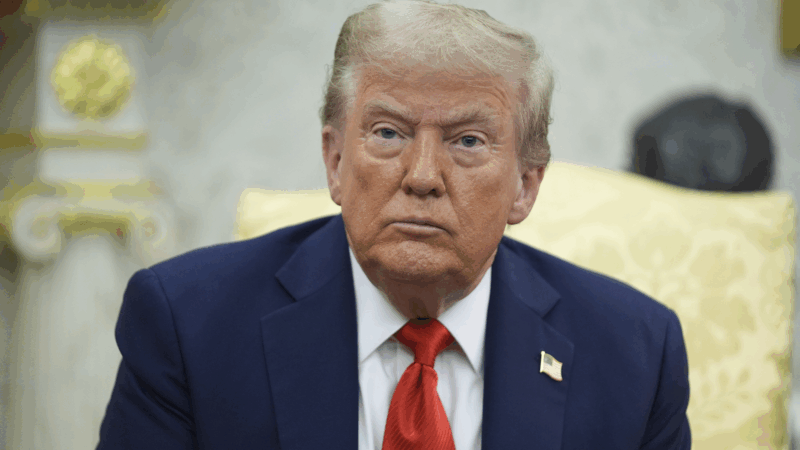
WASHINGTON — The Trump administration took the fight over tariffs to the Supreme Court on Wednesday, asking the justices to rule quickly that the president has the power to impose sweeping import taxes under federal law.
The government called on the court to reverse an appeals court ruling that found most of President Donald Trump’s tariffs are an illegal use of an emergency powers law.
It’s the latest in a series of Trump administration appeals to a Supreme Court he helped shape, and one that is expected to put a centerpiece of the president’s trade policy before the justices.
The U.S. Court of Appeals for the Federal Circuit left the tariffs in place for now, but the administration nevertheless called on the high court to intervene quickly in a petition filed electronically late Wednesday and provided to The Associated Press. It was expected to be formally docketed on Thursday.
Solicitor General D. John Sauer asked the justices to take up the case and hear arguments in early November.
“That decision casts a pall of uncertainty upon ongoing foreign negotiations that the President has been pursuing through tariffs over the past five months, jeopardizing both already negotiated framework deals and ongoing negotiations,” he wrote. “The stakes in this case could not be higher.”
But the stakes are also high for small businesses battered by tariffs and uncertainty, said Jeffrey Schwab, senior counsel and director of litigation at the Liberty Justice Center.
“These unlawful tariffs are inflicting serious harm on small businesses and jeopardizing their survival. We hope for a prompt resolution of this case for our clients,” he said.
The businesses have twice prevailed, once at a federal court focused on trade and again with the appeals court’s 7-4 ruling.
Their lawsuit is one of several challenging the tariffs and erratic rollout that have shaken global markets, alienated U.S. trading partners and allies and raised fears of higher prices and slower economic growth.
But Trump has also used the levies to pressure the European Union, Japan and other countries into accepting new trade deals. Revenue from tariffs totaled $159 billion by late August, more than double what it was at the same point the year before.
Most judges on the U.S. Court of Appeals for the Federal Circuit found the 1977 International Emergency Economic Powers Act, or IEEPA, did not let Trump usurp congressional power to set tariffs. The dissenters, though, said the law does allow the president to regulate importation during emergencies without explicit limitations.
The ruling involves two sets of import taxes, both of which Trump justified by declaring a national emergency: the tariffs first announced in April and the ones from February on imports from Canada, China and Mexico.
The Constitution gives Congress the power to impose taxes, including tariffs. But over the decades, lawmakers have ceded authority to the president, and Trump has made the most of the power vacuum.
Some Trump tariffs, including levies on foreign steel, aluminum and autos, weren’t covered by the appeals court ruling. It also does not include tariffs Trump imposed on China in his first term that were kept by Democratic President Joe Biden.
Trump can impose tariffs under other laws, but those have more limitations on the speed and severity with which he could act.
The government has argued that if the tariffs are struck down, it might have to refund some of the import taxes that it’s collected, delivering a financial blow to the U.S. Treasury.

Forget the State of the Union. What’s the state of your quiz score?
What's the state of your union, quiz-wise? Find out!

A team of midlife cheerleaders in Ukraine refuses to let war defeat them
Ukrainian women in their 50s and 60s say they've embraced cheerleading as a way to cope with the extreme stress and anxiety of four years of Russia's full-scale invasion.
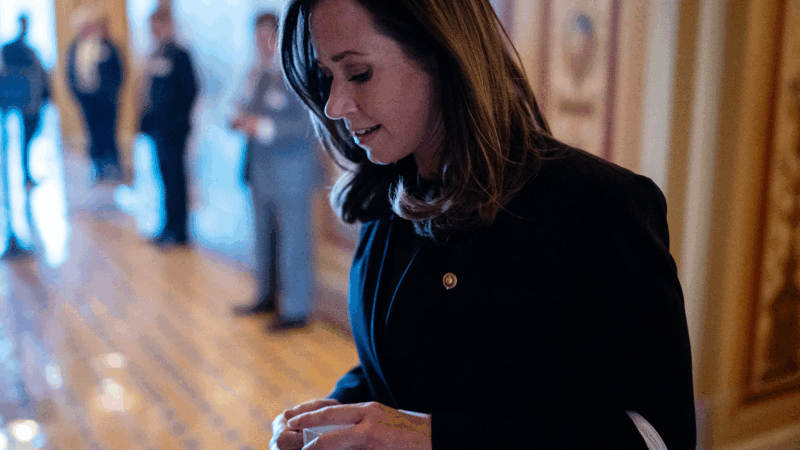
SNL mocked her as a ‘scary mom.’ In the Senate, Katie Britt is an emerging dealmaker
Sen. Katie Britt, Republican of Alabama, is a budding bipartisan dealmaker. Her latest assignment: helping negotiate changes to immigration enforcement tactics.
Nancy Guthrie case: How do families of missing people cope with the uncertainty?
When a loved one goes missing, relatives can feel guilty simply for eating, says Charlie Shunick, whose sister was kidnapped. Shunick now helps others navigate a nightmare "nobody is prepared for."

As the U.S. celebrates its 250th birthday, many Latinos question whether they belong
Many U.S.-born Latinos feel afraid and anxious amid the political rhetoric. Still, others wouldn't miss celebrating their country
This community festival embraces the joys of a frozen lake — while it still has one
As climate change accelerates, local experts say the date Wisconsin's Lake Mendota freezes over is getting later, making safe conditions for activities that rely on snow and ice harder to predict.
