
Trump administration cancels $400 million in federal dollars for Columbia University

The Trump administration says it has canceled $400 million in federal grants and contracts to Columbia University over what it described as the school’s failure to police antisemitism on campus.
The cancellation was announced Friday in a joint statement from the Department of Justice, Department of Health and Human Services, Department of Education and the U.S. General Services Administration. The decision was carried out, the statement said, “due to the school’s continued inaction in the face of persistent harassment of Jewish students.”
It’s unclear what programs at the school may be affected by the cancellation. The statement said the funding pullback was “the first round of action” and that “additional cancellations are expected to follow.” The government also said Columbia holds more than $5 billion in federal grant commitments.
In a statement to NPR, a Columbia spokesperson said the school was reviewing the announcement and pledged “to work with the federal government to restore Columbia’s federal funding.”
“We take Columbia’s legal obligations seriously and understand how serious this announcement is and are committed to combating antisemitism and ensuring the safety and wellbeing of our students, faculty, and staff.”
The administration’s announcement marked the latest turn in the long-running fallout at Columbia over its response to campus protests sparked by the war in Gaza between Israel and Hamas. As the protests unfolded, Columbia came under heavy criticism from Republicans in Congress — as well as some Democrats — who said the university was failing to protect Jewish students from antisemitism. Many of those alleged acts of antisemitism were first reported by the Columbia Spectator.
Last spring, the school administration publicly clashed with pro-Palestinian student demonstrators who demanded the university sell off its investments in companies that have ties to Israel. In April, as the protests continued, the university ultimately shifted all classes to remote-only for the rest of the term. Four months later, the university’s president, Minouche Shafik, resigned following a tenure that lasted little more than a year and was largely defined by the protests.
President Trump has been highly critical of pro-Palestinian protests on campus. Within days of returning to office, Trump signed an executive order calling on the Department of Justice to “investigate and punish anti-Jewish racism in leftist, anti-American colleges and universities.”
Columbia is one of 10 universities that the Department of Justice has said it is investigating following allegations that the schools “may have failed to protect Jewish students and faculty members from unlawful discrimination.”
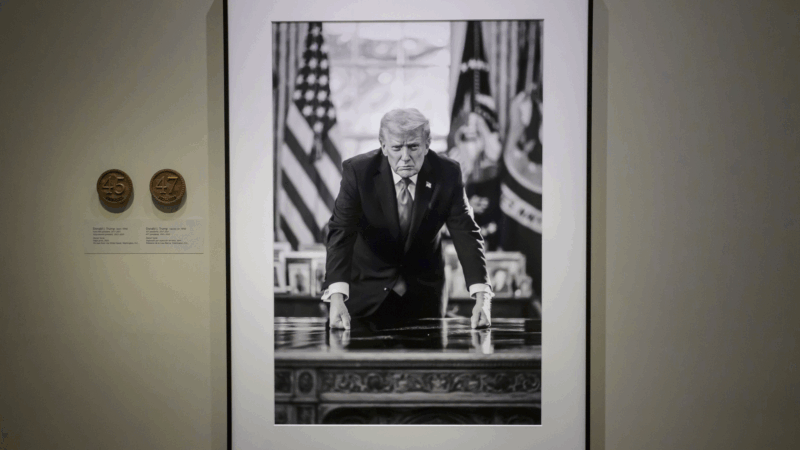
National Portrait Gallery removes impeachment references next to Trump photo
A new portrait of President Trump is on display at the National Portrait Gallery's "America's Presidents" exhibition. Text accompanying the portrait removes references to Trump's impeachments.

America’s top figure skaters dazzled St. Louis. I left with a new love for the sport.
The U.S. Figure Skating National Championships brought the who's who of the sport to St. Louis. St. Louis Public Radio Visuals Editor Brian Munoz left a new fan of the Olympic sport.
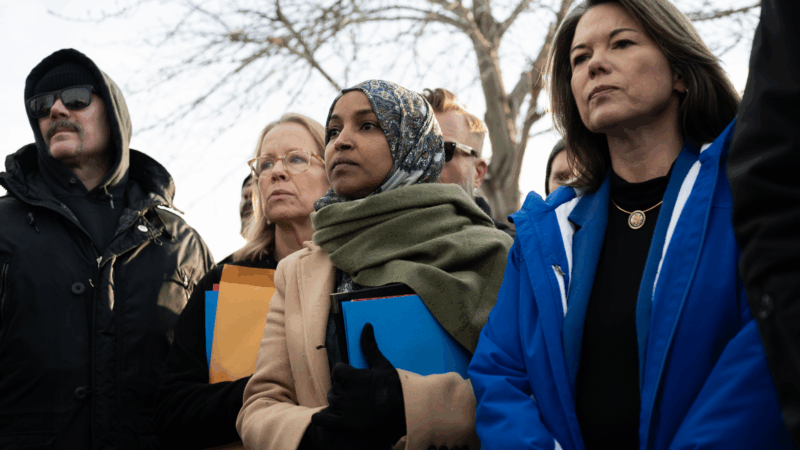
DHS restricts congressional visits to ICE facilities in Minneapolis with new policy
A memo from Homeland Security Secretary Kristi Noem, obtained by NPR, instructs her staff that visits should be requested at least seven days in advance.

Historic upset in English soccer’s FA Cup as Macclesfield beat holders Crystal Palace
The result marks the first time in 117 years that a side from outside the major national leagues has eliminated the reigning FA Cup holders.
Sunday Puzzle: Pet theory
NPR's Sacha Pfeiffer plays the puzzle with KAMW listener Daniel Abramson of Albuquerque, N.M, and Weekend Edition Puzzlemaster Will Shortz.
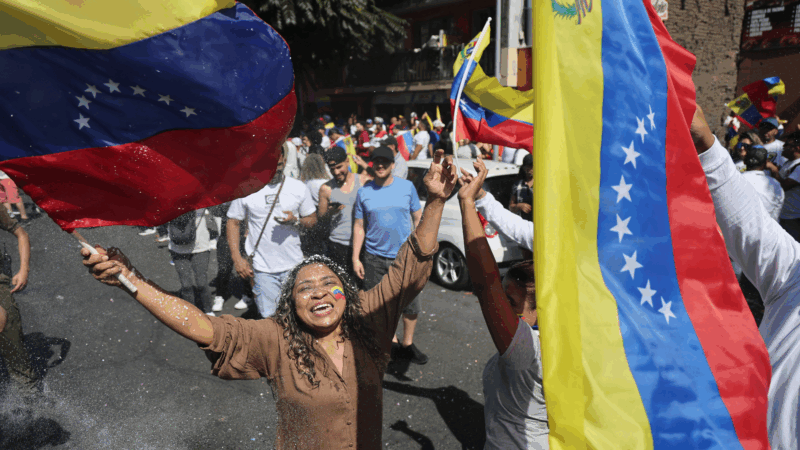
Venezuela’s exiles in Chile caught between hope and uncertainty
Initial joy among Venezuela's diaspora in Chile has given way to caution, as questions grow over what Maduro's capture means for the country — and for those who fled it.
