Trump administration backs off Nvidia’s ‘H20’ chip crackdown after Mar-a-Lago dinner
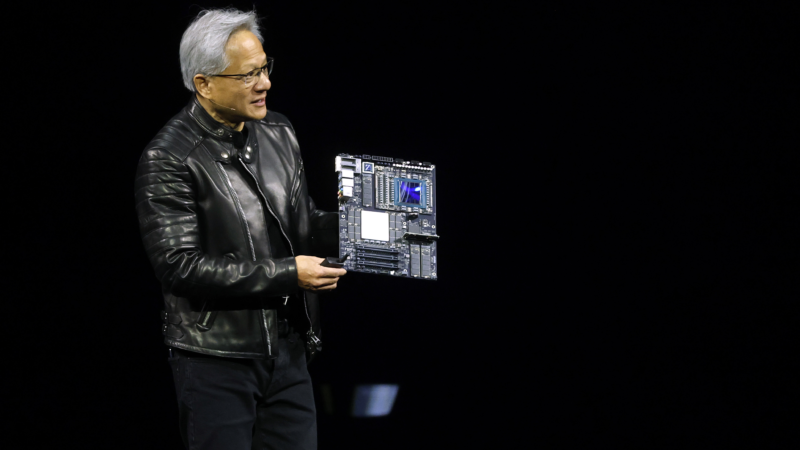
When Nvidia CEO Jensen Huang attended a $1 million-a-head dinner at Mar-a-Lago last week, a chip known as the H20 may have been on his mind.
That’s because chip industry insiders widely expected the Trump administration to impose curbs on the H20, the most cutting-edge AI chip U.S. companies can legally sell to China, a crucial market to one of the world’s most valuable companies.
Following the Mar-a-Lago dinner, the White House reversed course on H20 chips, putting the plan for additional restrictions on hold, according to two sources with knowledge of the plan who were not authorized to speak publicly.
The planned American export controls on the H20 had been in the works for months, according to the two sources, and were ready to be implemented as soon as this week.
The change of course from the White House came after Nvidia promised the Trump administration new U.S. investments in AI data centers, according to one of the sources.
American lawmakers have been pressuring the Trump administration for weeks to place stricter curbs on cutting edge technology related to artificial intelligence. In February, Sens. Elizabeth Warren, D-Mass., and Josh Hawley, R-Mo., jointly called for export controls on the H20 chip after Chinese tech company DeepSeek unveiled a breakthrough AI chatbot that stunned the world in January.
The Trump administration’s decision to allow Chinese firms to continue to purchase H20 chips is a major victory for the country, said Chris Miller, a Tufts University history professor and semiconductor expert.
“Even though these chips are specifically modified to reduce their performance thus making them legal to sell to China — they are better than many, perhaps most, of China’s homegrown chips,” Miller said. “China still can’t produce the volume of chips it needs domestically, so it is critically reliant on imports of Nvidia chips.”
The White House and the Commerce Department did not return requests for comment. A spokesman for Nvidia declined to comment.
It is unclear if Huang spoke directly to Trump during the Friday event, but two sources say until then, the assumption had been that Washington’s trade war with China would soon include tight controls on the H20 chip — which were among the chips used by DeepSeek.
Since 2022, U.S. regulators have restricted what semiconductor chips Nvidia can sell to China out of fear that Beijing could harness American technology to bolster its AI and military capabilities. The H20 arose under these constraints, becoming the most powerful AI chip it could export to China under the law.
This year, the H20 chip has become increasingly coveted by artificial intelligence companies, because it is designed to support inference, a computational process used to support AI models like China’s DeepSeek and other AI agents being developed by Meta and OpenAI.
As a result, the H20 had appeared as if it, too, would be subject to a Trump administration crack down. And tech companies in China responded. In the first three months of the year, leading Chinese tech firms purchased $16 billion worth of H20 chips, The Information reported last week, stockpiling the components in anticipation there would soon be U.S. export controls on the chip.
Despite mounting political pressure to broaden American export controls to cover the H20 chip, the regulatory process has encountered delays, in part because of a lack of staff at the Bureau of Industry and Security (BIS), the Commerce Department office responsible for designing and enforcing such controls, according to a third person familiar with the agency’s operations who was also not authorized to speak publicly.
BIS has been hobbled by federal cuts and reshuffling under the Trump administration. The country’s most senior export control expert, Matthew Boreman, left BIS this year as part of an exodus in February of senior agency staff.
President Trump has also moved fast to dismantle and reorganize technology policies implemented by the Biden administration, particularly the CHIPS Act, which authorized $39 billion in subsidies for companies to invest in semiconductor supply chains in the U.S.
Last month, Trump ordered the establishment of a new investment “accelerator” office which will take over much of the portfolio of semiconductor investment work from CHIPS Act staff laid off from National Institute of Standards and Technology (NIST), a federal agency hit hard by ongoing federal restructuring efforts.

Zohran Mamdani sworn in as New York City mayor, capping historic rise
Mayor Zohran Mamdani took the oath of office in New York City after midnight Thursday. The city's first Muslim mayor, a member of the Democratic Socialists of America, has promised to focus on affordability and fairness.
Rising from the ashes, a symbol of hope at the Rose Parade
Survivors of the Eaton and Palisades Fires find healing and community working on a Rose Parade float to honor the lives and communities lost in last year's wildfires.
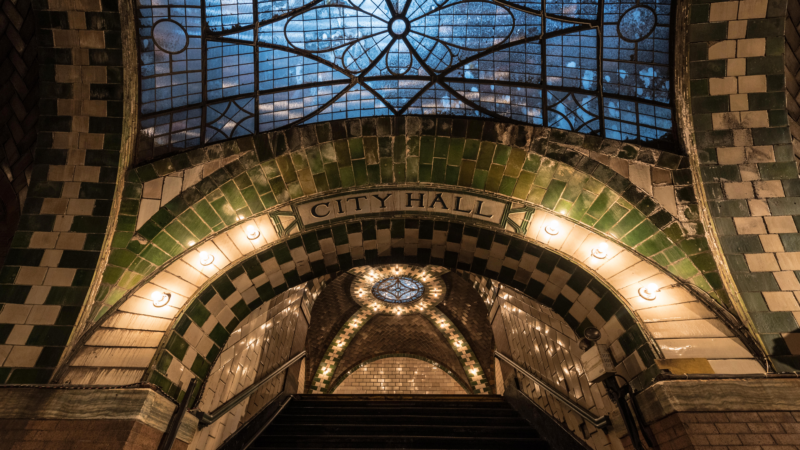
The history behind the NYC subway station chosen for Mamdani’s swearing-in
The city shut down the station in 1945 on New Year's Eve. Eighty years later, it's a symbolic venue choice for the incoming mayor's private swearing-in ceremony.
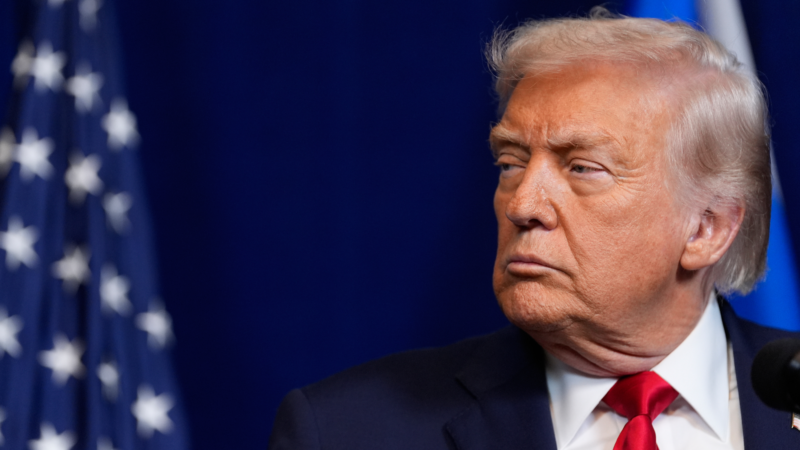
U.S. military strikes 5 more alleged drug boats, killing 8
The U.S. military says it struck five alleged drug-smuggling boats over two days. The attacks killed eight people, while others jumped overboard and may have survived. U.S. Southern Command did not reveal where the attacks occurred.
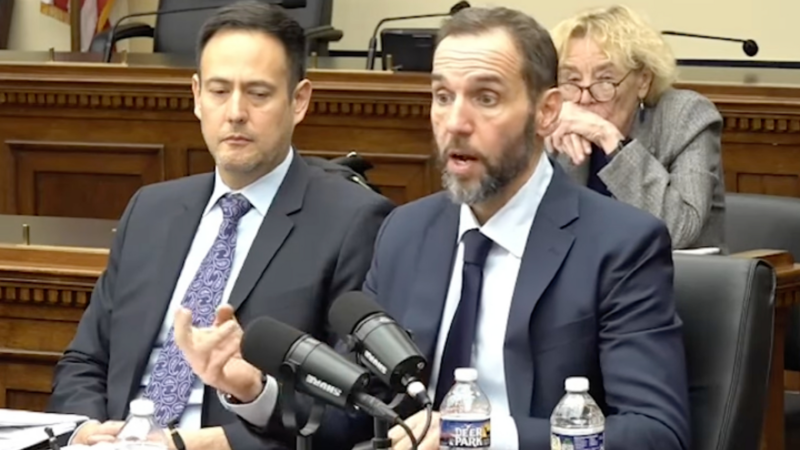
Capitol riot ‘does not happen’ without Trump, Jack Smith told Congress
Former special counsel Jack Smith also described President Trump as the "most culpable and most responsible person" in the criminal conspiracy to overturn the 2020 election results, according to a transcript of Smith's closed-door interview with the House Judiciary Committee.
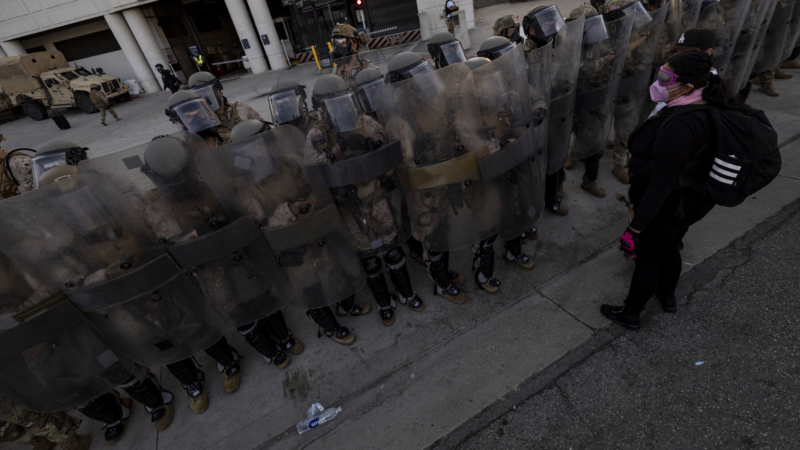
Trump will drop push for National Guard deployments in Chicago, LA and Portland, Ore.
Courts blocked troops from deploying in Chicago and Portland, Ore., and the Los Angeles deployment effectively ended after a judge blocked it earlier this month.