
This sprawling, surrealist movie is a tribute to cinema itself
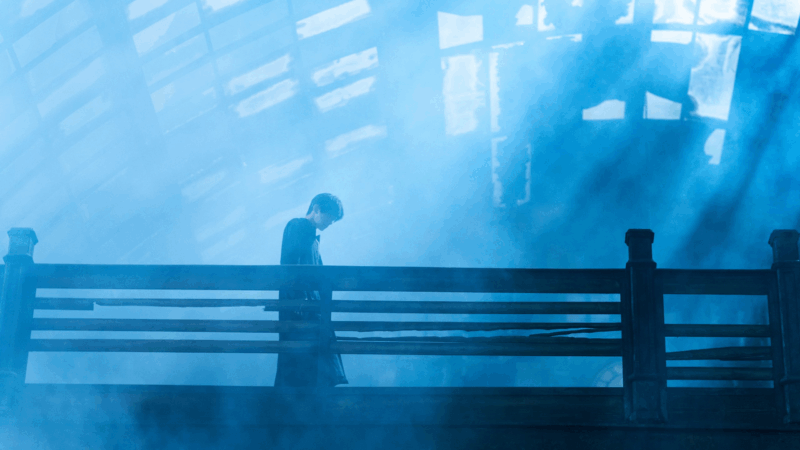
If you’ve ever wondered what filming your dreams would look like, director Bi Gan’s Resurrection has an answer. The Chinese auteur’s newest feature is as sprawling as it is enigmatic, conjuring up dreamlike forces from transcendent worlds and blurring the lines between fantasy and reality. The film’s nearly three-hour run time feels as such, and for some, the payoff may not be worth it. But Resurrection is less interested in an audience’s pleasure than in widening a sense of cinematic possibility. Beginning and ending in a movie theatre, the film unfolds as a sweeping tribute to Chinese history and to the enduring power of global cinema.
Resurrection opens with a series of title cards, reminiscent of those in the silent film era. They explain that the film is set in a futuristic world where humans can live indefinitely — if they do not dream. “People not dreaming is like candles that don’t burn, they can exist forever,” one intertitle reads. However, a few remaining figures called Deliriants are trapped in a state of dreaming, and a woman known as The Big Other, played by the elegant Shu Qi, is tasked with stopping them from doing so.
In Resurrection, the Deliriant in question is a Nosferatu-esque hunchback character, who has “been hiding in an ancient, forgotten past. That is film!” In a state of agony, the Deliriant, played by Chinese superstar Jackson Yee, begs The Big Other to kill him, saying, “Illusions may bring pain, but they are incredibly real.” The Big Other engineers a slow death for the Deliriant by projecting his dreams like a movie, slowly draining his senses one by one.

Resurrection primarily lives in the realm of the Deliriant’s dreams, a sequence that spans four different storylines set across four different points in time in 20th century China. Bi, whose previous credits include his 2015 debut Kaili Blues and his sophomore feature Long Day’s Journey Into Night, has made a name for himself by making films that glide in and out of subconscious worlds that feel suspended in time and space. In the Deliriant’s first dream, he is thrust into a World War II–era crime noir centered around a mysterious suitcase. In the second, he becomes a prisoner in a Buddhist temple, visited by a “spirit of bitterness” born from a broken tooth. The third casts him as a hustler who enlists a child in a scheme to convince a wealthy man of their supposed supernatural powers. Finally, in the last chapter, the Deliriant is engulfed in a doomed romance with a young vampire, unfolding in the hours before sunrise on New Year’s Eve, 1999.
While from afar, such dream sequences might appear disparate or even random, each pulls from a range of film styles, eras of Chinese history and sensory experiences. For example, in Resurrection‘s opening sequence, the “visual” chapter, Bi goes back to the basics. The Deliriant appears clad in a papier-mâché–like costume and the surrounding set, defined by looming shadows and asymmetric forms, pays homage to German Expressionist cinema. When The Big Other attempts to search for the Deliriant’s heart, she finds the monster’s mind in an opium den, a nod to the lingering effects of the Opium Wars that marked the beginning of the end of China’s Qing Dynasty. This stands in stark temporal contrast to Resurrection‘s final dream sequence, a dazzling single take lasting over thirty minutes that centers touch and evokes the red-lit, gangster-inflected aesthetics of the Hong Kong New Wave, a film movement that emerged in the late 1970s and flourished throughout the 1980s and 1990s.
By making a film that is as much a dream as it is a movie, Bi paints cinema as a mélange of the past, present, future and beyond. The film aims to embody the state of dreaming, shifting context without warning and leaving viewers unsure of how they’ve arrived at each place from the last. Between each dream, the Deliriant is thrust into a new lifecycle that mirrors film’s own necessity for constant death and rebirth, shedding oneself in order to remain open to transformation. And although dreams exist in the realm of imagination, they too, bleed into reality. If cinema is a dream and vice versa, what do we lose without it? Bi asks. Without the courage to use our imaginations, our deaths might be more painful than the Deliriant’s.
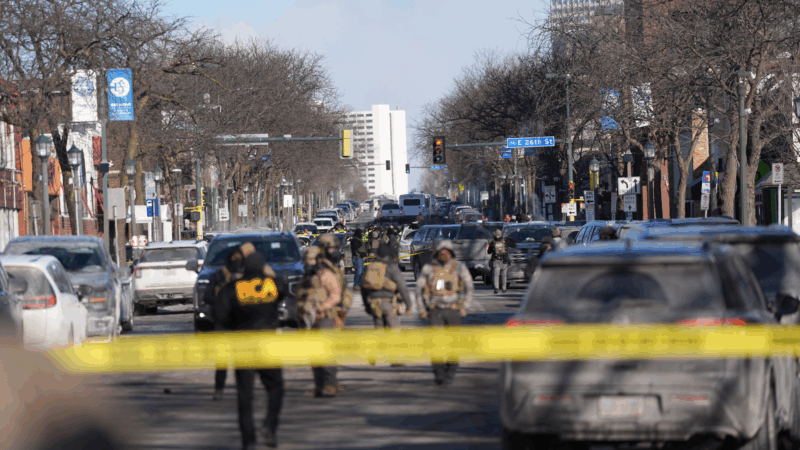
Man shot dead by federal immigration officers in Minneapolis
The incident, which was caught on video, marks the second deadly shooting by federal officers in Minneapolis in less than a month.
Heavy snow and rainfall kill 61, injure 110 over 3 days in Afghanistan
Dozens were killed and hundreds homes destroyed, according to the country's disaster management authority, in storms impacting 15 of Afghanistan's 34 provinces.

China’s top general under investigation in latest military purge
Analysts believe these purges aim to reform the military and ensure loyalty to Chinese leader Xi Jinping. Another commission member, Liu Zhenli, is also under investigation.

As the winter storm rages, here’s what to know in your state
Reporters across the NPR Network are covering the impact of the storm and how officials are responding. We've also got tips for staying safe once bad weather hits.
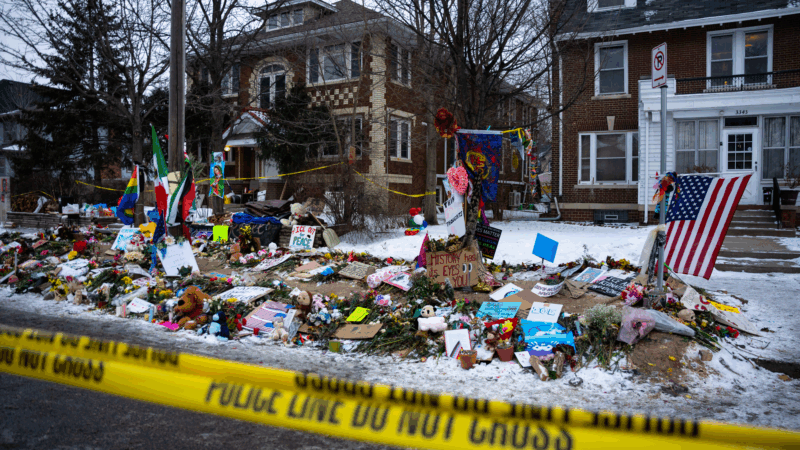
A deadly standoff in 1992 changed federal use-of-force rules. Here’s why it matters
An encounter with white separatists decades ago led to new deadly force policies for some federal law enforcement. Minneapolis is raising questions about whether it's again time to revisit the issue.
Tired of bad haircuts? 3 stylists share tips on how to get the do of your dreams
No more crying over bad haircuts. This illustrated guide has advice on how to find a great stylist and communicate what you want, even while you're sitting in the salon chair.
