
The U.S. takes a step towards allowing mining on the ocean floor, a fragile ecosystem
President Trump signed an executive order Thursday aimed at making it easier for companies to mine the deep seafloor, saying it would create “a robust domestic supply for critical minerals.”
There is currently no commercial-scale deep-sea mining anywhere in the world. But companies have long eyed the ocean floor as a potential source of metals like nickel, cobalt, manganese and copper, which are used in batteries for electric vehicles and other technologies.
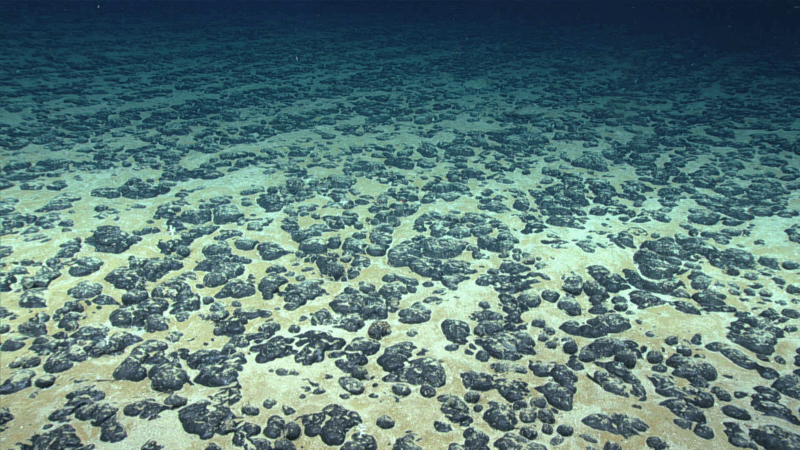
These metals can be found in potato-sized nodules lying on the ocean floor. Many of the nodules are in the middle of the Pacific ocean, beyond the legal territory of individual countries.
Thursday’s order might circumvent ongoing international negotiations to regulate deep-sea mining.
Those regions have traditionally been overseen by an international organization, the International Seabed Authority (ISA). The ISA has hosted talks for years to try to hammer out a rulebook to govern a potential seabed mining industry. The U.S. did not ratify the treaty that governs the seabed, and is not a voting member of the ISA, though in the past under previous administrations it has respected the ISA process.
In his executive order, Trump instructed federal agencies to expedite the process for reviewing and issuing permits for mining on the seafloor in both U.S. and international territory. It will use a U.S. law from 1980, the “Deep Seabed Hard Mineral Resources Act.”
Scientists and environmental groups condemned the order, arguing that opening the deep seabed for mining could disrupt important marine ecosystems, and damage the fishing industry.
“This is being planned on some of the least resilient ecosystems on the planet,” says Douglas McCauley, professor of ocean science at the University of California Santa Barbara. “It would have catastrophic biological consequences.”
Underwater mining can create plumes of sediment that could suffocate marine life, and degrade the food webs that fish depend on, McCauley says.
There are also important questions about whether we actually need to be mining the seabed to get enough of these minerals for technologies like batteries, says Micah Ziegler, assistant professor of energy and chemical systems at Georgia Institute of Technology.
While a couple of years ago researchers were concerned about the limitations of land-based mining for metals like cobalt and nickel, a variety of alternative battery chemistries have been developed that might reduce the need for those elements, Ziegler says.
“People said we were going to be cobalt-limited and then we found a bunch of alternative chemistries that use less [or no] cobalt,” Ziegler says. “The technologies are changing so rapidly and alternatives are being explored.”
At least one company has expressed interest in applying for a permit to mine the seafloor through the U.S. The Metals Company, a Canadian mining company, said this spring it would seek a permit from the Trump administration. Shares of the company were up 44% by the end of the day Thursday.

HUD proposes time limits and work requirements for rental aid
The rule would allow housing agencies and landlords to impose such requirements "to encourage self-sufficiency." Critics say most who can work already do, but their wages are low.
Paramount and Warner Bros’ deal is about merging studios, and a whole lot more
The nearly $111 billion marriage would unite Paramount and Warner film studios, streamers and television properties — including CNN — under the control of the wealthy Ellison family.

A new film follows Paul McCartney’s 2nd act after The Beatles’ breakup
While previous documentaries captured the frenzy of Beatlemania, Man on the Run focuses on McCartney in the years between the band's breakup and John Lennon's death.

An aspiring dancer. A wealthy benefactor. And ‘Dreams’ turned to nightmare
A new psychological drama from Mexican filmmaker Michel Franco centers on the torrid affair between a wealthy San Francisco philanthropist and an undocumented immigrant who aspires to be a dancer.
Bill making the Public Service Commission an appointed board is dead for the session
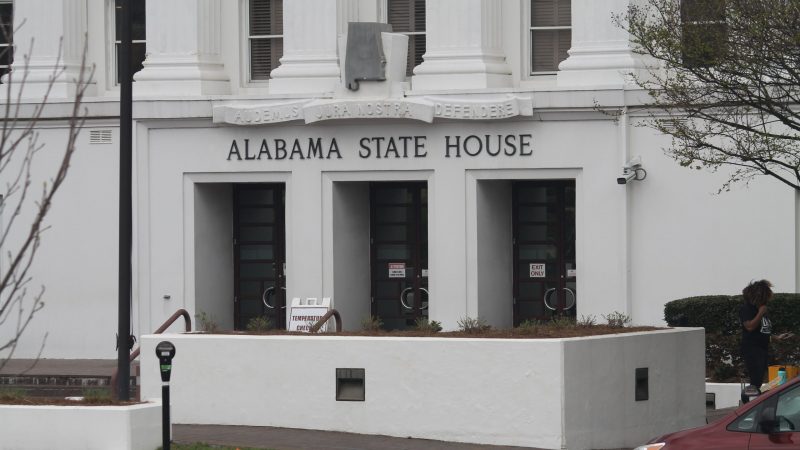
Usually when discussing legislative action, the focus is on what's moving forward. But plenty of bills in a legislature stall or even die. Leaders in the Alabama legislature say a bill involving the Public Service Commission is dead for the session. We get details on that from Todd Stacy, host of Capitol Journal on Alabama Public Television.
My doctor keeps focusing on my weight. What other health metrics matter more?
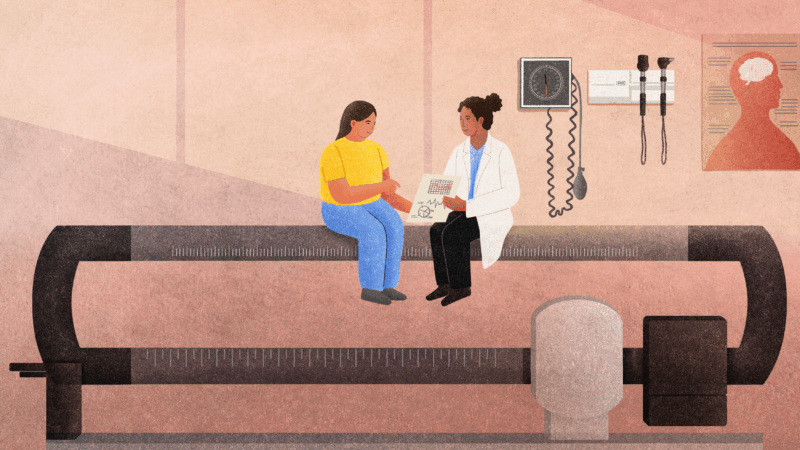
Our Real Talk with a Doc columnist explains how to push back if your doctor's obsessed with weight loss. And what other health metrics matter more instead.
